
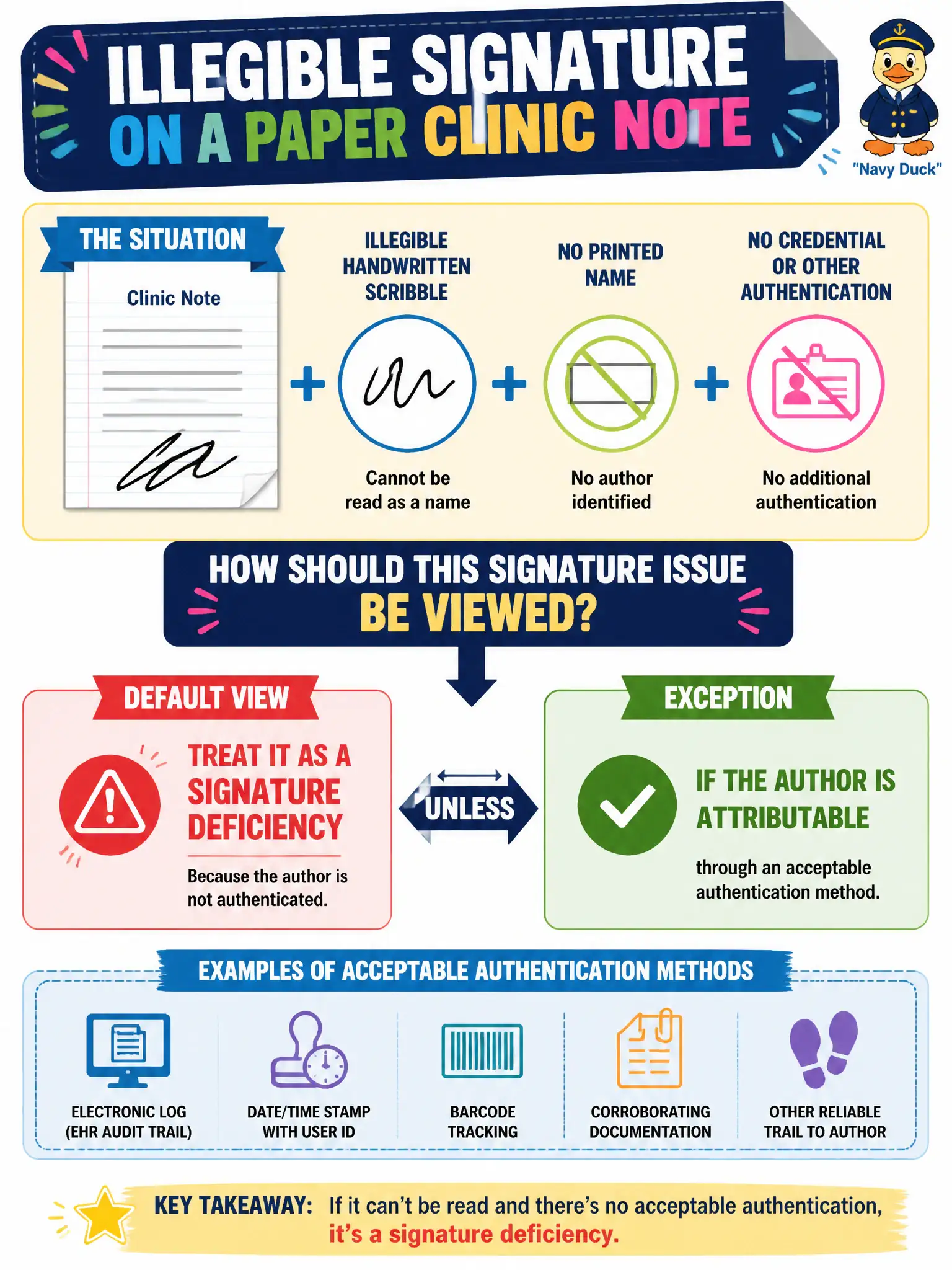
A paper clinic note ends with an illegible handwritten scribble and no printed name, credential, or other authentication method identifying the author. How should this signature issue be viewed?
Select an answer to reveal the explanation.
Short Explanation
A signature has to tell you who stood behind the note. A mystery squiggle with no printed name is like a nametag that fell off—auditors can't attribute it, so it's a deficiency until you fix authentication.
Full Explanation
Signature requirements demand that authorship be attributable. An illegible handwritten mark without printed name, credentials, signature log reference, or another acceptable authentication method is typically considered deficient. In a paper civic clinic note ending with an illegible scribble and no identifying authentication method, treat it as a signature deficiency unless the author is attributable through an acceptable method. Electronic authentication is one acceptable path, but handwritten signatures can also suffice when they clearly identify the author per payer and organizational policy. Assuming illegible marks always satisfy Medicare because any ink counts fails attributable-signature standards. Claiming only electronic signatures can ever authenticate physician-office records fails because properly attributable handwritten signatures remain acceptable in many settings. Treating illegibility as irrelevant if the front desk stamped the DOS fails because a date stamp does not identify the author. Exam caveat: signature logs or printed name/credentials beside a mark can remediate attributable identity when policy allows—pure illegibility alone usually does not. Operational check: attempt to identify the author via signature log/policy methods, obtain proper re-authentication or attestation if permitted, hold billing until attributable, and train providers in the municipal clinic on legible signature blocks.