
A Medicare office claim is ready, but the supporting encounter note lacks an authenticated provider signature. What is the correct compliance action?
Select an answer to reveal the explanation.
Short Explanation
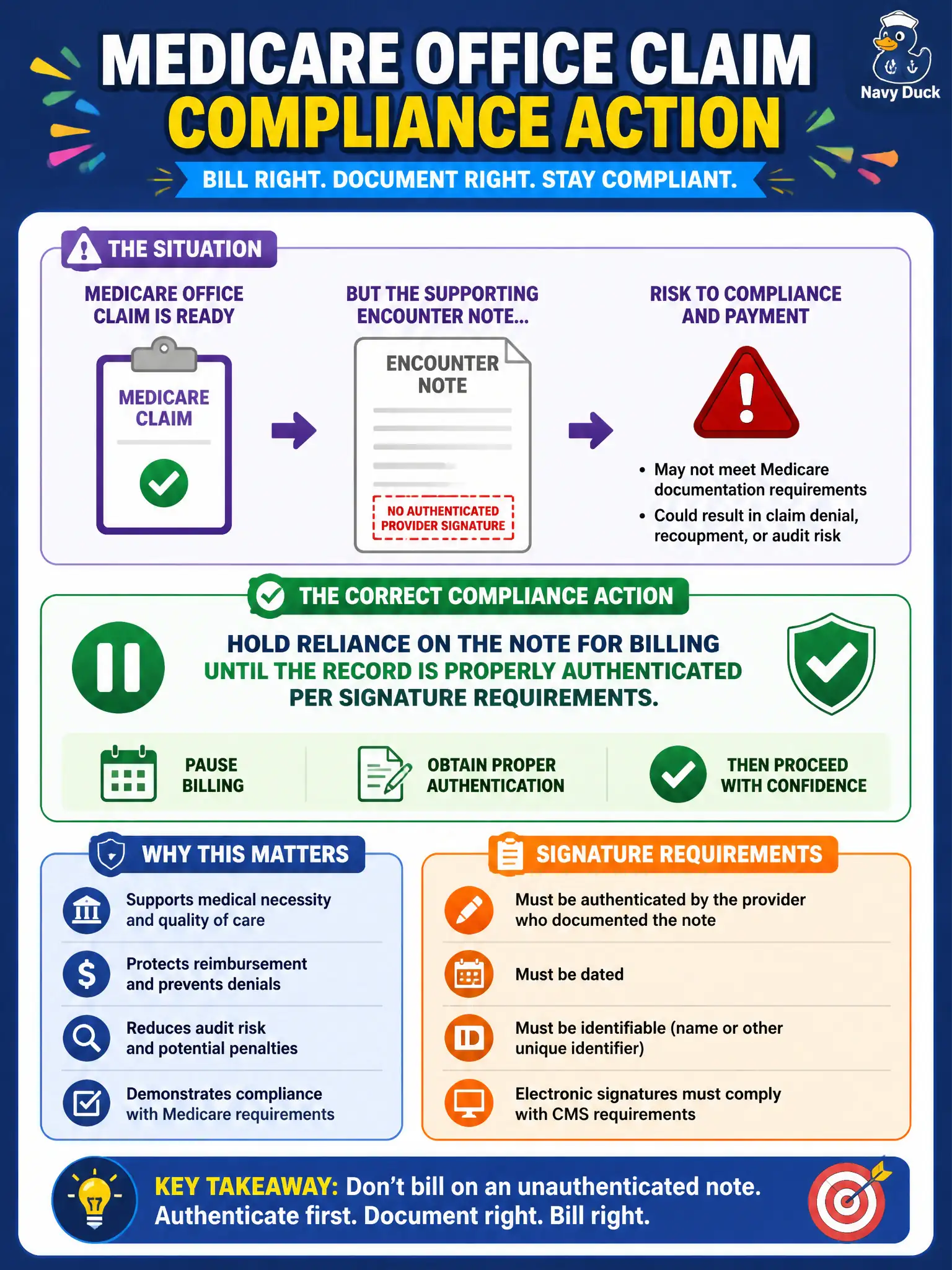
Unsigned notes are like unsigned contracts—Medicare won't treat them as solid proof. Pause the claim until the real provider authenticates the record the right way.
Full Explanation
Medicare and related guidance require medical records supporting billed services to be authenticated by the responsible provider. Missing signatures create a documentation deficiency that can make the note unreliable for claim support. When a Medicare office claim is ready but the supporting encounter note lacks an authenticated provider signature, the correct compliance action for a civic clinic is to hold reliance on the note for billing until the record is properly authenticated per signature requirements—not to forge or substitute signatures. Submitting immediately because unsigned notes are acceptable for Medicare professional claims fails authentication rules. Substituting the medical assistant’s initials as the physician signature fails authorship requirements. Stamping a facsimile signature without policy authorization whenever claims age fails signature protocol and can constitute falsification. Exam caveat: some payers allow attestation remediation later, but that is not permission to knowingly bill from an unauthenticated note as a routine shortcut. Operational check: place the claim on signature hold, notify the provider, verify authentication before release, and track aging unsigned notes on the county clinic’s documentation dashboard.