
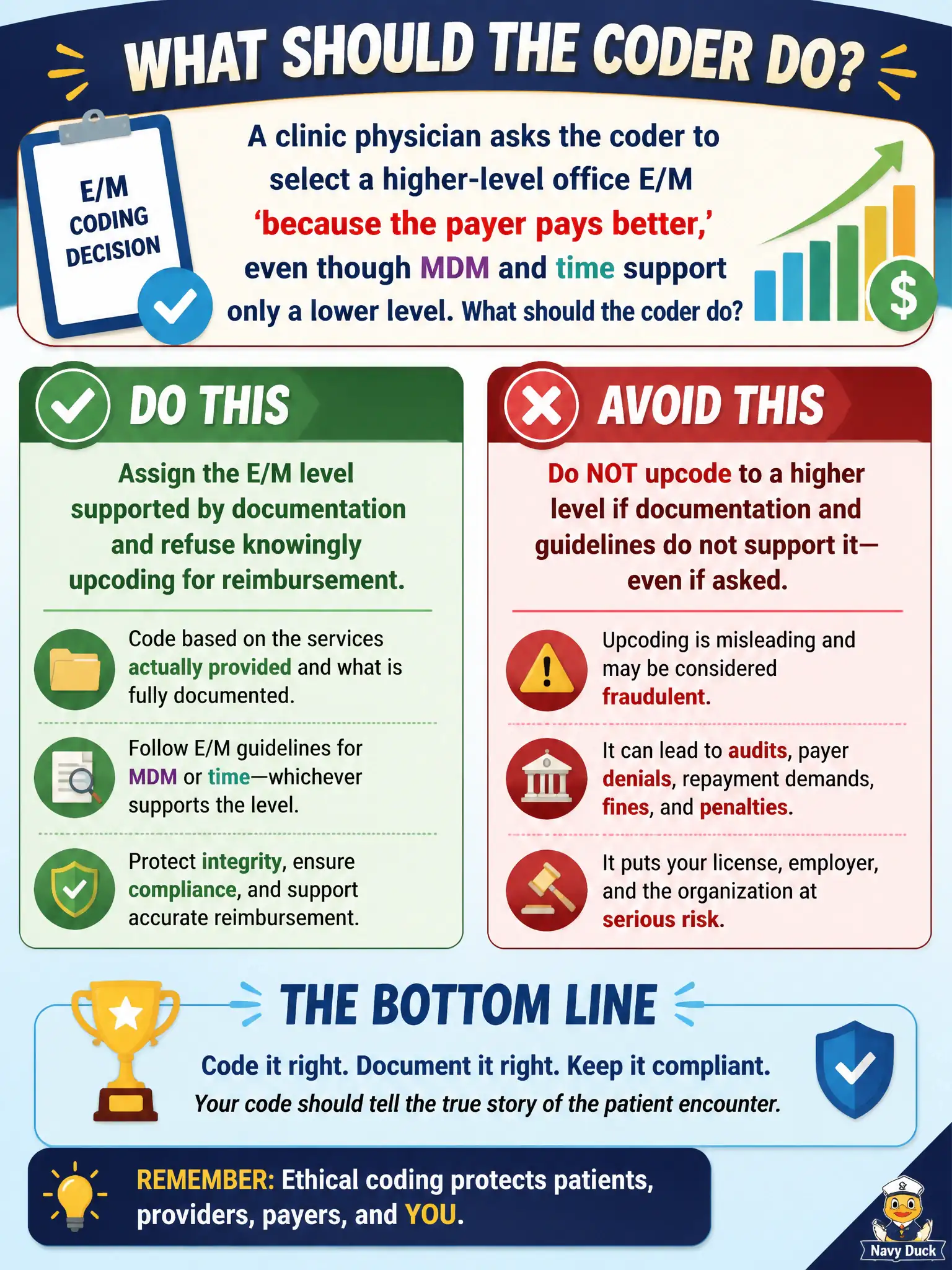
A clinic physician asks the coder to select a higher-level office E/M 'because the payer pays better,' even though MDM and time support only a lower level. What should the coder do?
Select an answer to reveal the explanation.
Short Explanation
Payment envy isn't a leveling guideline. If the note supports a 99213-type visit, you don't stretch it to a higher code just because the fee schedule looks tastier—that's the classic OIG risk area everyone warns about.
Full Explanation
Ethical coding and OIG compliance expectations prohibit knowingly assigning a higher E/M level than documentation supports for the purpose of increased payment. In a civic clinic, when a physician asks the coder to select a higher-level office E/M “because the payer pays better,” even though MDM and time support only a lower level, the coder must assign the E/M level supported by documentation and refuse knowingly upcoding for reimbursement. Escalate through the compliance channel and educate the provider on CPT leveling rules so public-program claims remain defensible. Upcoding as requested and documenting that reimbursement strategy drove the level fails by creating written evidence of intentional miscoding. Alternating high and low levels across patients to “average out” risk fails as deliberate manipulation that still produces false claims on individual encounters. Reporting the highest payable E/M in the category whenever the payer fee schedule looks favorable fails CPT and payer leveling rules and substitutes fee-schedule shopping for clinical documentation. Exam caveat: medical necessity and documented MDM or total time—not payer fee attractiveness—drive office/outpatient E/M selection on CCS-P ethics items; commercial contract quirks never authorize knowing upcoding. Operational check: score MDM or validated total time from the note, release only the supported level, decline the upcode request in writing to compliance, open an incident for the county clinic, and include anonymized examples in provider E/M education with follow-up audit sampling.