
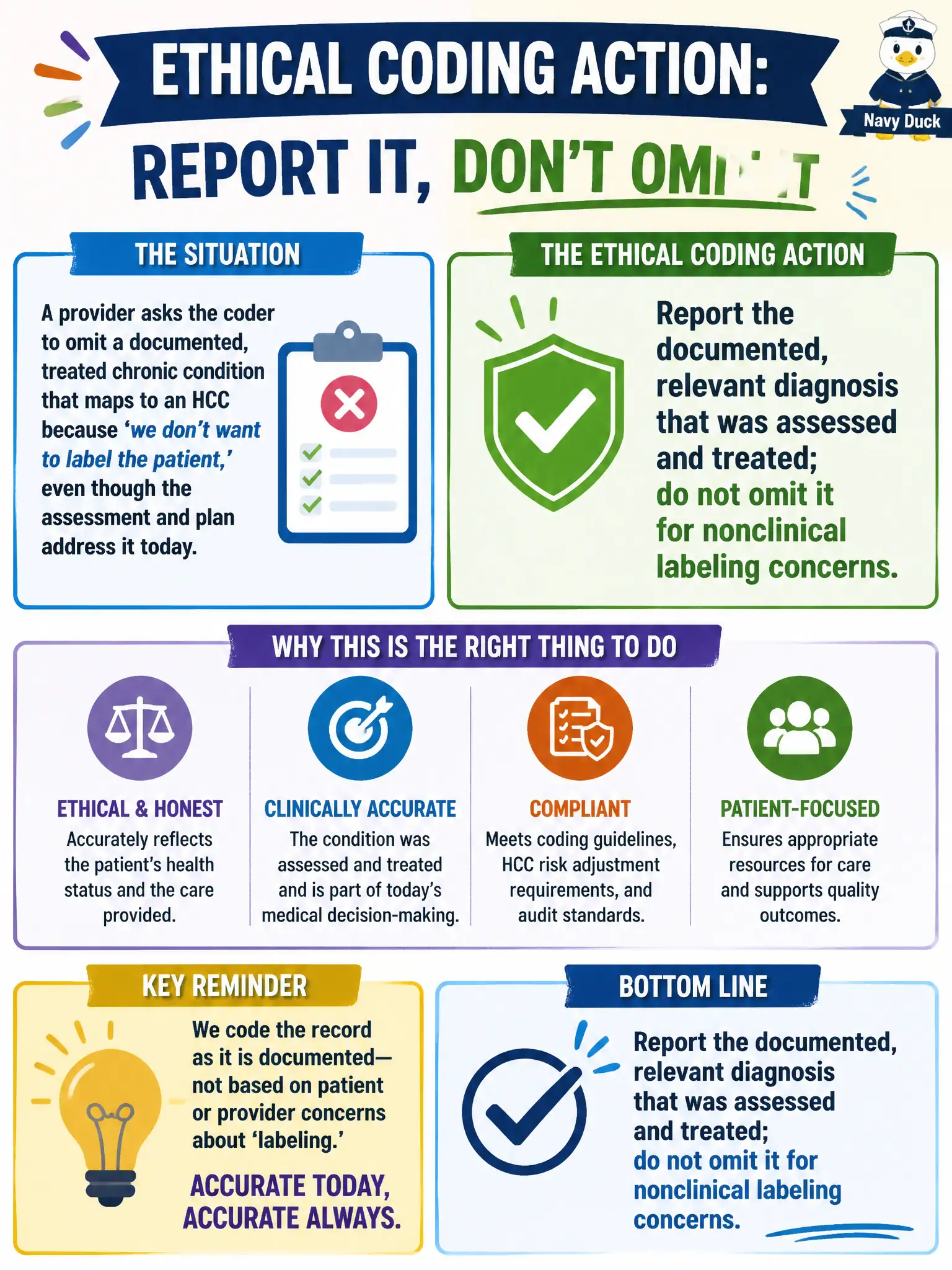
A provider asks the coder to omit a documented, treated chronic condition that maps to an HCC because 'we don't want to label the patient,' even though the assessment and plan address it today. What is the ethical coding action?
Select an answer to reveal the explanation.
Short Explanation
Coding isn't a nickname contest. If the doctor diagnosed it, treated it, and wrote it in today's plan, leaving it off because someone worries about 'labels' undercodes the truth—and ethical coding says report what's relevant and documented.
Full Explanation
AHIMA Standards of Ethical Coding require accurate, complete reporting of diagnoses that are documented and clinically relevant to the encounter. Omitting a treated, documented condition for nonclinical reasons such as stigma avoidance is improper undercoding. When a provider asks a civic clinic coder to omit a documented, treated chronic condition that maps to an HCC because “we don’t want to label the patient,” even though today’s assessment and plan address it, the ethical action is to report the diagnosis; labeling concerns are addressed through clinical communication, not by suppressing valid codes. Omitting all HCC-related diagnoses to avoid risk-adjustment scrutiny fails completeness and can distort quality/risk data. Replacing the HCC condition with a nonspecific symptom code to soften the label fails accuracy. Coding the condition only on internal reports and never on the claim when the patient objects to the diagnosis name fails claim integrity when the diagnosis was assessed/treated. Exam caveat: patients may request restrictions on certain disclosures in limited HIPAA contexts, but routine “don’t code the treated diagnosis” for stigma is not ethical coding practice for the claim supporting care. Operational check: code the addressed HCC condition, explain ethical/completeness requirements to the provider, offer clinical wording support if needed, and notify compliance if omission pressure recurs in the municipal practice.