
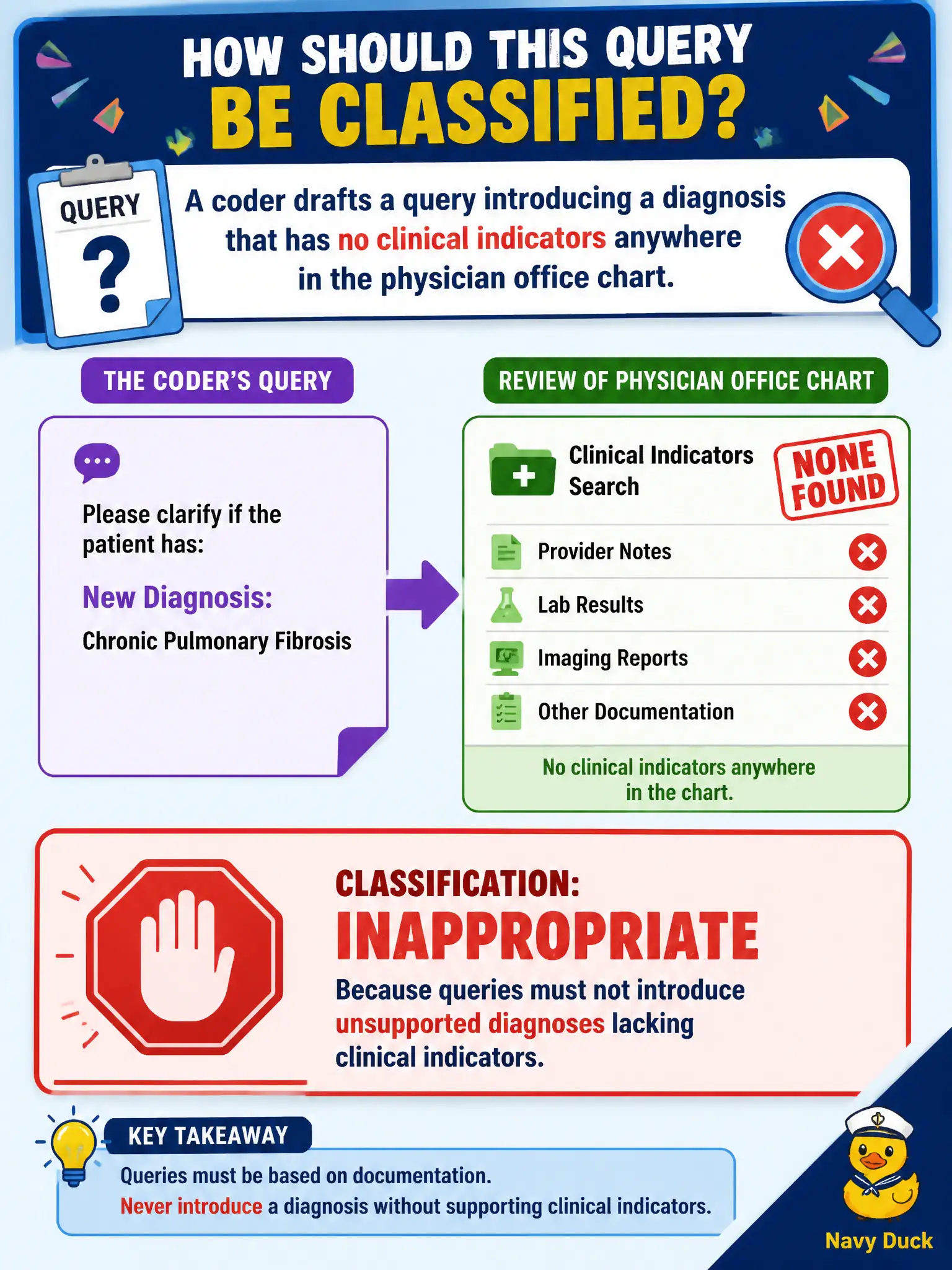
A coder drafts a query introducing a diagnosis that has no clinical indicators anywhere in the physician office chart. How should that query be classified?
Select an answer to reveal the explanation.
Short Explanation
No clues in the chart means no fishing expedition. Queries clarify what the documentation already points toward—they do not plant brand-new diagnoses. Unsupported diagnosis queries are out of bounds.
Full Explanation
Compliant queries seek clarification of conflicting, incomplete, or unclear documentation supported by clinical indicators in the record. Drafting a query that introduces a diagnosis with no clinical indicators anywhere in the physician office chart is inappropriate and can appear to solicit documentation for reimbursement or risk adjustment. Coders in public clinics should refrain from such queries and code only what the encounter documentation supports. Calling the query appropriate because it may invent diagnoses to improve risk scores fails ethical coding and risk-adjustment integrity expectations. Calling it appropriate if the diagnosis appears on a marketing clinical pathway flyer fails because marketing materials are not clinical indicators in the chart. Claiming NCCI requires such queries before any E/M can be billed fails by conflating correct-coding edits with query ethics. Exam caveat: clinical indicators justify asking; absence of indicators means do not plant the diagnosis via query. Operational check: scan the note for objective indicators before drafting, cancel drafts that introduce unsupported conditions, educate staff who request “HCC fishing” queries, and document the refusal rationale in the civic compliance log when pressure persists.