
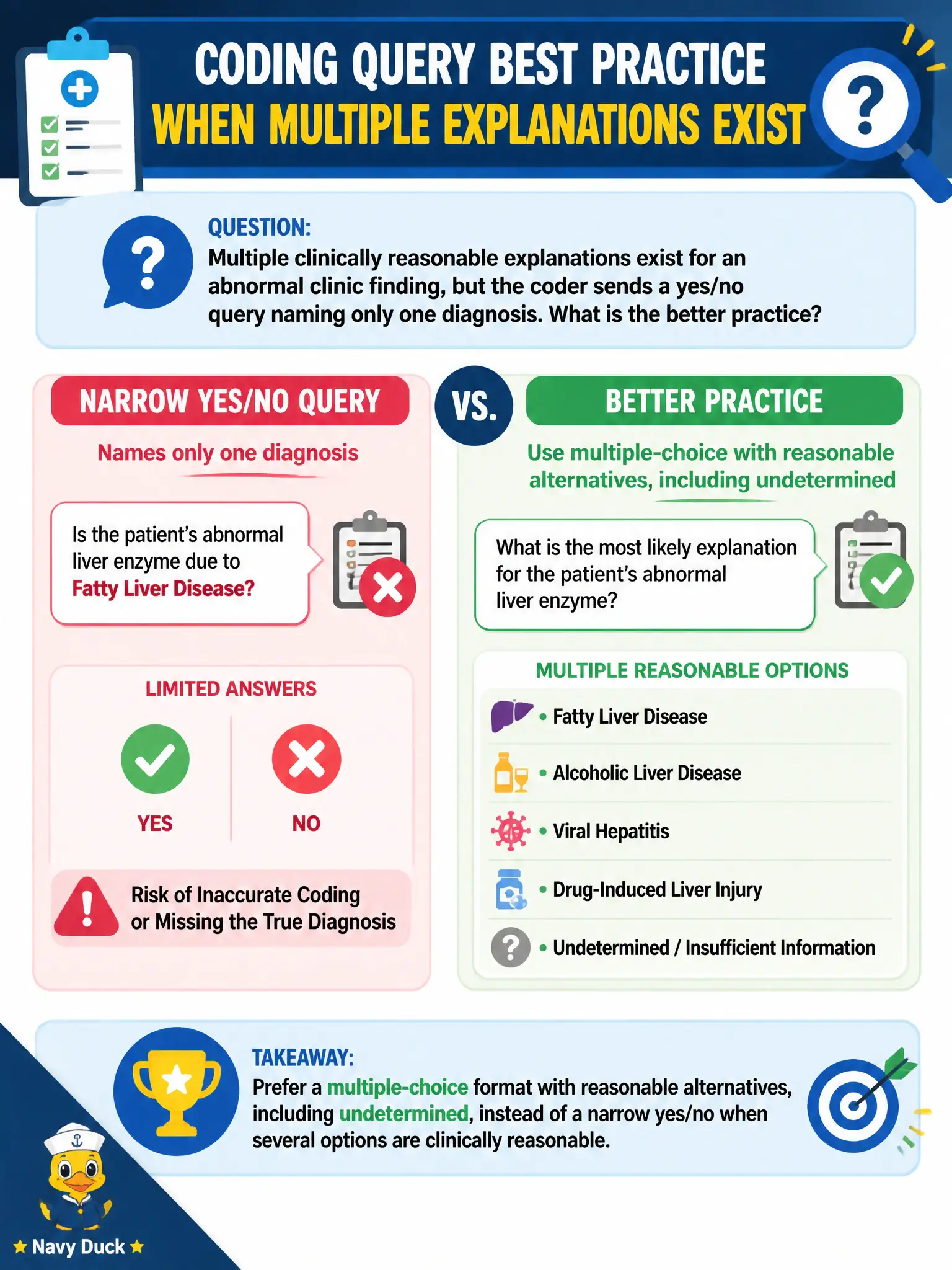
Multiple clinically reasonable explanations exist for an abnormal clinic finding, but the coder sends a yes/no query naming only one diagnosis. What is the better practice?
Select an answer to reveal the explanation.
Short Explanation
Yes/no works when the world really is binary. When several diagnoses could fit, a one-disease yes/no steers the chart. Give real alternatives—including “undetermined”—and keep the query honest.
Full Explanation
Yes/no queries are appropriate only in limited circumstances, such as confirming a specific already-documented item. When multiple clinically reasonable explanations exist for an abnormal civic clinic finding, ethical practice favors a multiple-choice format presenting those options concurrently—including undetermined/cannot be determined—so the provider is not steered toward a single suggested diagnosis. Narrow yes/no wording that introduces one preferred condition is treated as leading. Treating yes/no as always ideal whenever any diagnosis is possible fails query ethics when alternatives exist. Avoiding querying entirely and coding every possible explanation at once fails because speculative multi-coding is not a substitute for clarification. Naming only the highest-paying diagnosis in a yes/no format to save provider time fails as payment-driven leading practice. Exam caveat: yes/no can be acceptable to confirm a discrete documented fact; it is not a shortcut to plant a preferred diagnosis among several reasonable differentials. Operational check: list clinically reasonable options plus undetermined, cite indicators from the note, remove payment language, peer-review the query in the municipal compliance program, and code only from the authenticated response.