
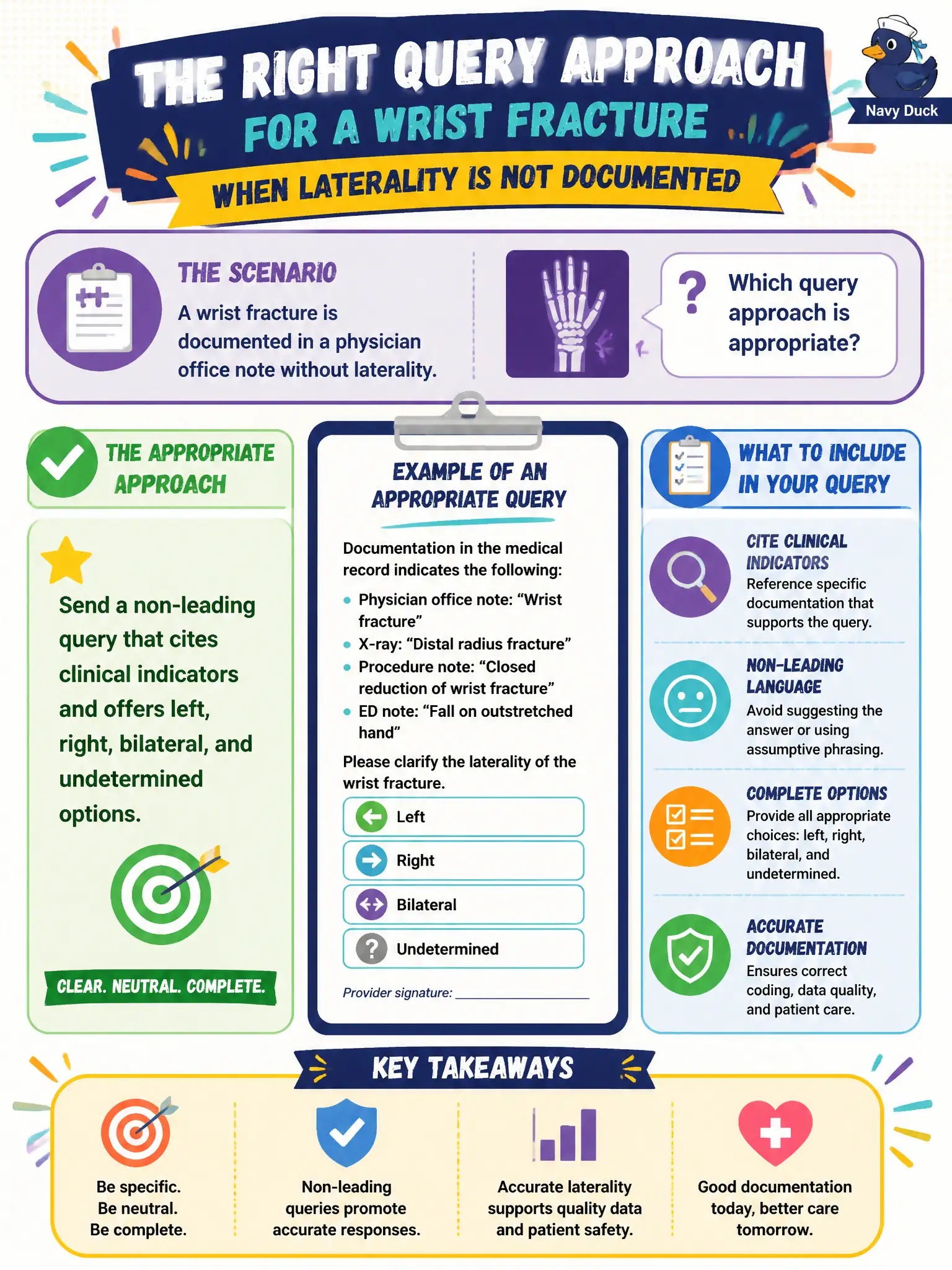
A wrist fracture is documented in a physician office note without laterality. Which query approach is appropriate?
Select an answer to reveal the explanation.
Short Explanation
Missing left/right is fixable—but not by putting the answer in the question. Offer the real choices, include what you see in the chart, and let the provider pick. That is a clean laterality query.
Full Explanation
When laterality is required for specificity and is missing from a physician office note, a compliant query presents reasonable options—such as left, right, bilateral, and undetermined/cannot be determined—along with relevant clinical indicators from the record. For a wrist fracture without laterality in a civic clinic, that non-leading multi-option query is appropriate. Leading yes/no prompts that assert a side are noncompliant. If laterality cannot be obtained, coders use the appropriate unspecified code rather than inventing a side. Asking “This is a right wrist fracture, correct?” fails as a leading yes-only prompt. Assigning bilateral fracture codes by default when laterality is missing fails by fabricating laterality. Omitting any query and always coding unspecified without attempting clarification when indicators exist can miss a legitimate opportunity to improve specificity, though unspecified remains correct if clarification is unavailable. Exam caveat: unspecified is acceptable when the record cannot support laterality after good-faith clarification attempts; inventing laterality is never acceptable. Operational check: draft a laterality query with left/right/bilateral/undetermined options plus imaging/exam indicators, send through the clinic query process, update the code from the response, and retain the query in the municipal HIM record.