
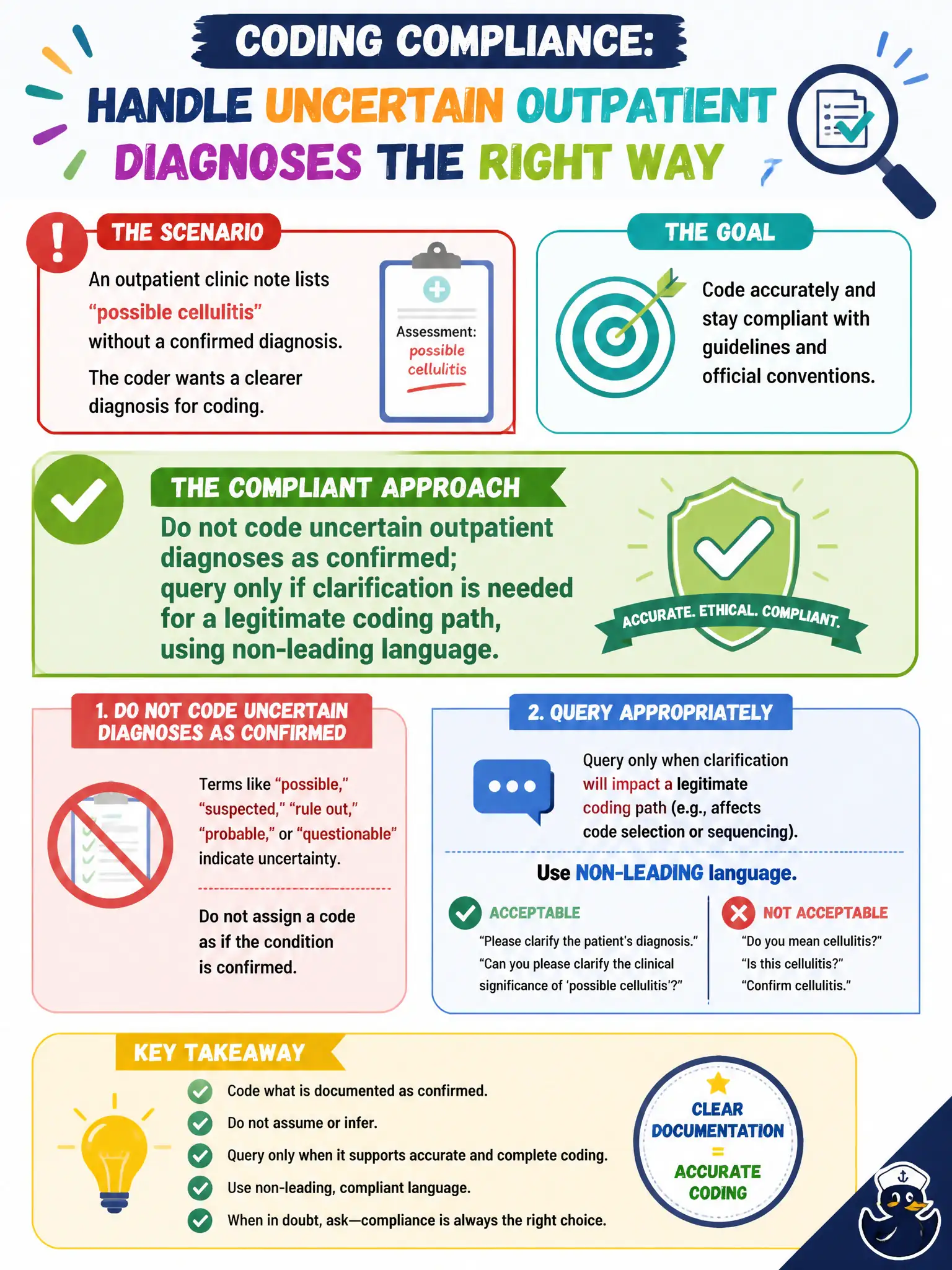
An outpatient clinic note lists “possible cellulitis” without a confirmed diagnosis. The coder wants a clearer diagnosis for coding. Which approach is compliant?
Select an answer to reveal the explanation.
Short Explanation
Outpatient “possible” is not a green light to code the disease as proven. Uncertain diagnoses stay uncoded as confirmed conditions. If you truly need clarity, ask without steering the doctor toward a payday diagnosis.
Full Explanation
Under ICD-10-CM Official Guidelines, uncertain diagnoses described as possible, probable, likely, or similar terms are not coded as if confirmed in outpatient settings. When an outpatient civic clinic note lists “possible cellulitis” without confirmation, the coder does not report confirmed cellulitis; if clarification is needed for a legitimate coding path, the coder queries with non-leading language—or codes signs/symptoms as appropriate when that is the supported reporting path. Queries must never be framed around reimbursement goals. Coding confirmed cellulitis automatically because “possible” always means definite in outpatient settings fails the uncertain-diagnosis outpatient rule. Querying by asking the provider to confirm cellulitis so a higher-weighted diagnosis can be billed fails as a leading, payment-driven query. Replacing “possible cellulitis” with sepsis on the claim fails by inventing a more severe unsupported diagnosis. Exam caveat: inpatient uncertain-diagnosis rules differ from outpatient—do not import inpatient probable/possible conventions onto physician-office claims. Operational check: identify uncertain language, withhold confirmed infection coding, query only with clinical indicators and balanced options if clarification is needed, and educate providers in the county clinic on documenting confirmed impressions when clinically established.