
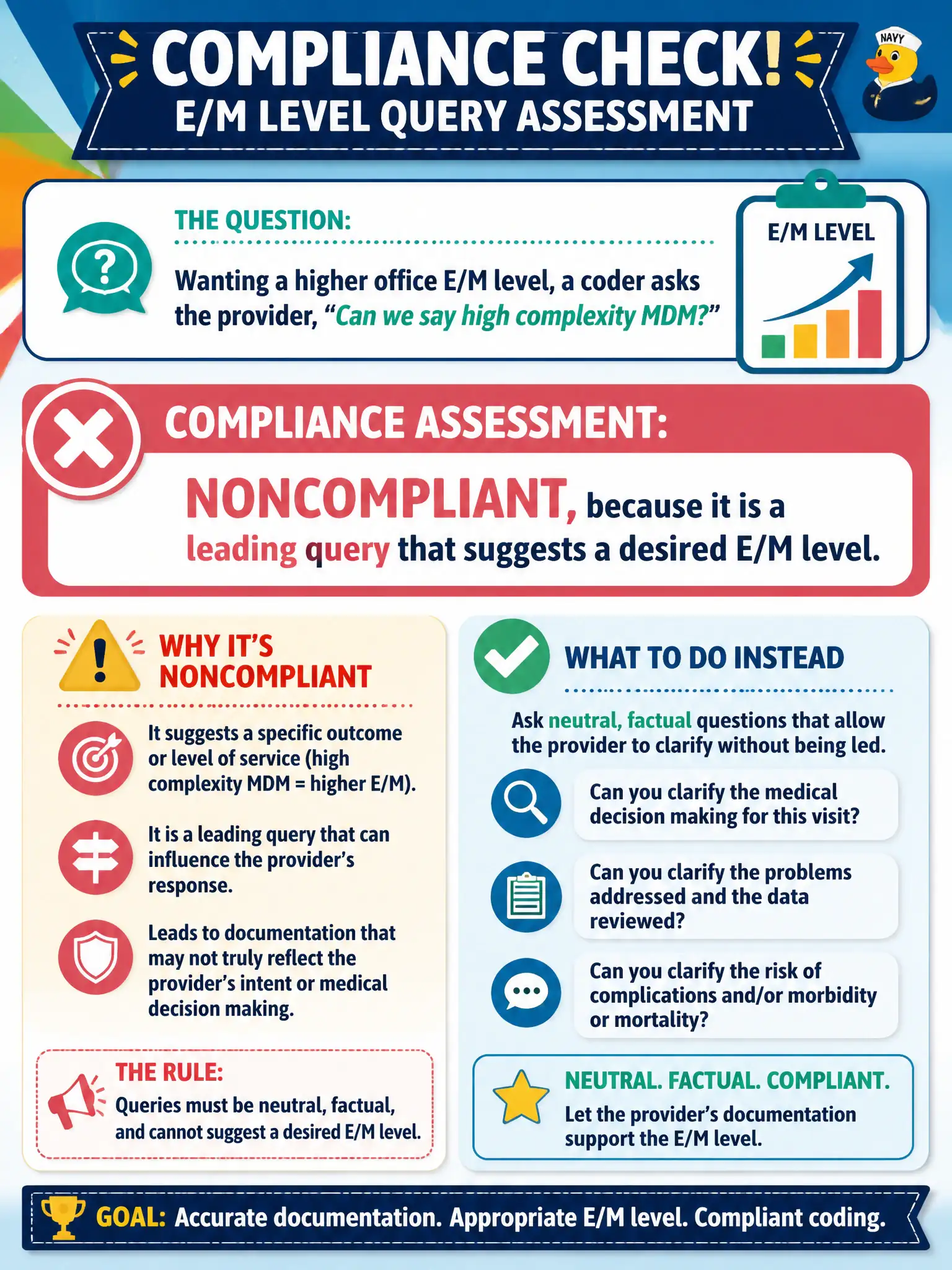
Wanting a higher office E/M level, a coder asks the provider, “Can we say high complexity MDM?” What is the compliance assessment of that query?
Select an answer to reveal the explanation.
Short Explanation
“Can we say high complexity?” is a nudge wearing a question mark. Leading queries that hand the provider the level you want are noncompliant. Ask about the clinical work and decisions—not the code shopping list.
Full Explanation
Ethical query practice prohibits leading questions that introduce or imply a preferred code, diagnosis, or E/M level. Asking “Can we say high complexity MDM?” because the coder wants a higher office E/M level is a noncompliant leading query that steers documentation toward a reimbursement outcome rather than clarifying clinical facts. Appropriate clarification focuses on clinical indicators and decision-making elements already present or needing explanation, without naming the desired billed level as the goal. Calling any revenue-increasing question compliant fails ethical standards. Claiming compliance if a fee schedule is attached fails even more clearly by making payment the query’s centerpiece. Saying E/M queries are never subject to ethical query standards fails—E/M clarification is fully within query ethics. Exam caveat: you may ask about problems addressed, data reviewed, or risk of management options; you may not ask the provider to endorse a target E/M level. Operational check: rewrite E/M clarifications around clinical elements (problems/data/risk or time), remove level-seeking language, peer-review queries in the civic compliance program, and score query quality in coder QA.