
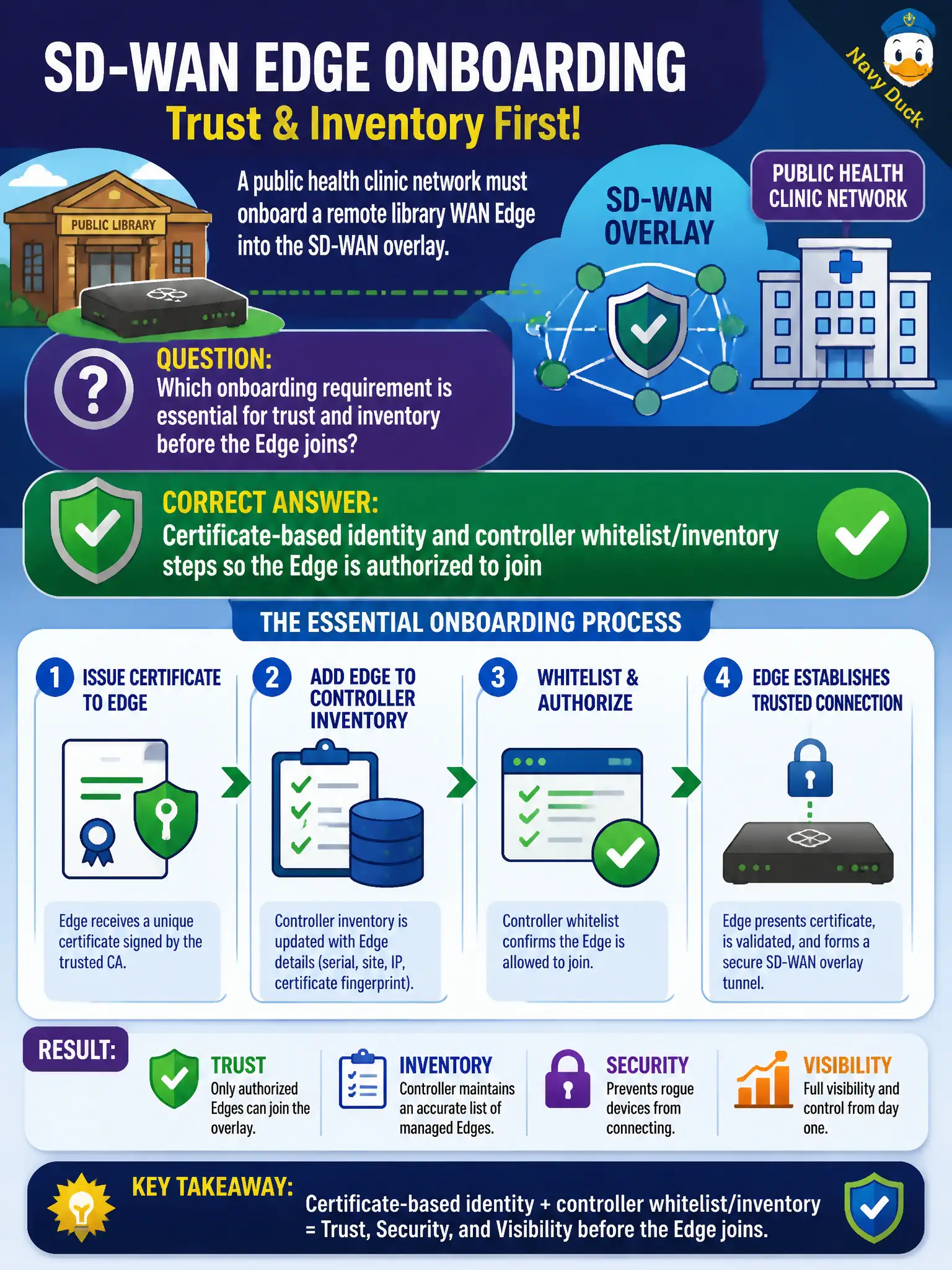
A public health clinic network must onboard a remote library WAN Edge into the SD-WAN overlay. Which onboarding requirement is essential for trust and inventory before the Edge joins?
Select an answer to reveal the explanation.
Short Explanation
Onboarding is the badge check at the civic door: the Edge proves who it is with certificates and shows up on the approved inventory list before anyone lets it into the overlay. Skipping trust and whitelisting is like propping the door open. Turning a library router into a vSmart is the wrong job entirely.
Full Explanation
Onboarding a remote library WAN Edge into a public-health clinic SD-WAN overlay requires certificate-based identity and controller whitelist/inventory steps so the Edge is authorized to join. Trust and inventory before join protect the civic overlay from unauthorized devices.
Publishing the Edge enable password in a public DNS TXT record leaks credentials and is not an onboarding trust model.
Disabling all DTLS so tunnels come up without authentication removes control-plane security.
Configuring the library Edge as a vSmart so it can push policies to clinics misassigns controller roles to a branch Edge.
Exam caveat: organization name, cert chain, and vBond reachability (including NAT/DNS) are common first-contact failure points.
Operational check: install/authorize the Edge certificate, whitelist serial in vManage, complete vBond onboarding, and confirm control connections. Check the library Edge into the health-district SD-WAN inventory CMDB. In municipal operations, record the rationale in the change ticket so future on-call staff know which control was chosen and which failure modes the rejected options would create for city services. Re-validate after the next maintenance window that the same control still holds under the platform code and policy revisions used by the civic network team.