
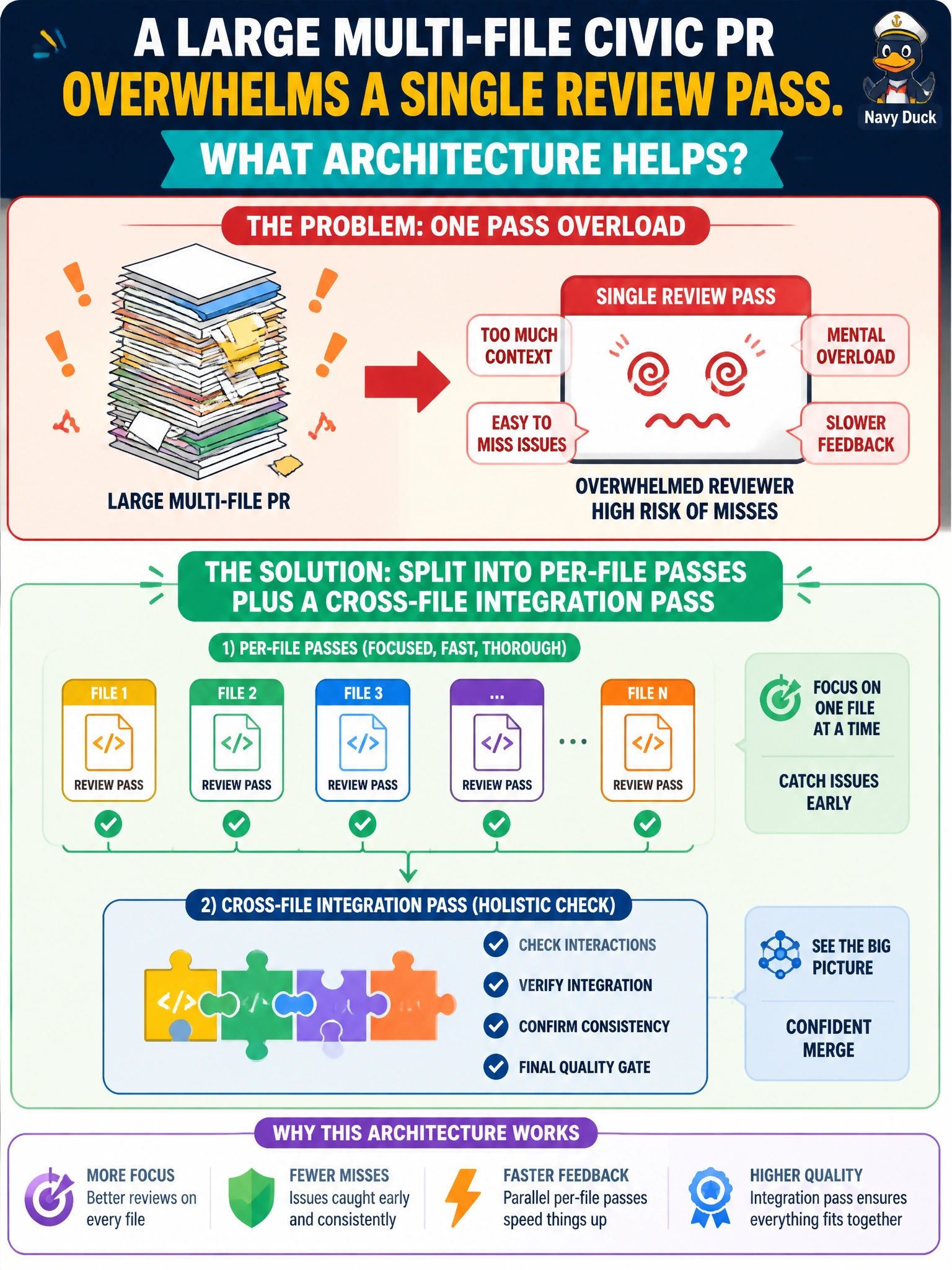
A large multi-file civic PR overwhelms a single review pass. What architecture helps?
Select an answer to reveal the explanation.
Short Explanation
Big PRs are a buffet—plate each dish, then check how they sit together. Per-file passes plus an integration pass beat one overloaded glance.
Full Explanation
A large multi-file civic pull request overwhelms a single unstructured review pass: attention dilutes, findings contradict, and cross-file contracts are missed. A stronger architecture splits work into per-file passes plus a dedicated cross-file integration pass. Per-file passes keep local defects visible; the integration pass examines APIs, shared fee helpers, and data flow across the permitting or housing change set. One mega-pass that mixes every file without structure invites shallow skimming and inconsistent severity labels that frustrate developers. Reviewing only the first file and ignoring cross-file risks leaves the most expensive municipal bugs—broken callers, mismatched schemas, authz gaps—unchecked while giving false confidence from a partial look. Disabling review findings when PRs exceed three files abandons quality precisely when complexity peaks and when regression risk to resident-facing services is highest. Exam caveat: multi-pass designs need a consolidation step so duplicate or conflicting findings are reconciled before they hit developers. Operational check: for PRs above a file threshold, schedule per-file reviews, then an integration review focused on cross-module contracts, and require that integration findings are visible in the merge gate alongside local ones.