
Verification passes for permit extracts need to route human review wisely. What should accompany findings?
Select an answer to reveal the explanation.
Short Explanation
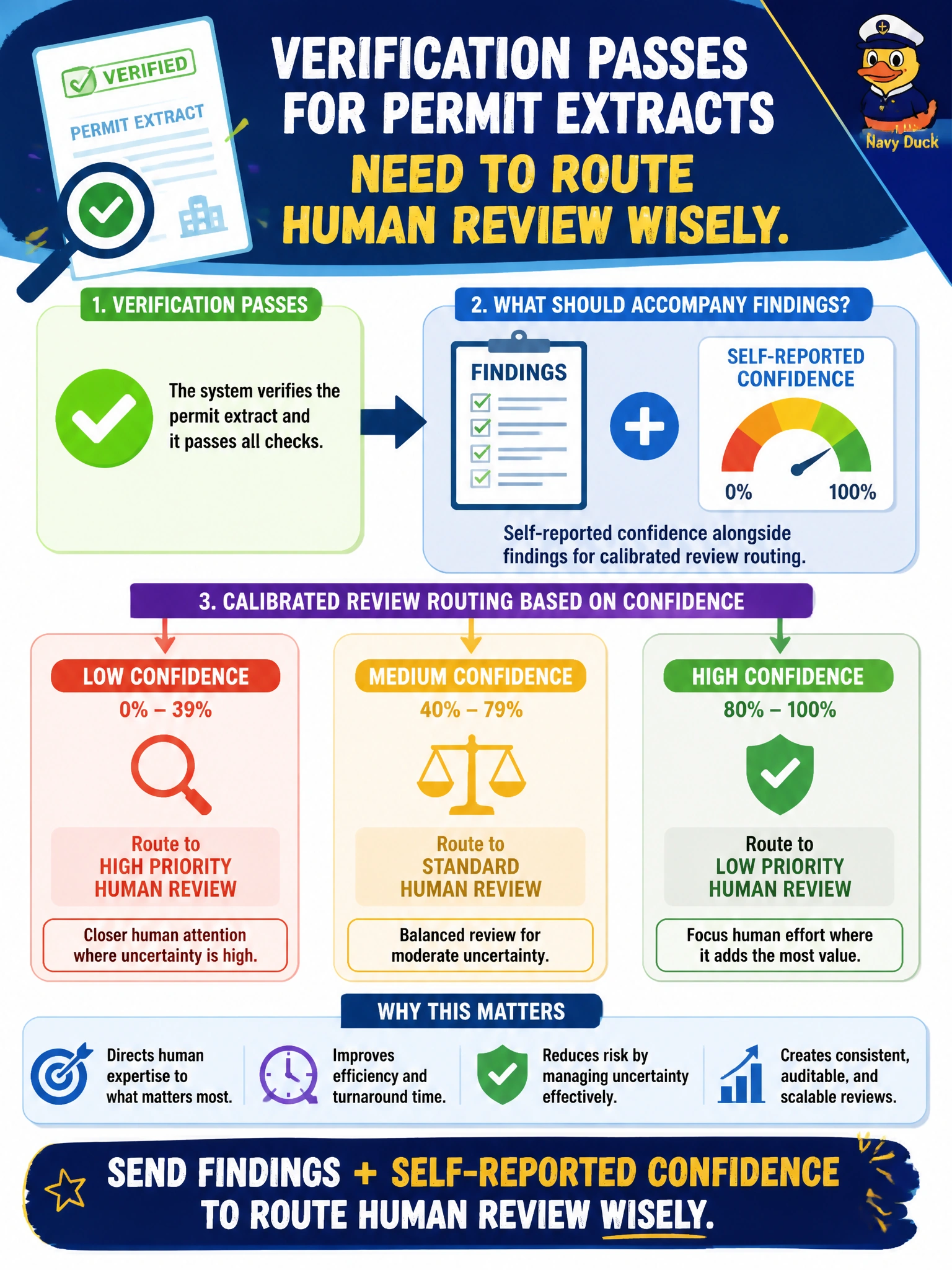
Attach a how-sure-are-we sticker to each finding so clerks get the shaky ones first. Confidence beside findings routes review smarter.
Full Explanation
Verification passes for municipal permit extracts should accompany findings with self-reported confidence so human review can be routed by risk rather than by random order or binary panic. Confidence metadata lets clerks prioritize shaky grantor names, ambiguous fee lines, or low-certainty square footage while light-touching high-confidence boilerplate. That calibration stretches limited staff without pretending automation is finished. Only a binary pass/fail with no confidence signal forces uniform handling and wastes expert attention on easy cases. Confidence scores that replace all human review forever overclaim what self-reported certainty can do—models can be confidently wrong on civic documents. Findings without any self-reported confidence metadata leave triage blind and push either everything or nothing to humans. Exam caveat: treat confidence as a routing feature, not as ground truth; calibrate thresholds on labeled municipal samples and watch for overconfidence on OCR-degraded pages. Operational check: log confidence with each finding, route below-threshold items to clerks first, periodically compare confidence to human overturn rates, and retune thresholds when calibration drifts.