
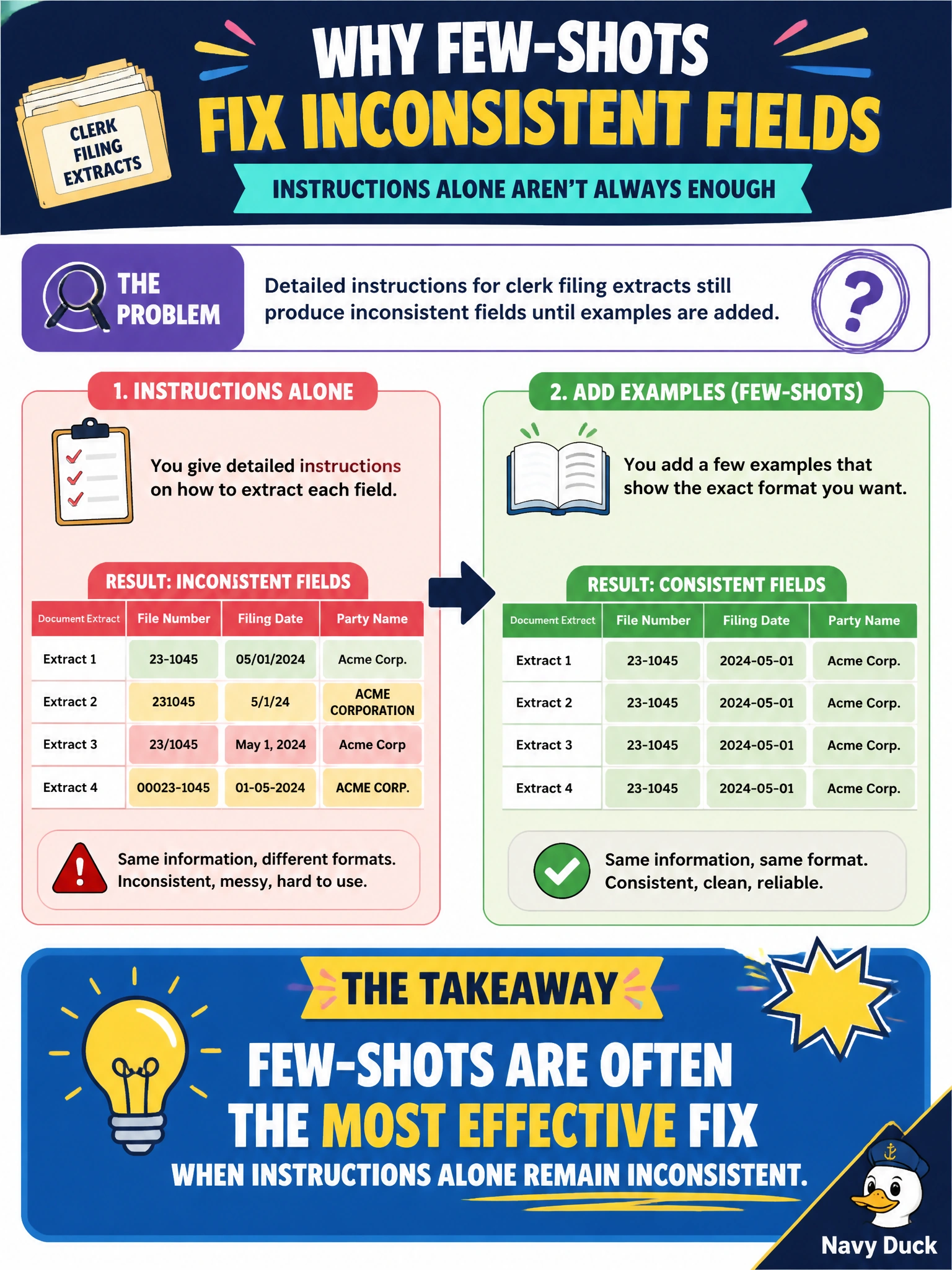
Detailed instructions for clerk filing extracts still produce inconsistent fields until examples are added. What does that illustrate?
Select an answer to reveal the explanation.
Short Explanation
You can write a three-page recipe and still botch the pie until someone shows you a finished slice. When instructions wobble, few-shots are usually the fix that sticks.
Full Explanation
Detailed instructions for clerk filing extracts that still yield inconsistent fields until examples are added illustrate a common prompt-engineering result: few-shots are often the most effective fix when instructions alone remain inconsistent. Showing completed extracts teaches field boundaries, null handling, and formatting that paragraphs of rules fail to pin down for varied municipal filings.
Claiming instructions alone are always more effective than any few-shot set fails against the stem and against practice—examples frequently outperform more rule text once rules already exist. Saying few-shots cannot help once instructions exist fails logically; instructions and examples are complementary, and examples often supply the missing grounding. Asserting clerk filings never benefit from example-based prompting fails domain-specifically: clerk documents are exactly where layout variety makes exemplars valuable.
Exam caveat: few-shots usually win when instructions plateau; poorly chosen examples can still bias extracts, so curate representative filings rather than one oddball packet. Operational check: keep the instruction block, add two to five gold extracts, compare field consistency metrics before/after, and only then expand instructions further if gaps remain.