
Open-data findings for a parks briefing omit publication dates. What risk does that create, and what should travel with findings?
Select an answer to reveal the explanation.
Short Explanation
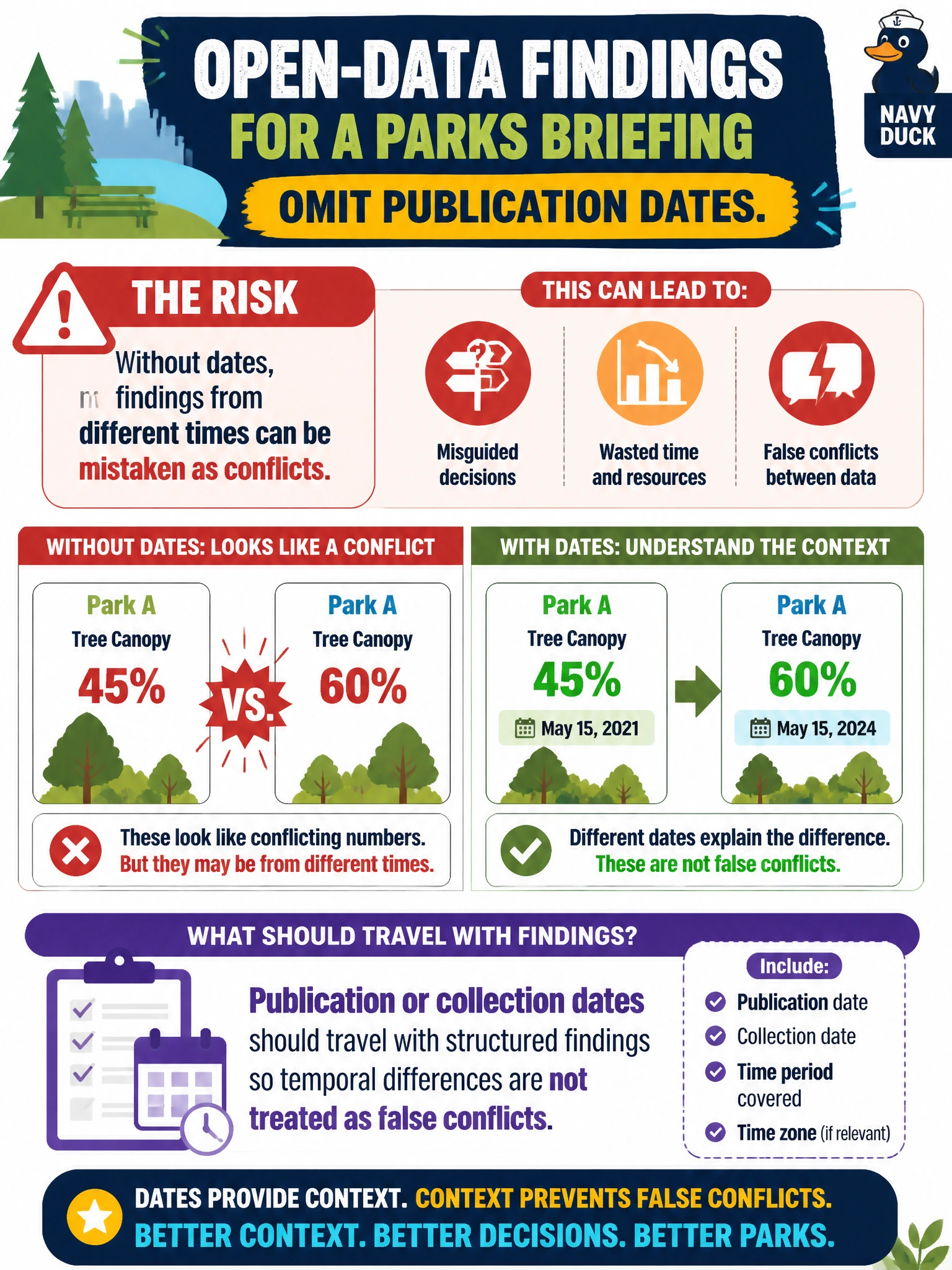
Last year's headcount isn't fighting this year's—check the date stamps. Carry publication dates so "conflict" isn't just time travel.
Full Explanation
Open-data findings for a parks briefing that omit publication or collection dates create a false-conflict risk: numbers from different years look like contradictory facts. Publication or collection dates should travel with structured findings so temporal differences are not treated as permanent factual contradictions.
Carrying dates works because civic indicators change—acreage, visitation, budget actuals—and time stamps let synthesis order series, prefer fresher official releases, or explain why two seeming conflicts are actually a trend. Dates are part of the evidence for municipal open-data briefs, not optional metadata to strip for token savings.
Claiming dates are irrelevant and only numeric values matter fails because a 2019 headcount is not fighting a 2024 headcount as if both were timeless truth. Stripping dates to shrink context and force a single timeless number fails because it manufactures false certainty. Treating any numeric difference as a permanent factual contradiction fails because it ignores time and method and over-escalates ordinary updates into disputes.
Exam caveat: missing dates should be marked unknown—not silently dropped—so readers see dating gaps in the parks packet. Operational check: in structured parks findings, require publication/collection date fields alongside values; when comparing numbers, check dates before declaring a conflict.