
How should a final civic research brief present certainty?
Select an answer to reveal the explanation.
Short Explanation
Put the solid bricks in one pile and the debated ones in another, with a note on how you looked. Readers deserve that map.
Full Explanation
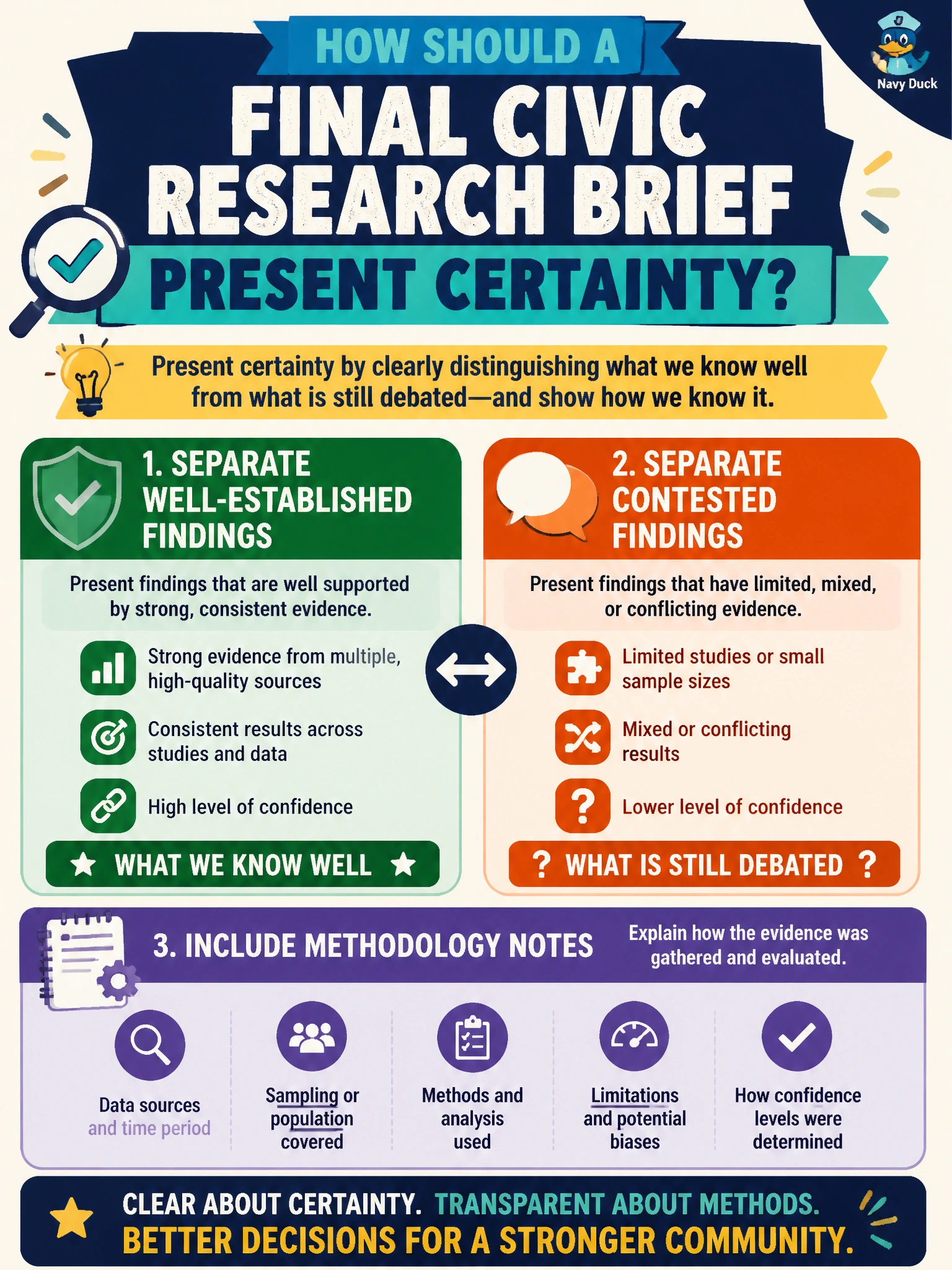
A final civic research brief should present certainty by separating well-established findings from contested ones and including methodology notes. Readers—council staff, department heads, the public—need a map of what is solid versus what remains debated, plus how the team looked.
Separation plus methodology works because blending everything into one voice invents false consensus. Established findings (multi-source, recent, official) can support firmer recommendations; contested items need hedges, dual figures, or follow-up research calls. Methodology notes explain search scope, source classes, and known gaps so municipal audiences can judge confidence themselves.
Blending established and contested claims into one undifferentiated list fails because it hides uncertainty. Presenting every claim as equally settled regardless of evidence fails because it overclaims. Hiding methodology so readers cannot judge confidence fails because transparency is part of civic analytical quality.
Exam caveat: contested does not mean discard—retain contested items with labels and sources rather than deleting inconvenient uncertainty from the brief. Operational check: structure the final brief with established versus contested sections (or tags) and a short methods note covering sources used, date range, and gaps.