
A city codebase agent crashes mid-exploration. How should recovery be designed?
Select an answer to reveal the explanation.
Short Explanation
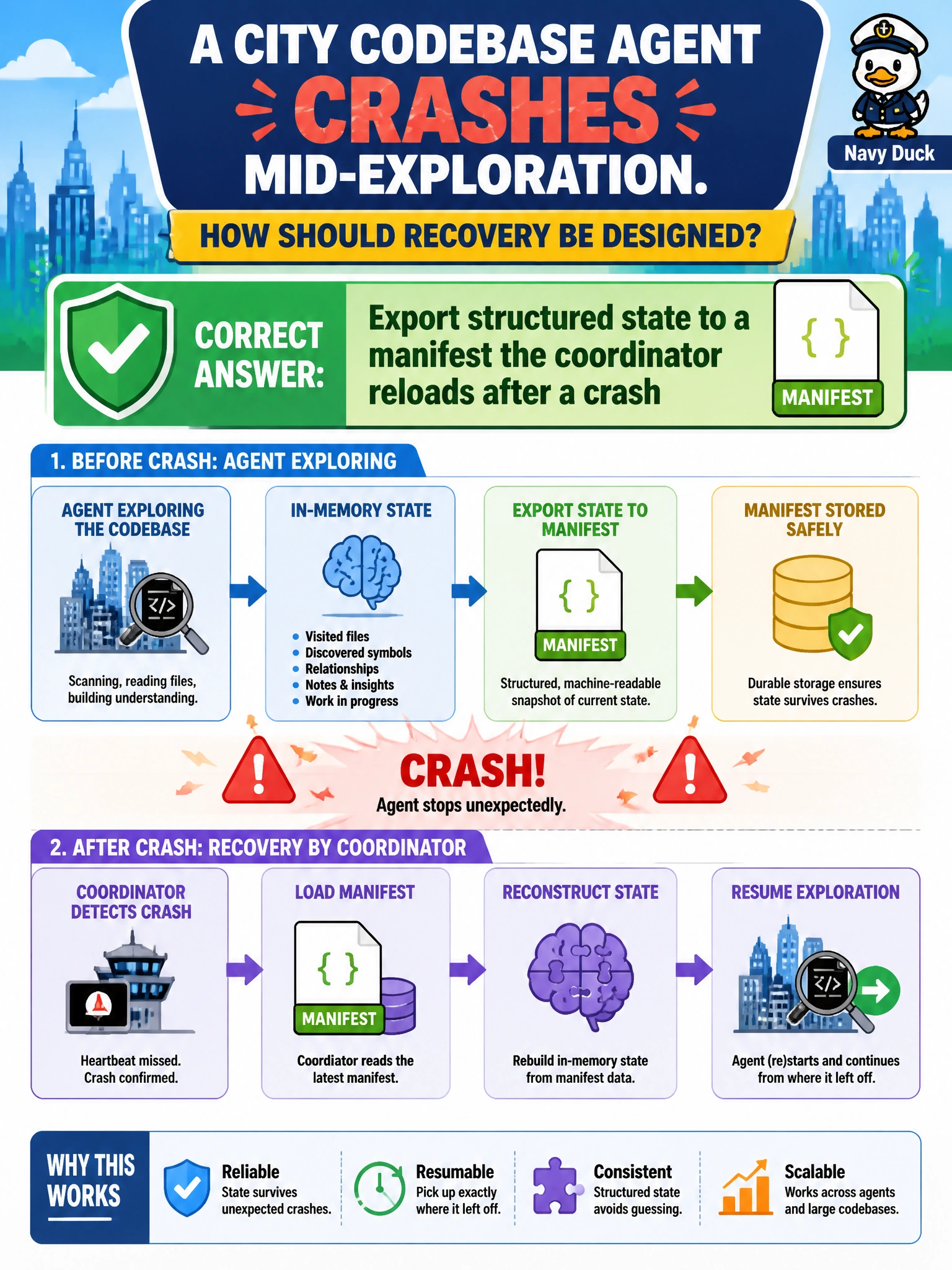
Save a checklist of where you were before the lights went out. A structured manifest lets the coordinator pick up after a crash.
Full Explanation
When a city codebase agent crashes mid-exploration, recovery should reload structured state from a manifest the coordinator exported before or during the tour. The manifest captures completed files, open questions, key findings, and next targets so work resumes instead of restarting from ignorance.
Exporting structured state works because crashes are expected on long municipal codebase tours; durable manifests turn an interruption into a resume point. The coordinator reloads the manifest, skips finished branches, and continues with preserved findings rather than rediscovering from scratch.
Restarting with a blank slate and no exported state fails because it wastes prior exploration and can reintroduce already-dismissed false leads. Relying only on the incomplete chat transcript without a manifest fails because transcripts are noisy, truncated, and hard to parse into actionable progress. Assuming the crash never happened and continuing from random files fails because it loses ordering, duplicates work, and may contradict earlier conclusions.
Exam caveat: manifests should be structured (JSON or similar), not just leftover prose in a broken session log. Operational check: periodically write exploration progress to a reloadable manifest; after any crash, load that file first and resume from recorded next targets.