
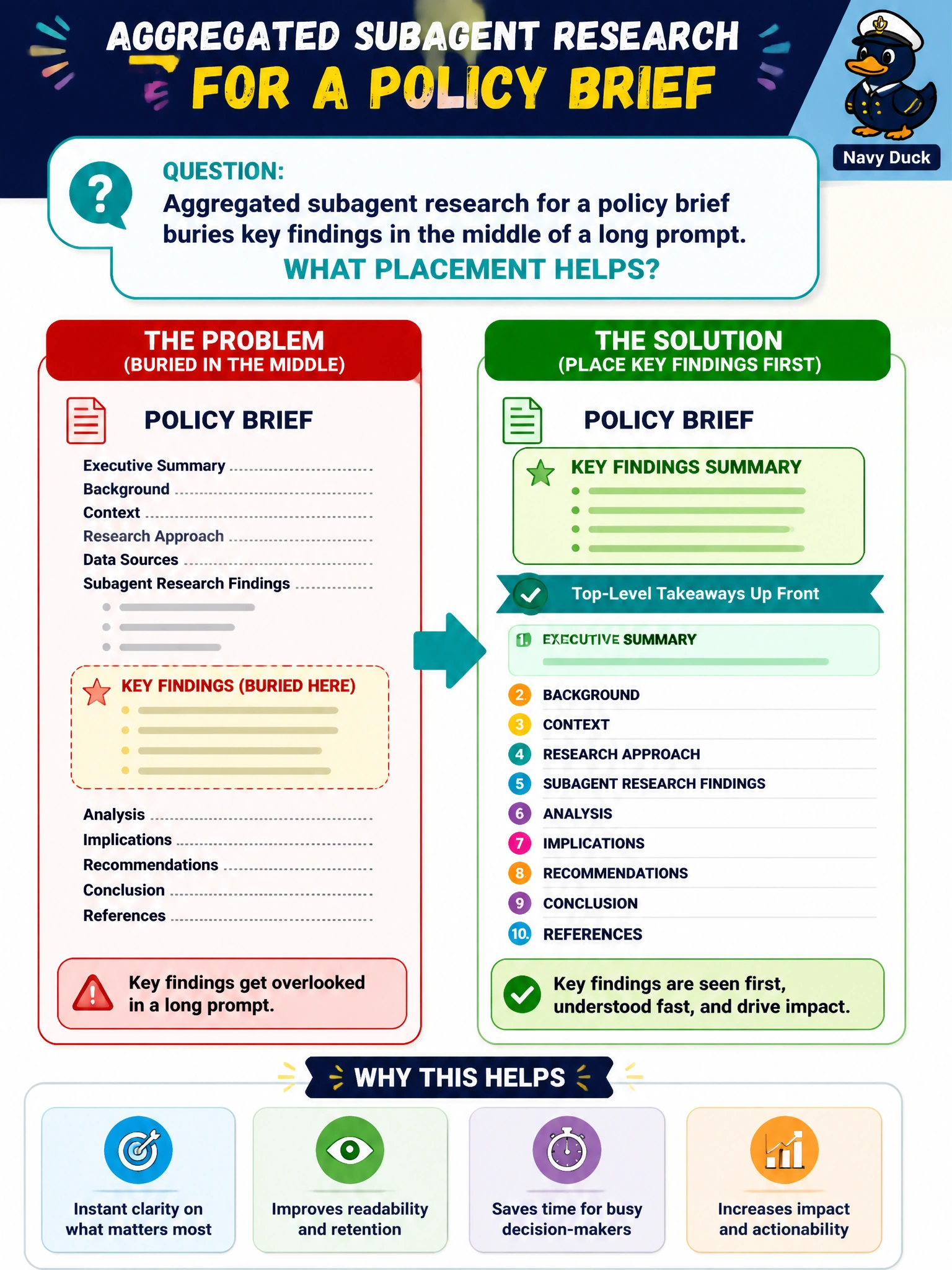
Aggregated subagent research for a policy brief buries key findings in the middle of a long prompt. What placement helps?
Select an answer to reveal the explanation.
Short Explanation
Put the headlines up front—models get lost in the middle of a long pile. Key findings at the beginning with headers keep the coordinator sharp.
Full Explanation
Aggregated subagent research for a municipal policy brief often buries key findings in the middle of a long coordinator prompt, where models are likelier to underweight them. Place key findings summaries at the beginning with clear section headers so the coordinator attends to evidence before optional detail, methodology notes, or raw excerpts. Structure and primacy mitigate lost-in-the-middle effects in civic research synthesis. Hiding key findings only in the middle without headers maximizes the failure mode the question describes and produces briefs that omit the very points subagents were hired to surface. Removing all findings so the coordinator has no evidence avoids mid-prompt burial by destroying the research product and leaving leadership without supportable recommendations. Randomizing finding order each turn to maximize surprise actively harms consistency and reproducibility of policy briefs across reviewers. Exam caveat: early placement helps attention but does not replace citation quality or contradictory-evidence handling. Operational check: assemble a long multi-subagent packet both mid-buried and header-first, compare whether the coordinator cites the same critical findings, and standardize on early headers plus a short executive findings block for municipal brief workflows.