
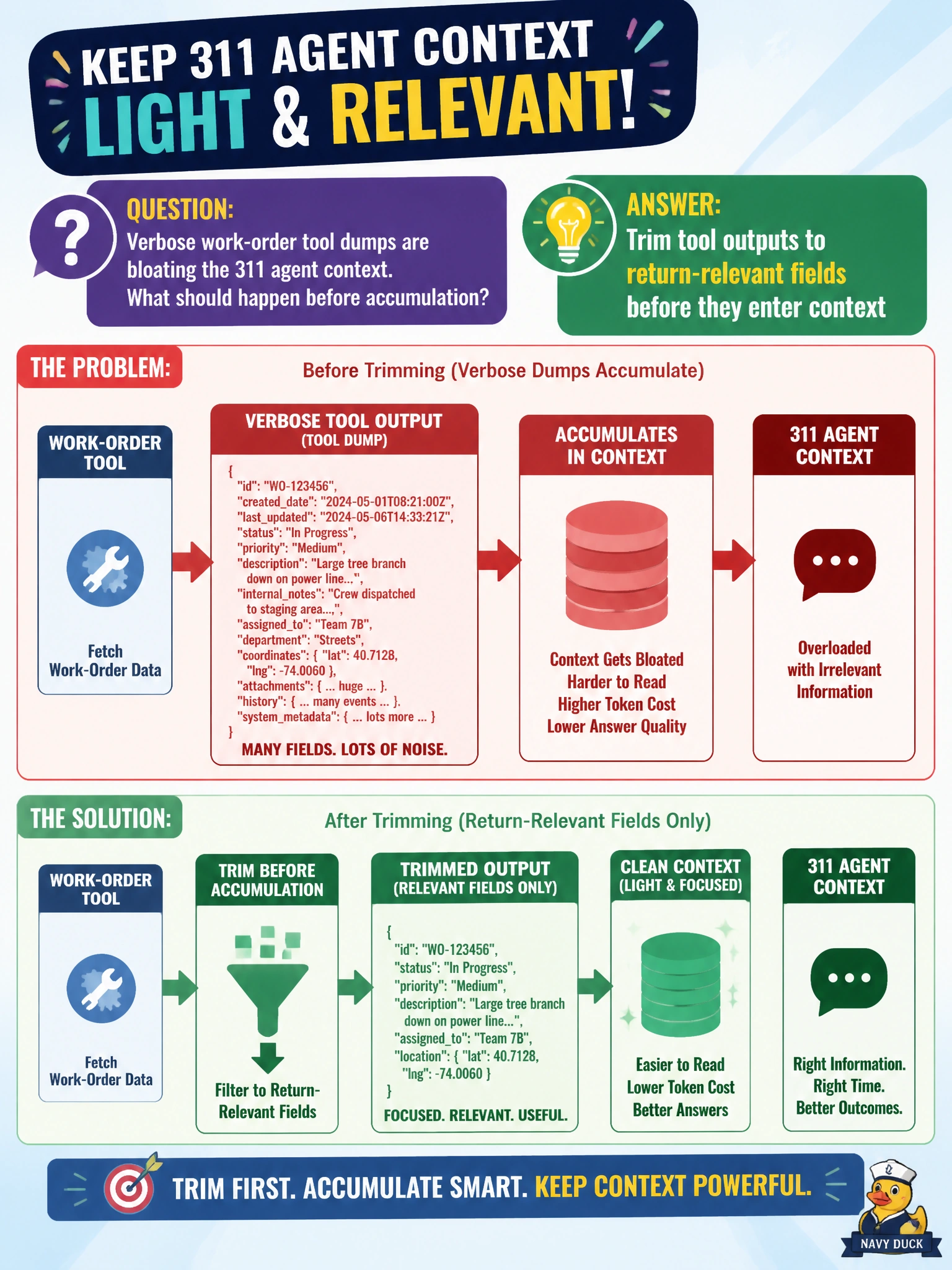
Verbose work-order tool dumps are bloating the 311 agent context. What should happen before accumulation?
Select an answer to reveal the explanation.
Short Explanation
Don't haul the whole warehouse inventory when you only needed the aisle number—trim tool dumps to the fields that matter before they pack the context.
Full Explanation
Verbose work-order tool dumps bloat 311 agent context and crowd out dialogue, case facts, and policy snippets that actually drive the next action. Before accumulation, trim tool outputs to return-relevant fields—status, IDs, scheduled windows, assignee—so only operationally useful data enters the window. Selection at the tool boundary is cheaper than trying to recover budget after the dump lands. Pasting full vendor dumps unfiltered into every subsequent turn maximizes noise and accelerates lost-in-the-middle failures on civic agents handling multiple resident issues. Disabling tools so no operational data can be retrieved avoids bloat by crippling the agent; work orders then cannot be checked at all and clerks lose automation value. Storing every raw byte forever without selection treats context as infinite and degrades long municipal sessions until critical facts fall out of the window. Exam caveat: trimming must preserve fields required for audit and handoff; over-aggressive filters can hide the one status code clerks need. Operational check: define an allowlist of work-order fields for context ingestion, compare token use and task success before and after trimming, and confirm escalations still include enough detail for human takeover.