
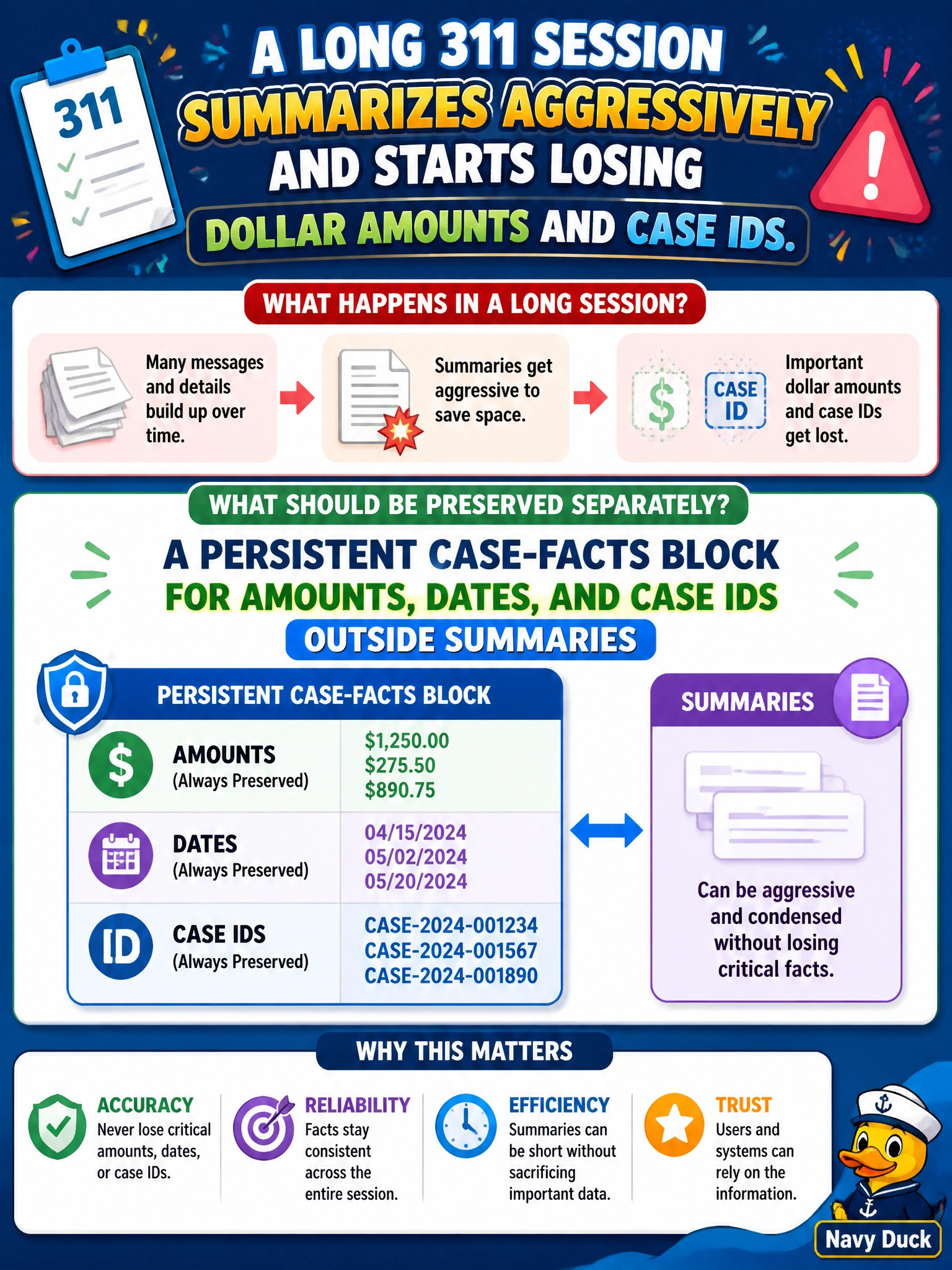
A long 311 session summarizes aggressively and starts losing dollar amounts and case IDs. What should be preserved separately?
Select an answer to reveal the explanation.
Short Explanation
Don't let the tidy summary erase the ticket number and dollar amounts—park those in a sticky case-facts block. Summaries shrink; facts must stick.
Full Explanation
Long 311 sessions that summarize aggressively tend to drop dollar amounts, dates, and case IDs—the transactional facts residents and clerks need for continuity. Those identifiers should be preserved in a persistent case-facts block outside progressive summarization so summaries can shrink dialogue while facts remain durable across turns. Mixing summarization with fact storage without a separate block invites silent loss as context pressure rises. Keeping only stylistic chat tone with no transactional identifiers produces polite but useless continuity when a resident asks about a balance or ticket. Progressive summaries that drop amounts, dates, and case IDs optimize for brevity at the expense of case integrity and force awkward rediscovery. Relying on nothing durable and forcing the resident to restate every fact each turn shifts burden onto the public and guarantees drop-off and transcription errors. Exam caveat: case-facts blocks must be updated carefully on corrections so stale amounts do not outrank newer resident statements. Operational check: after forced summarization in a long 311 transcript, verify amounts, dates, and case IDs still resolve from the case-facts block, and add tests that fail the agent if summarization deletes those fields.