
Before building a cache for parcel lookups, the team wants Claude to surface invalidation tradeoffs. What pattern helps?
Select an answer to reveal the explanation.
Short Explanation
Before you dig a parcel-cache cistern, ask where the overflow goes. The interview pattern has Claude poke at invalidation modes and other design gotchas first.
Full Explanation
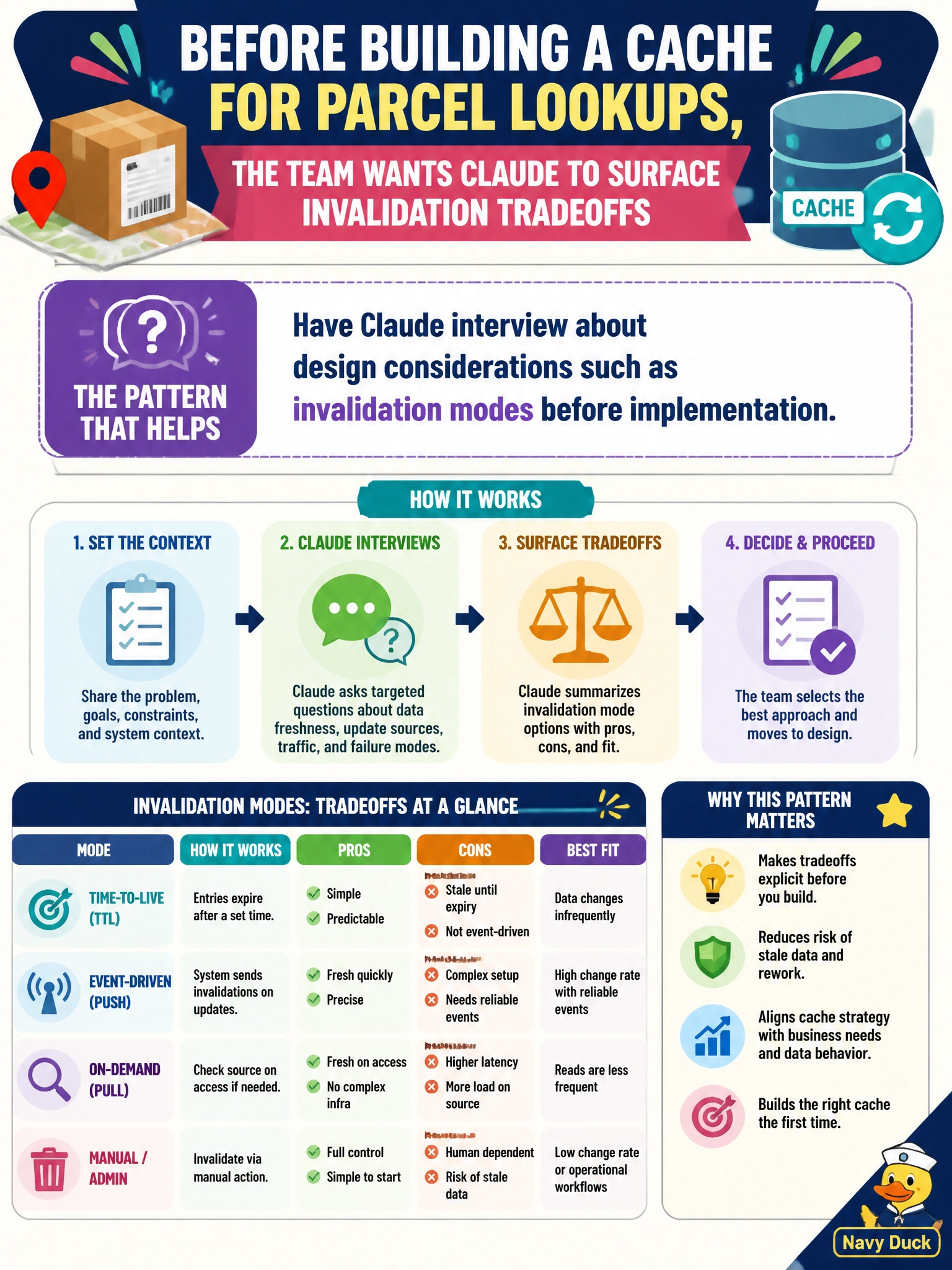
Before building a cache for parcel lookups, having Claude interview about design considerations such as invalidation modes before implementation helps surface stale-read and consistency tradeoffs while change is still cheap. The interview pattern is deliberate design dialogue prior to Write calls.
Interviewing works because parcel caches can fail civic workflows through stale assessments, wrong ownership displays, or inconsistent map overlays if invalidation is naive. Asking Claude to probe TTL versus event-driven invalidation, key granularity, and failure modes clarifies requirements the team might skip when rushing to implement. Design answers then constrain the cache implementation.
Implementing the cache immediately with no discussion of stale-read risks fails by skipping the hazard that makes parcel caching hard. Storing cache keys only in user-level CLAUDE.md for one developer fails because cache design is a shared architectural concern, not personal notes. Forbidding any questions and requiring a single irreversible Write call fails by concept: it blocks clarifying design and forces premature commitment.
Exam caveat: the interview pattern precedes implementation; it does not replace tests or production monitoring for cache correctness. Operational check: before coding the parcel cache, run a design interview covering invalidation modes and stale-read risks, record decisions, then implement against those constraints.