
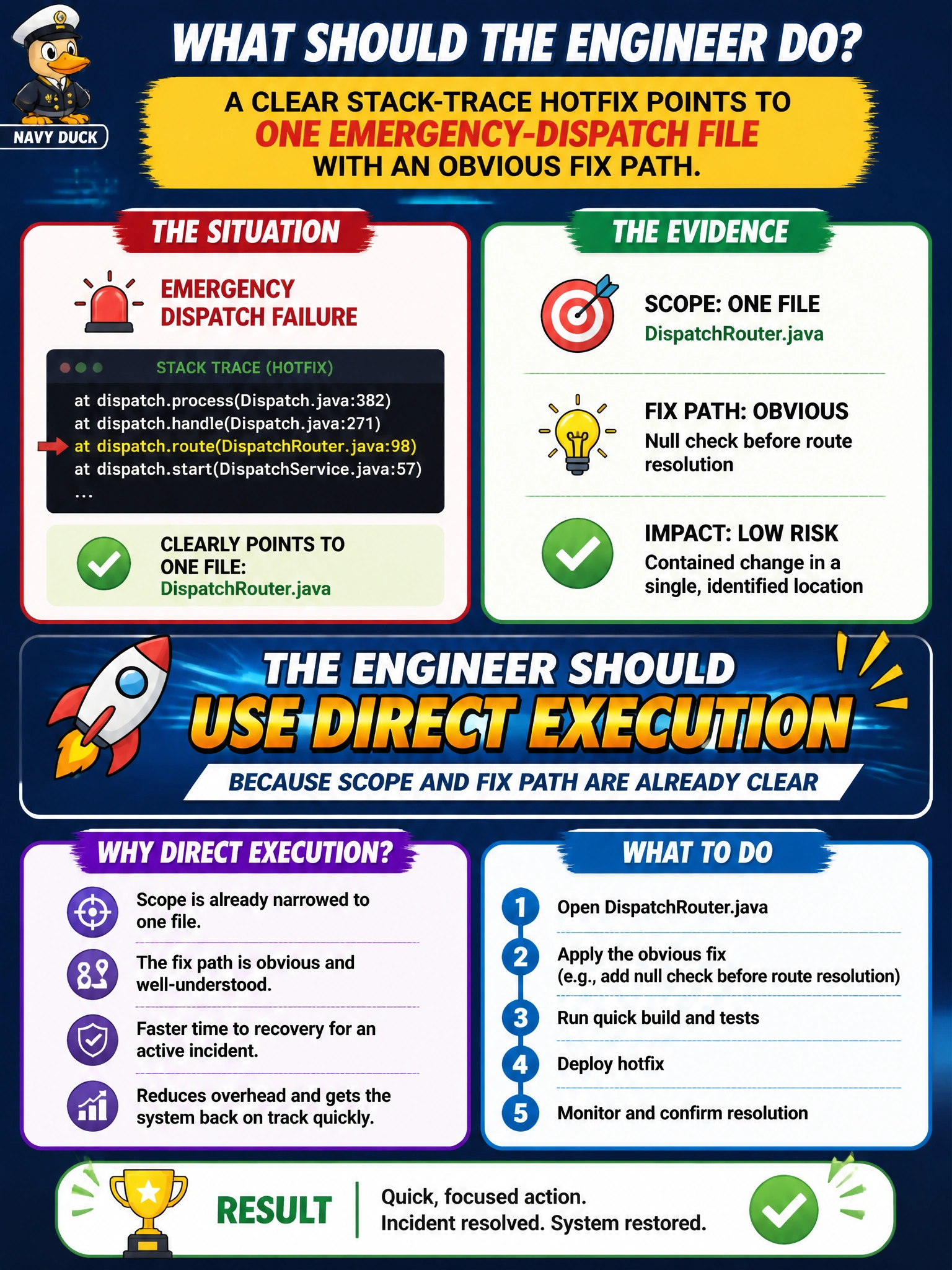
A clear stack-trace hotfix points to one emergency-dispatch file with an obvious fix path. What should the engineer do?
Select an answer to reveal the explanation.
Short Explanation
Stack trace lights up one dispatch file and the fix is obvious—that's a firefighter with the hydrant in sight. Direct execution; skip the citywide planning parade.
Full Explanation
When a clear stack-trace hotfix points to one emergency-dispatch file with an obvious fix path, the engineer should use direct execution because scope and fix path are already clear. Hotfix urgency plus evidential clarity make planning overhead the wrong default.
Direct execution works here because the stack trace localizes the defect, the emergency-dispatch file is identified, and the remediation path is obvious. Applying the fix quickly restores dispatch correctness for city operations while still allowing normal review and tests on the small change set.
Opening an unbounded plan mode session covering unrelated payroll modules fails by expanding scope away from the evidenced hotfix and delaying emergency response. Requiring argument-hint on CLAUDE.md before any hotfixes are allowed fails by concept: argument-hint is skill-invocation guidance, not a gate on CLAUDE.md or hotfix policy. Blocking all file edits until a new MCP server is designed from scratch fails because MCP design is orthogonal to a localized stack-trace fix in an existing dispatch file.
Exam caveat: stack-trace clarity is a direct-execution signal; do not invent process gates from unrelated features like argument-hint or MCP. Operational check: confirm the stack trace file and fix, patch via direct execution, run dispatch tests, and avoid opening a multi-module plan for unrelated systems.