
After the team agrees on a planned SIS migration sequence, what is the sensible next Claude Code step?
Select an answer to reveal the explanation.
Short Explanation
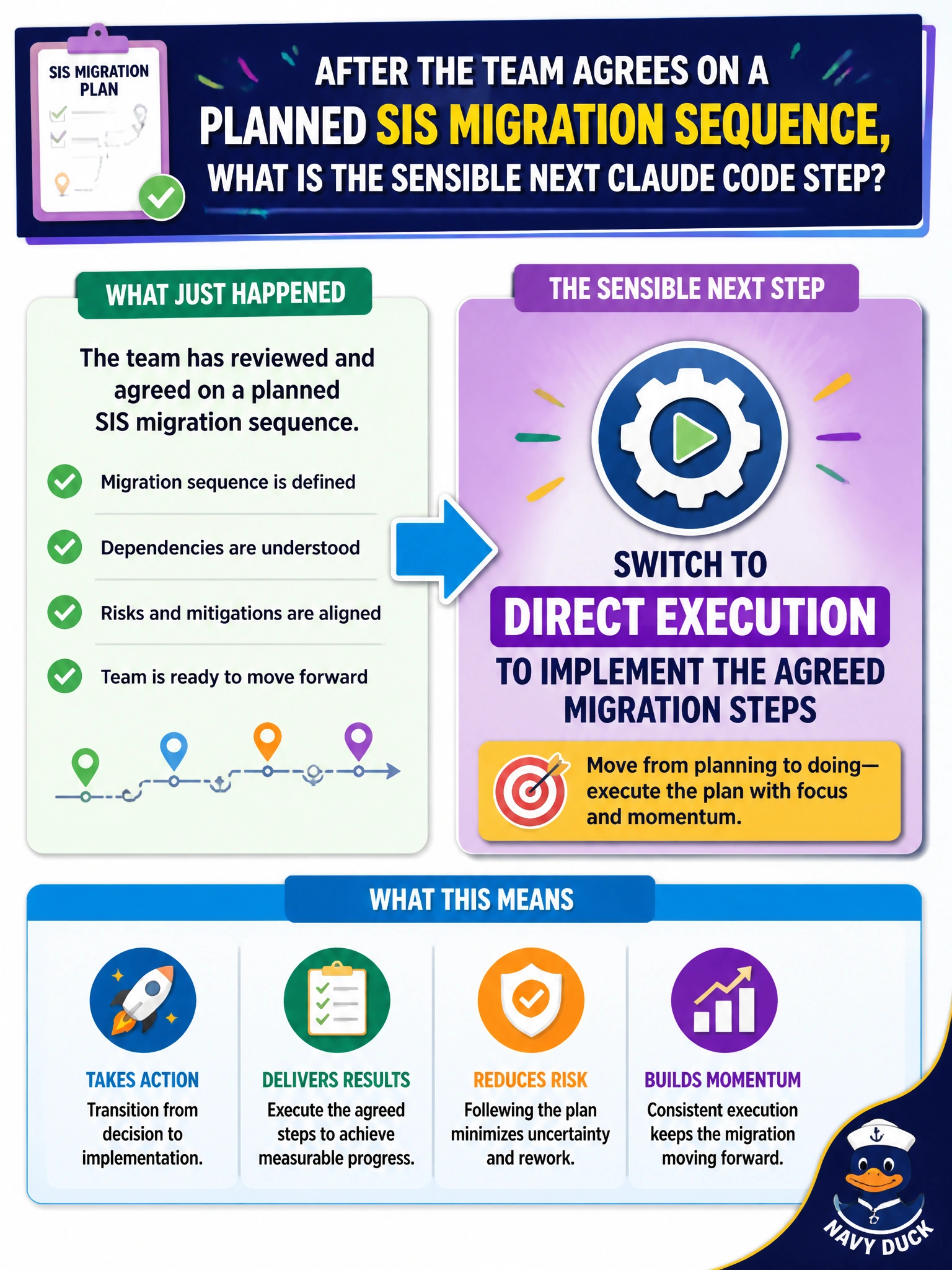
Once the migration map is taped to the wall, stop re-planning every hallway—walk the route. Switch to direct execution for the steps everyone already signed.
Full Explanation
After the team agrees on a planned SIS migration sequence, the sensible next Claude Code step is to switch to direct execution to implement the agreed migration steps. Plan mode did its job; continued planning without implementation stalls delivery.
Switching to direct execution works because the sequencing risks that justified planning are now resolved into an agreed path. Engineers should apply the SIS migration steps under project standards, run tests, and review diffs against the plan rather than re-litigating the approach indefinitely. Plan-then-execute is the intended pairing for complex civic migrations.
Remaining in plan mode indefinitely and never applying the agreed edits fails by treating planning as the deliverable. Discarding the plan and randomly reordering migration steps mid-flight fails because it reintroduces the sequencing risk the plan removed. Moving standards out of the repo so execution ignores civic conventions fails by concept: implementation should still obey CLAUDE.md and rules; leaving plan mode does not mean abandoning municipal guardrails.
Exam caveat: agreement is the handoff signal from plan mode to direct execution—not a cue to strip project configuration. Operational check: after SIS plan sign-off, exit plan mode, implement the sequenced steps, and verify each step still matches the written plan and repo standards.