
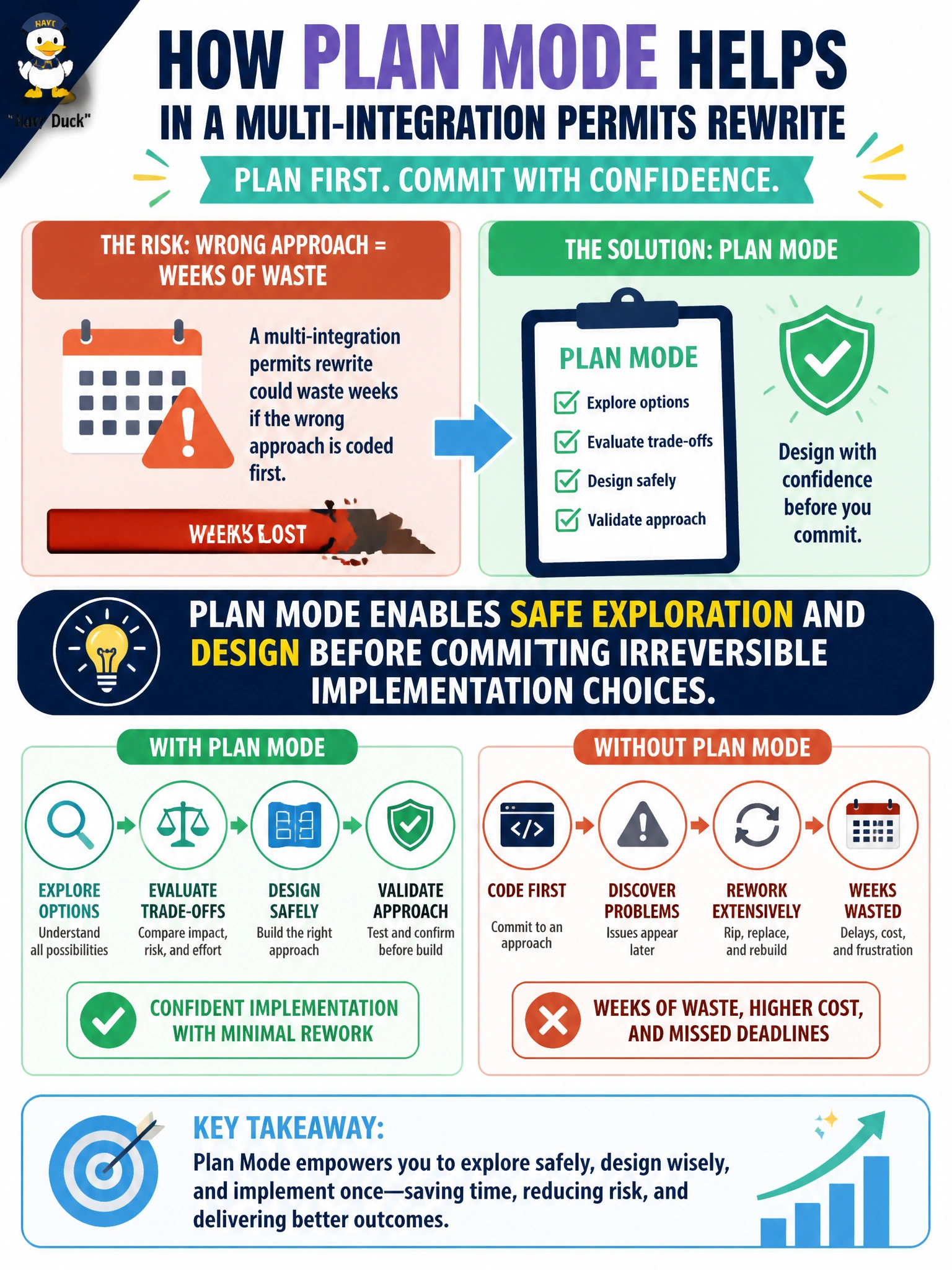
A multi-integration permits rewrite could waste weeks if the wrong approach is coded first. How does plan mode help?
Select an answer to reveal the explanation.
Short Explanation
Wrong permits architecture coded first is like pouring the wrong foundation—expensive to jackhammer out. Plan mode lets you walk the site and pick the design before concrete trucks arrive.
Full Explanation
A multi-integration permits rewrite that could waste weeks if the wrong approach is coded first benefits from plan mode because it enables safe exploration and design before committing irreversible implementation choices. Planning is cheap relative to ripping out the wrong integration architecture.
Plan mode helps by letting the team compare integration patterns, failure handling, and rollout sequencing against municipal constraints without writing production permits code yet. Exploring in plan mode preserves option value: wrong turns stay on the whiteboard instead of in merged services, partner contracts, and data mappings.
Plan mode does not disable version control so failed approaches cannot be rolled back—that distractor invents a false side effect. It does not automatically merge unfinished branches into production nightly. It does not replace human review with unconditional approve-all hooks; civic permits changes still need review, and plan mode is about design sequencing, not rubber-stamping.
Exam caveat: plan mode reduces commitment risk; it is not a substitute for VCS, CI, or human approval. Operational check: before coding the multi-integration permits rewrite, use plan mode to select and document the approach, then implement only after that design checkpoint.