
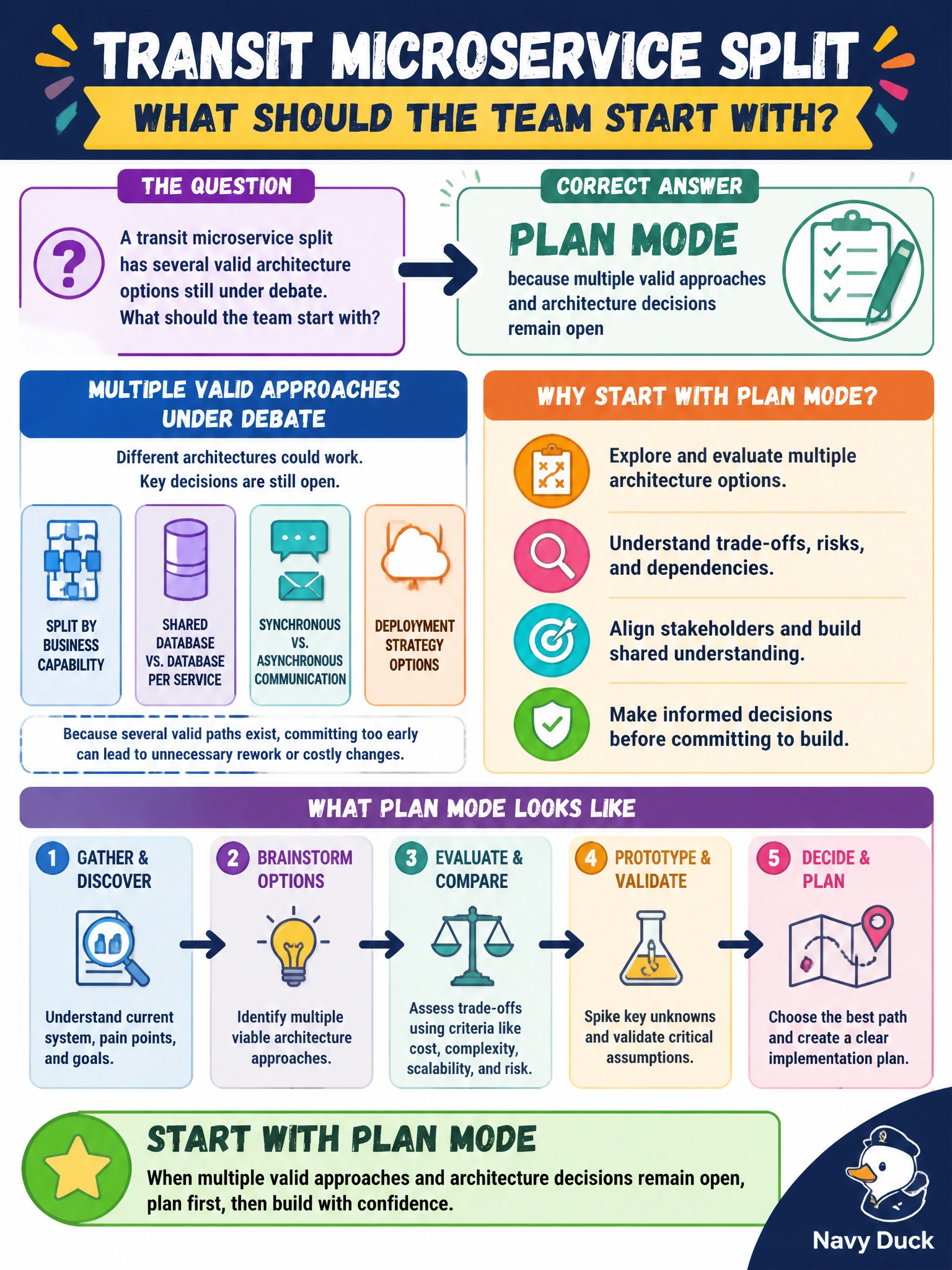
A transit microservice split has several valid architecture options still under debate. What should the team start with?
Select an answer to reveal the explanation.
Short Explanation
When three bus-route splits all look plausible, you sketch before you tear up asphalt. Plan mode is that sketching board for open architecture calls.
Full Explanation
A transit microservice split with several valid architecture options still under debate should start in plan mode because multiple valid approaches and architecture decisions remain open. Plan mode is the mode for comparing designs before irreversible service cuts.
Plan mode works when options are still live: shared database versus separate stores, sync versus async boundaries, API gateway placement, and rollout order can all be "valid" until constraints are weighed. Designing first lets the transit team document tradeoffs, pick a direction, and align with municipal standards before code forks the services.
Direct execution that implements the first idea that appears in chat fails by locking in an accidental choice among several valid designs. Deleting competing design notes so only one option remains undocumented fails because suppressing alternatives is not the same as reasoned selection and harms auditability. Forcing a skill with allowed-tools Bash to rewrite services without discussion fails by concept: tool permission to run Bash is not an architecture decision process.
Exam caveat: open architectural debate is a plan-mode trigger even if each option looks implementable. Operational check: list the candidate transit split approaches in plan mode, record the chosen design and rationale, then execute only after agreement.