
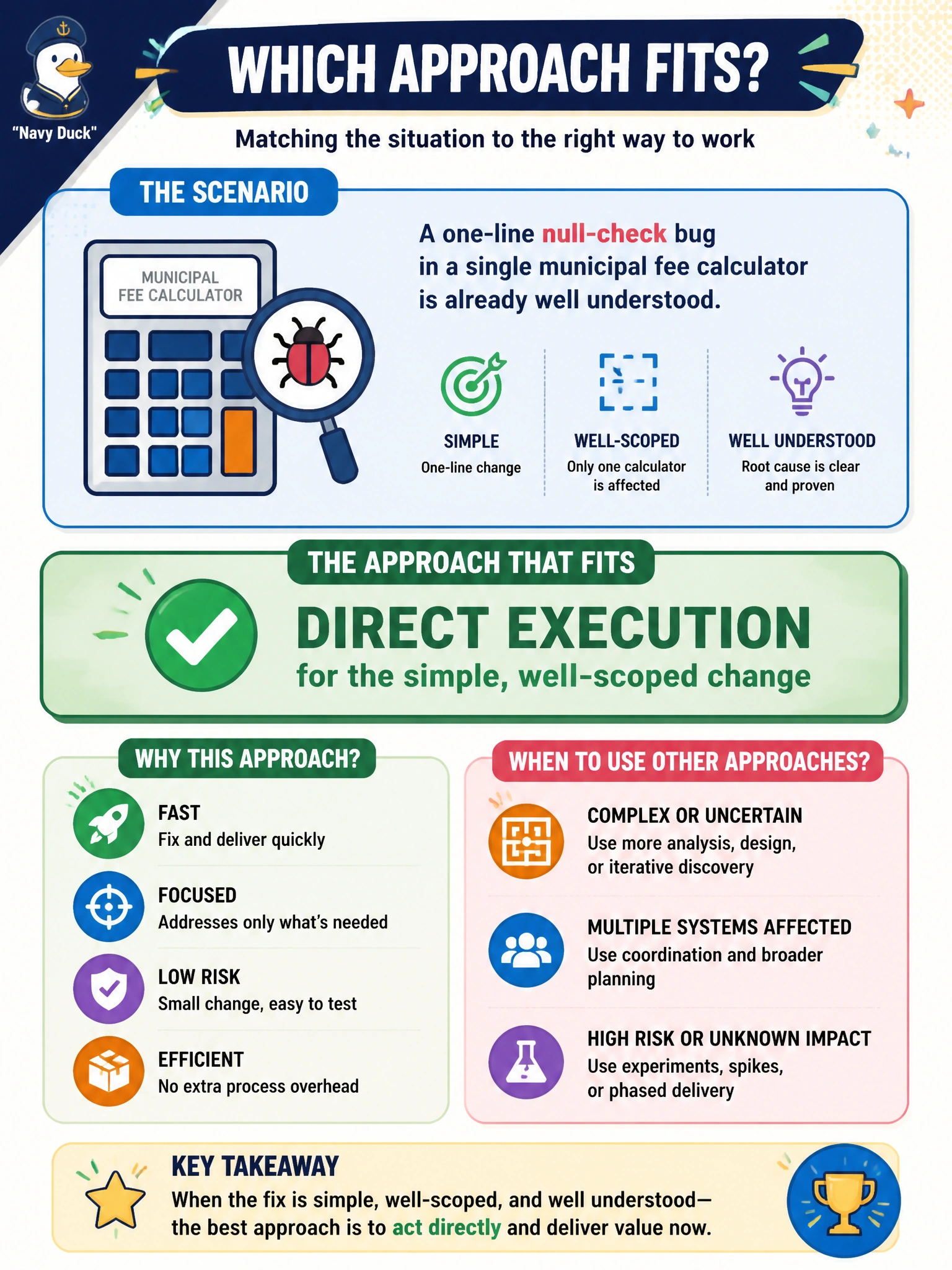
A one-line null-check bug in a single municipal fee calculator is already well understood. Which approach fits?
Select an answer to reveal the explanation.
Short Explanation
One clear null check in one fee file is a quick patch on a pothole—you don't redesign the whole street map. Direct execution fits simple, well-scoped work.
Full Explanation
A one-line null-check bug in a single municipal fee calculator that is already well understood fits direct execution for the simple, well-scoped change. When the defect, file, and fix path are clear, Claude Code should apply the patch without ceremony.
Direct execution works because overhead should match uncertainty. A known null check in one fee calculator does not present architectural forks, multi-file sequencing risk, or discovery needs. Implementing immediately keeps the billing path corrected quickly while still respecting project CLAUDE.md conventions during the edit.
A multi-day plan mode workshop before touching the null check fails by over-planning a trivial, already-understood fix and delaying fee correctness for residents. Spawning parallel Explore agents across the entire monorepo first fails because broad discovery is unnecessary when the bug location is known. Rewriting CLAUDE.md hierarchy instead of fixing the calculator fails by concept: configuration hierarchy is unrelated to the null-check defect and does not remediate the fee bug.
Exam caveat: direct execution is for clear, narrow fixes; plan mode is for uncertain multi-file or architectural work—do not invert them. Operational check: confirm the null-check location and expected behavior, apply the one-line fix via direct execution, and run the fee calculator tests without opening a migration-scale plan.