
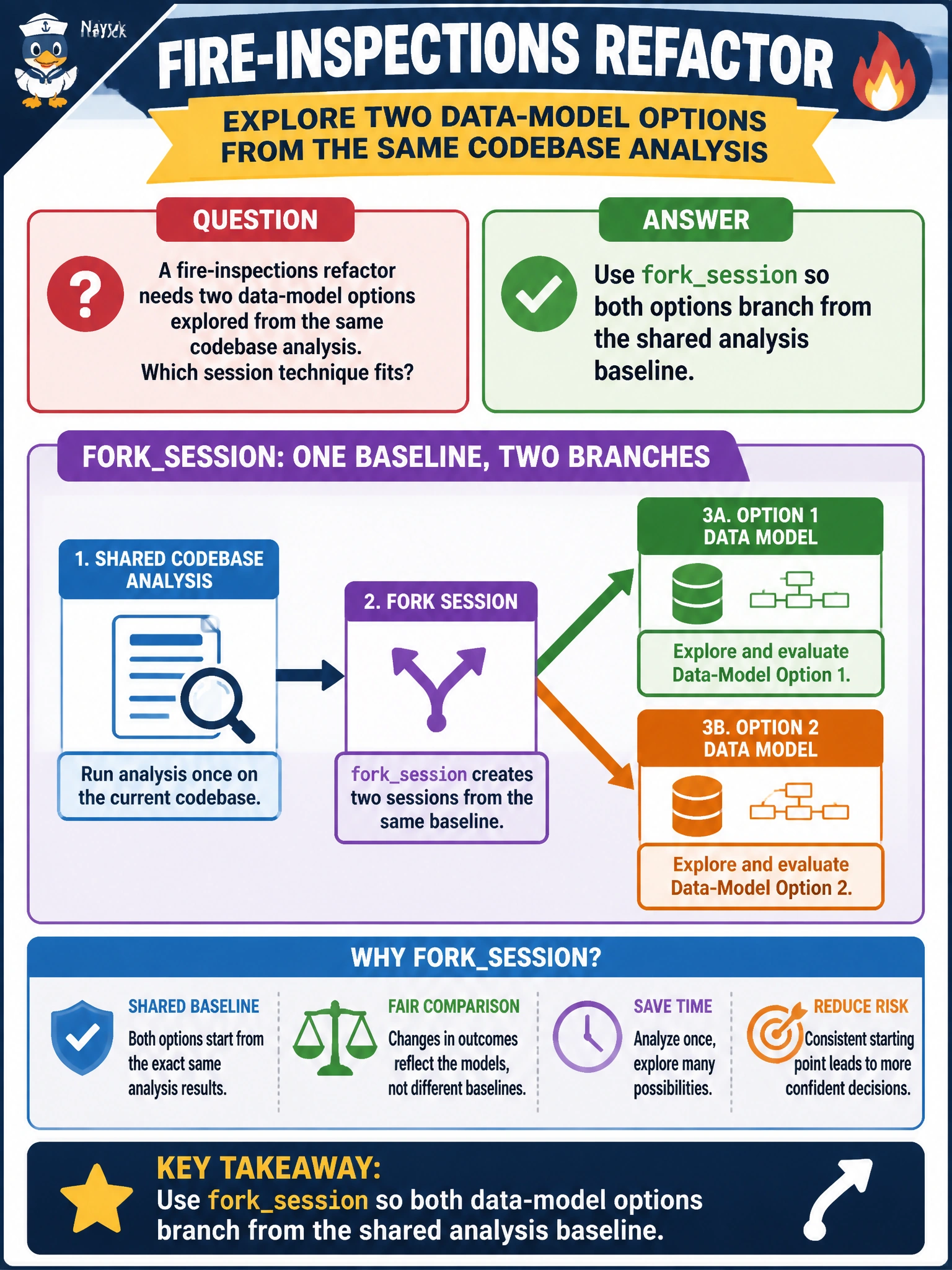
A fire-inspections refactor needs two data-model options explored from the same codebase analysis. Which session technique fits?
Select an answer to reveal the explanation.
Short Explanation
Want two fire-inspection data models from the same homework? Fork the session—both branches keep the shared analysis instead of starting from zero twice.
Full Explanation
A fire-inspections refactor that needs two data-model options explored from the same codebase analysis is a classic fork_session case. Forking creates parallel branches that share the completed analysis baseline—inspection entities, relationships, and constraints already extracted—while allowing each branch to develop a distinct model design for stakeholder comparison.
fork_session works because comparative design needs a common root. Both options inherit identical facts about the fire-inspections codebase, so differences later reflect design choices rather than divergent understanding of the source system. Municipal fire-prevention teams can then evaluate trade-offs (normalization, audit fields, inspection history) on equal footing.
Running only one option and discarding the analysis if stakeholders ask for an alternative wastes the shared homework and risks an inconsistent second pass. Overwriting the original session repeatedly so earlier option notes disappear destroys the first design path and prevents side-by-side review. Starting two unrelated blank sessions with no shared baseline analysis forces duplicate discovery and invites contradictory assumptions about the same inspection data model.
Exam caveat: forks still need labeling—document which branch explores which data-model option and which shared analysis commit they started from. Operational check: after one analysis pass, fork twice, implement option A and option B separately, and confirm each branch still cites the same baseline findings while diverging only on the proposed model.