
After public-works code changes overnight, an engineer resumes a Claude Code session. What should they tell the resumed agent?
Select an answer to reveal the explanation.
Short Explanation
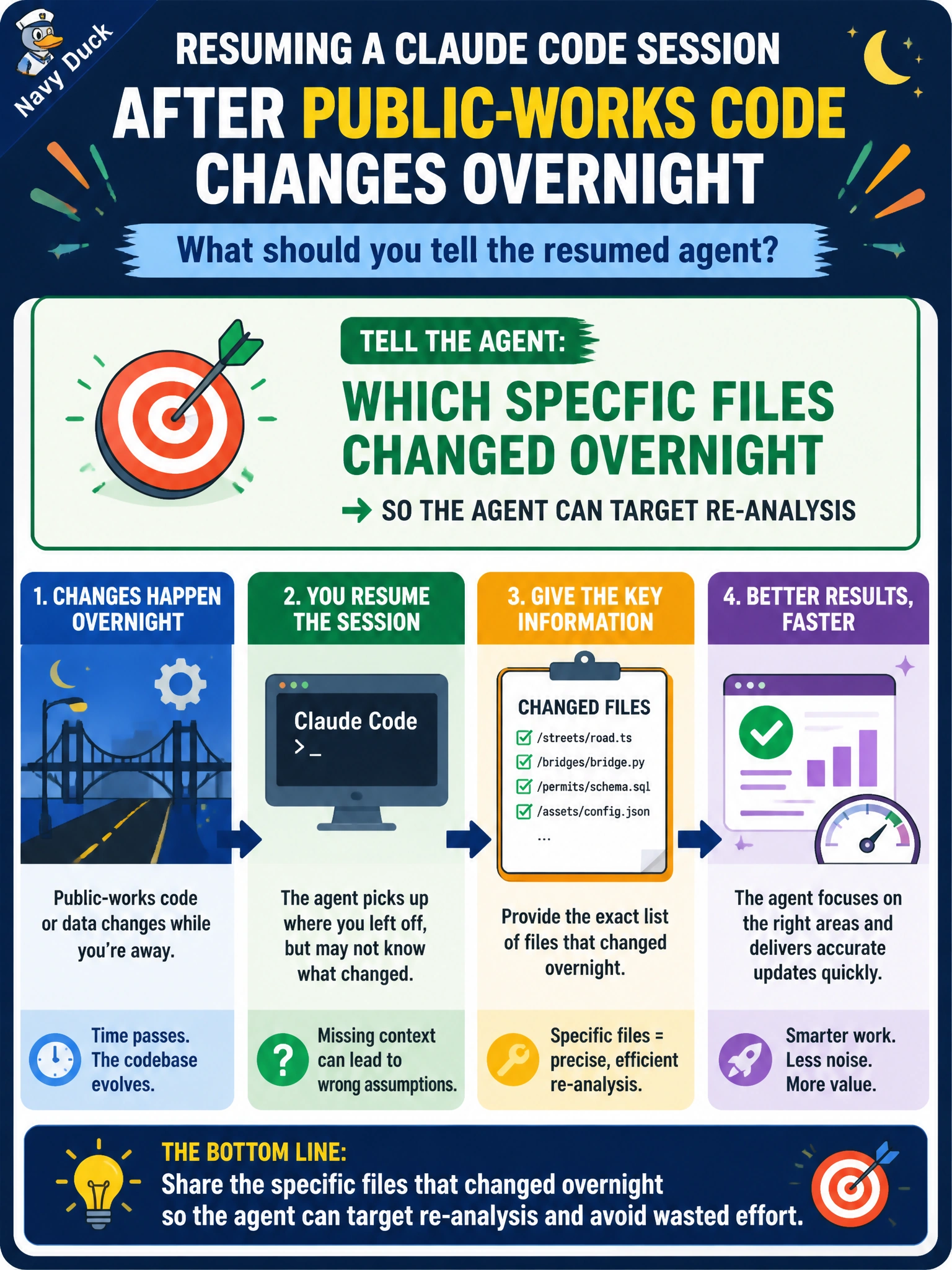
A resumed agent is not psychic about last night's commits. Tell it exactly which public-works files changed so re-analysis aims at the right targets.
Full Explanation
After public-works code changes overnight, an engineer resuming a Claude Code session should tell the agent which specific files changed so re-analysis targets the right surface area. Resumed conversational state does not automatically equal a fresh, complete view of the working tree; explicit change scope keeps the agent from trusting stale tool results.
Saying nothing because resumed sessions automatically detect every filesystem change fails because resume restores conversation context, not an omniscient filesystem watcher for overnight edits. Saying only that “stuff changed” with no paths or scope fails conceptually—it provides no actionable targeting for re-read, re-test, or diff review. Instructing the agent to ignore local changes and rely solely on stale prior tool results fails because those results may predate the overnight commits and produce wrong public-works guidance.
Exam caveat: file lists should match reality (including renames and deletions); an incomplete list can leave critical changed modules unreviewed. Operational check: after resume, paste a concrete changed-file list (from git status/diff), ask the agent to re-read those paths before further edits, and discard or re-run tool outputs that predate the listed changes.