
A city code-review bot must check each changed file locally and then assess cross-file integration. Which decomposition pattern fits best?
Select an answer to reveal the explanation.
Short Explanation
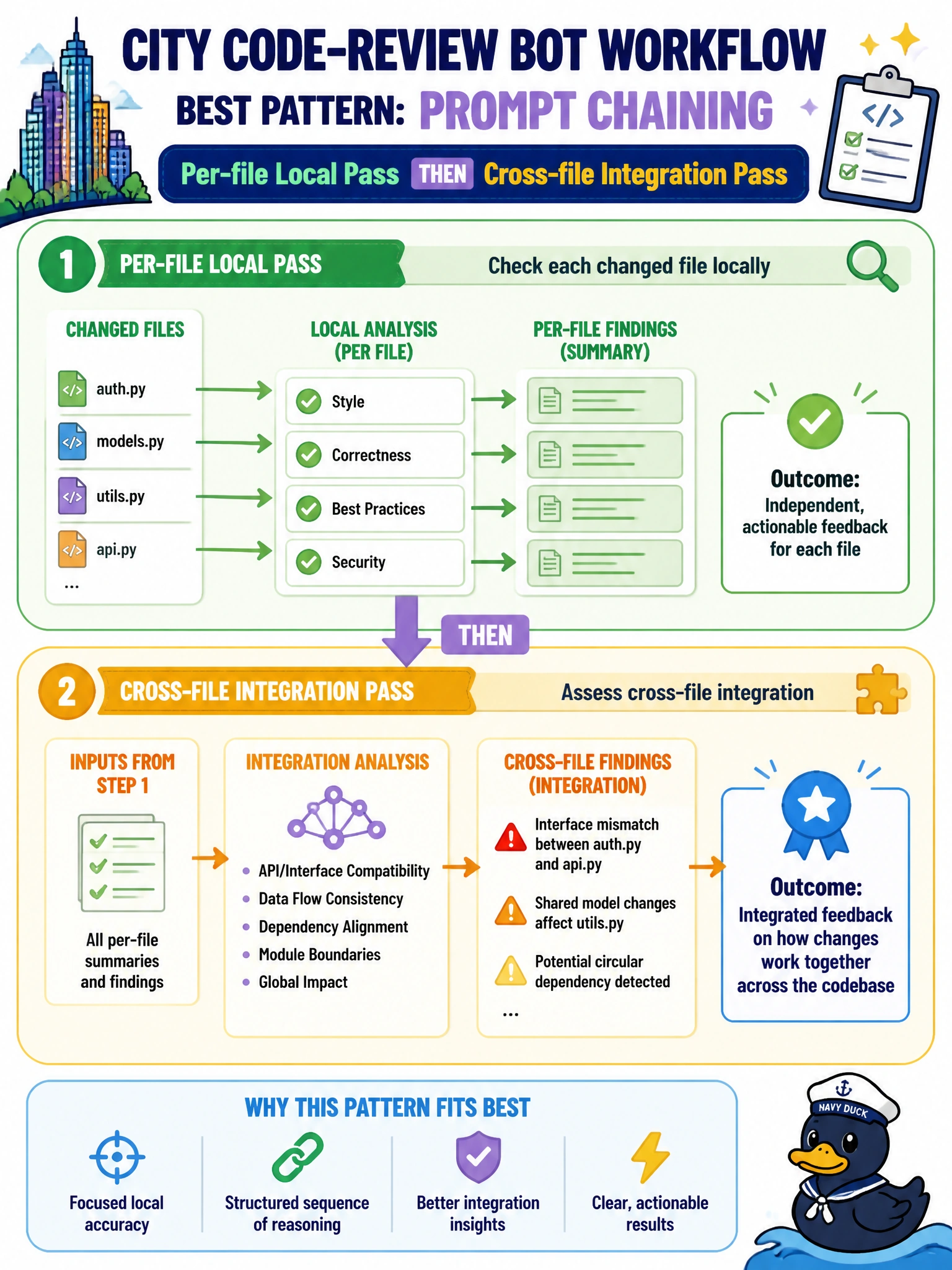
Code review is a relay, not a one-lap sprint. Chain a local per-file pass, then a cross-file integration pass so attention does not smear across everything at once.
Full Explanation
Prompt chaining with a per-file local pass followed by a separate cross-file integration pass fits a city code-review bot because local defects and integration defects need different attention budgets. Checking each changed file thoroughly, then assessing how those changes interact, preserves model focus and produces actionable municipal review findings.
One unbounded pass that reviews every service and integration concern simultaneously fails because attention dilutes across too many aspects, missing both local bugs and cross-file breaks. Skipping local file review and only sampling random integration comments fails conceptually—integration commentary without file-level grounding is shallow and inconsistent. Asking residents to approve each diff because agents cannot structure multi-aspect reviews fails because public residents are not a substitute for engineered review decomposition inside the city's development workflow.
Exam caveat: chaining order matters—integration passes that run before local passes often chase noise from unresolved file-level issues. Operational check: define a two-stage review job (local findings artifact → integration pass input), fail the pipeline if stage one output is missing, and keep each stage's prompt scoped to its concern set.