
A treasury agent must stop refund tool calls that exceed a policy threshold and send them to human escalation. Which mechanism provides that guarantee?
Select an answer to reveal the explanation.
Short Explanation
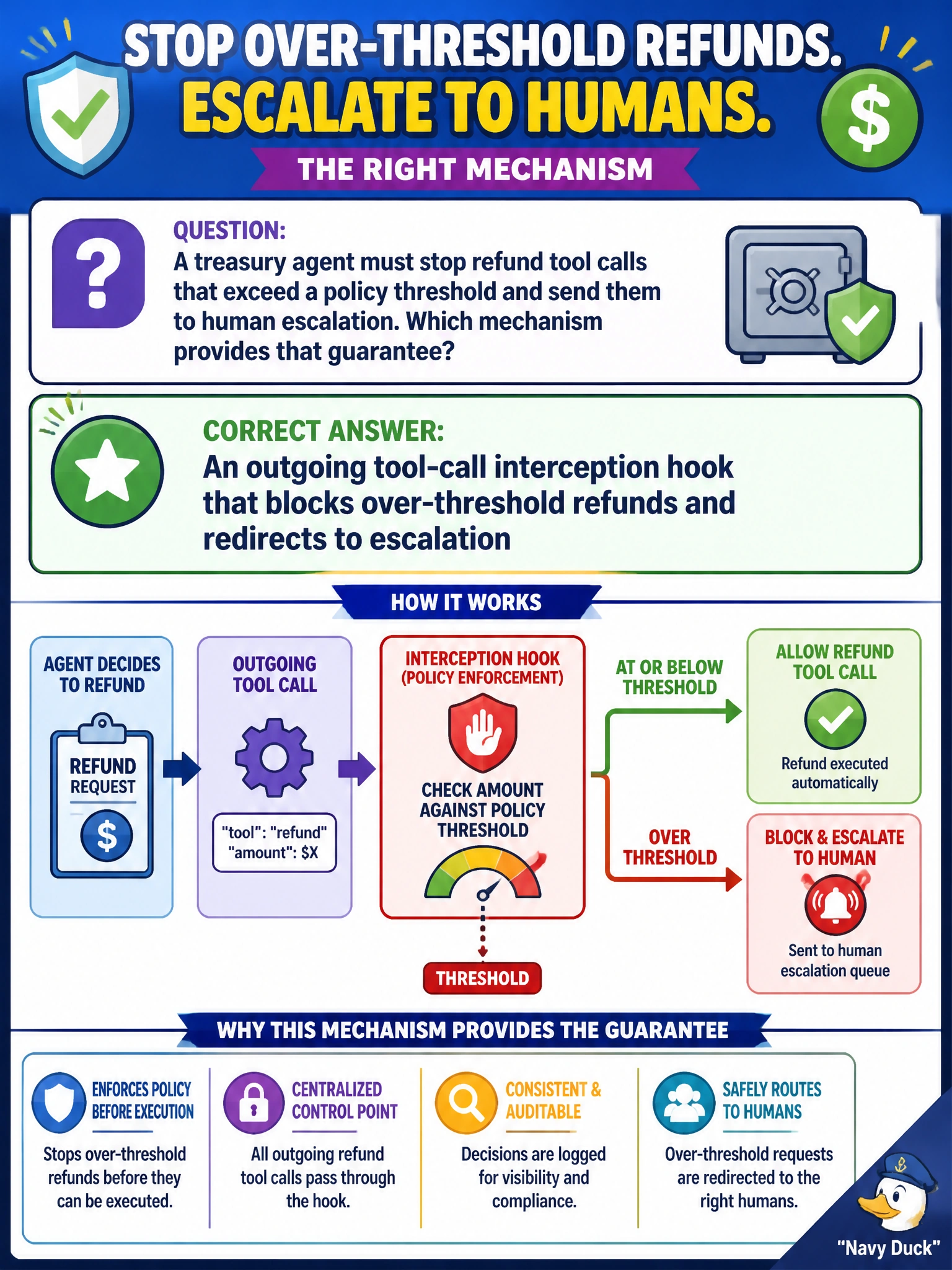
Big refunds need a bouncer, not a suggestion box. Intercept the outgoing refund tool call, block anything over the threshold, and route it to a human—after-the-fact audits are too late.
Full Explanation
An outgoing tool-call interception hook that blocks over-threshold refunds and redirects to human escalation provides the compliance guarantee a treasury agent needs because it stops money movement before it posts. Policy thresholds for civic refunds are controls, not suggestions; interception enforces them at the moment of tool invocation.
A soft reminder in the user message that large refunds are discouraged fails because reminders do not prevent tool execution when the model still chooses to call refund. Logging the refund after it posts for next week's audit fails conceptually—detection after funds leave is recovery work, not prevention. Asking the resident to confirm the amount twice in chat without a hard block fails because conversational confirmation is not an authorization gate and can be satisfied while still exceeding policy.
Exam caveat: threshold hooks must distinguish refund types and currencies correctly, or they will either block legitimate small adjustments or miss composite over-limit paths. Operational check: place an outgoing interception on refund tools that evaluates amount against policy, blocks over-threshold calls with a structured reason, opens an escalation ticket, and never allows a bypass flag from the model alone.