
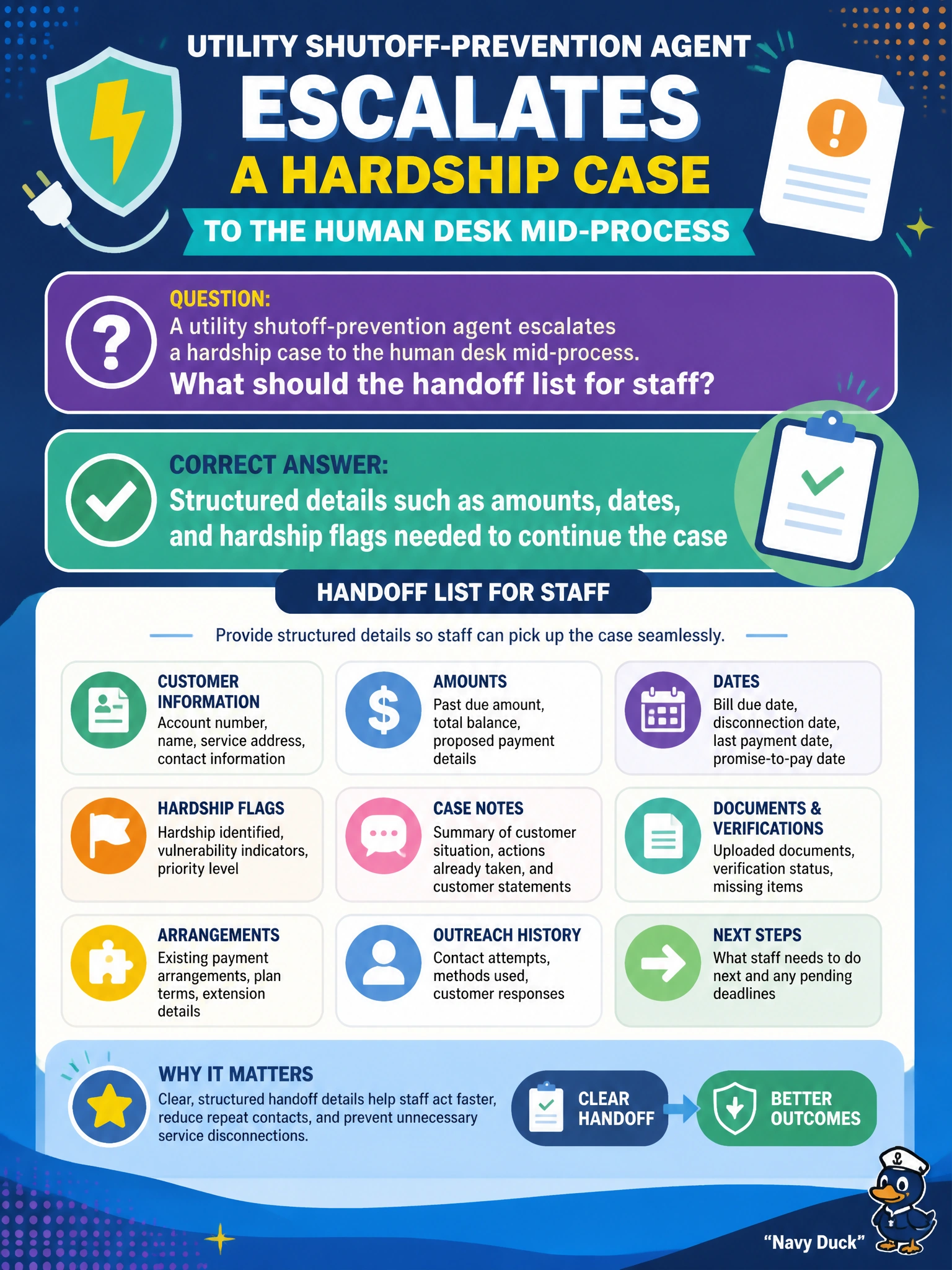
A utility shutoff-prevention agent escalates a hardship case to the human desk mid-process. What should the handoff list for staff?
Select an answer to reveal the explanation.
Short Explanation
Utility hardship handoffs need a case sheet, not vibes. Pass amounts, dates, and hardship flags so the human desk can keep helping without rebuilding the story from scratch.
Full Explanation
When a utility shutoff-prevention agent escalates a hardship case mid-process, staff need structured details—amounts, dates, hardship flags, and related case fields—so the human desk can continue without reconstructing the resident's situation from scratch. Continuity of care for shutoff risk depends on transferring actionable case state, not vibes or chat residue.
A thumbs-up emoji confirming the agent tried something fails because acknowledgment is not a case record and cannot support payment arrangements or shutoff holds. An unstructured dump of every conversation token without case fields fails conceptually because noise obscures the amounts, due dates, and hardship classifications the desk must act on. Passing only a nickname and a guess about next week's ability to pay fails because informal guesses lack identifiers, verified balances, and documented hardship criteria required for utility policy decisions.
Exam caveat: structured handoffs should include what was already attempted (tools, offers, denials) so staff do not repeat failed paths or contradict prior commitments. Operational check: require an escalation checklist with account ID, balance, shutoff date, hardship flag source, offers already extended, and recommended next action before the ticket can leave the agent queue.