
A respiratory therapy manager proposes replacing all adult mechanical ventilator breathing circuits every 48 hours on a fixed schedule to reduce ventilator-associated events in the intensive care unit. Under CDC and HICPAC guidelines for preventing healthcare-associated pneumonia, how should the infection preventionist respond to this proposal?
Select an answer to reveal the explanation.
Short Explanation
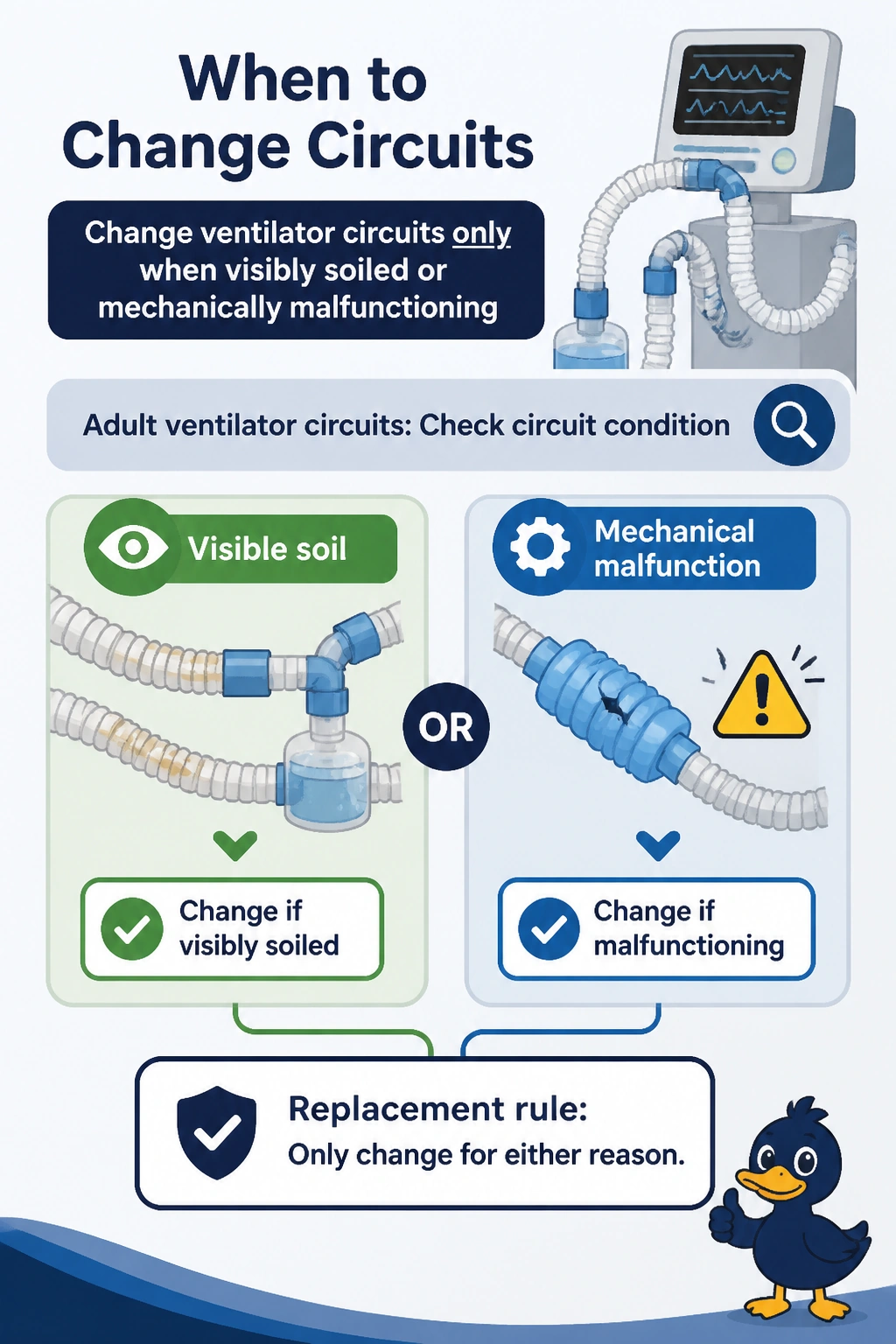
Opening a closed ventilator circuit on a timer is like unsealing a sterile jar just to check if it is clean—you invite contamination in. The trap is assuming frequent tubing swaps lower pneumonia risk. Under CDC guidelines, you should leave circuits intact and change them only when visibly soiled or malfunctioning.
Full Explanation
CDC and HICPAC guidelines for preventing healthcare-associated pneumonia explicitly advise against routine, scheduled replacement of ventilator breathing circuits. Breaking the closed system increases circuit manipulation, aerosolizes condensate, and raises contamination risk, so staff should "Change ventilator circuits only when visibly soiled or mechanically malfunctioning" for the same patient. Choosing to "Adopt 48-hour circuit changes to prevent bacterial biofilm buildup inside the tubing" or to "Schedule routine circuit changes every 72 hours paired with daily humidifier swaps" increases supply costs and staff exposure while studies show no reduction—and sometimes higher rates—of ventilator-associated pneumonia compared with as-needed changes. Opting to "Replace only the expiratory limb daily while leaving the inspiratory limb intact" still breaks the closed circuit unnecessarily and increases the risk of spilling contaminated condensate into the patient's airway. As a caveat, circuit condensate must be drained periodically away from the patient without opening the circuit, and all reusable components must be sterilized or high-level disinfected between different patients. Operationally, audit respiratory care rounds to confirm that inline condensate traps are emptied properly and circuits remain intact unless soiled or damaged.
Prefer to study offline? Printable PDF study book + test engine ($7.50, unofficial). These questions stay free here.