
An intensive care unit team prepares to insert a non-tunneled central venous catheter for hemodynamic monitoring and vasoactive infusions in a hemodynamically stable adult medical patient with normal anatomy. Under CDC intravascular catheter guidelines, which insertion site practice best reduces the risk of central line-associated bloodstream infection?
Select an answer to reveal the explanation.
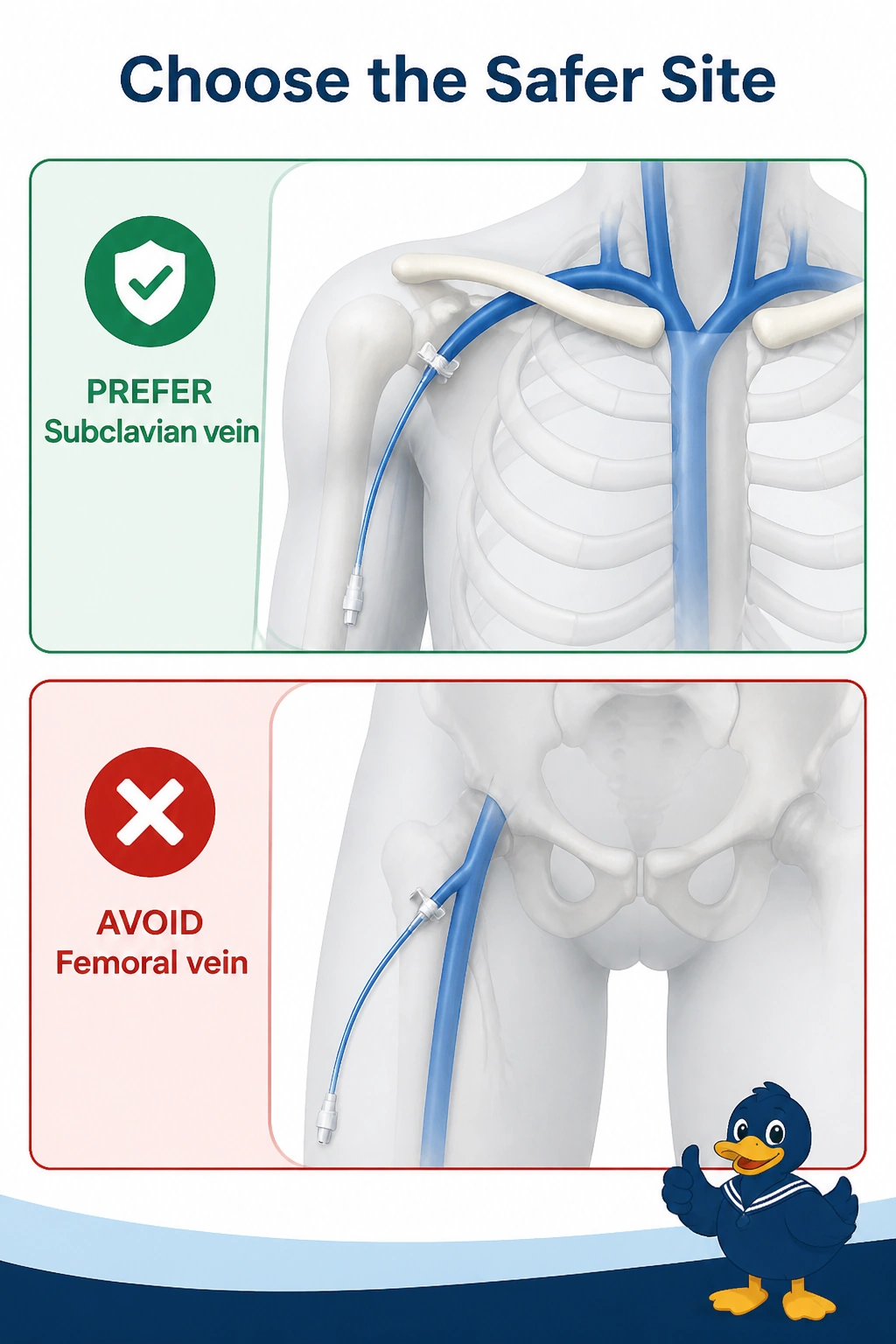
Short Explanation
When placing a non-tunneled central line in an adult, site selection is one of your strongest infection-prevention levers before the needle even touches skin. You want to steer clear of the femoral groin crease and favor the subclavian site whenever anatomy and clinical status allow. The trap is choosing the femoral site for convenience or scheduling routine 72-hour replacements.
Full Explanation
Under CDC intravascular catheter guidelines, clinicians should Avoid the femoral vein and prefer the subclavian vein when clinically appropriate for non-tunneled central venous catheter placement in adults. The subclavian site is associated with lower rates of catheter-related bloodstream infection and lower bacterial skin colonization compared with the moist, high-bioburden groin area. Choosing to Select the femoral vein as the preferred first-line site because it avoids thoracic complications increases infectious and thrombotic risks and contradicts Category 1A prevention guidance for routine adult access. The plan to Insert the catheter through an internal jugular site and replace it every 72 hours violates CDC recommendations against routine scheduled replacement of functioning central venous catheters, which only exposes patients to repeated insertion risks. Opting to Use a multi-lumen femoral catheter routinely to preserve upper-extremity veins for future access combines a higher-infection-risk insertion site with unnecessary extra lumens when fewer lumens may suffice. One caveat is that in patients with advanced kidney disease, clinicians may avoid the subclavian vein to preserve vasculature for hemodialysis access, weighing individual clinical factors. As an operational check, track femoral line utilization as a process metric on intensive care dashboards and review insertion checklists during daily rounds.
Prefer to study offline? Printable PDF study book + test engine ($7.50, unofficial). These questions stay free here.