
An intensive care unit team prepares to insert a femoral central venous catheter using bedside ultrasound guidance, and a nurse brings a half-used, multi-patient bottle of nonsterile ultrasound gel from the supply cart. Which action should the infection preventionist recommend?
Select an answer to reveal the explanation.
Short Explanation
Putting nonsterile gel near a fresh needle track is like inviting bacteria straight through an open front door—your aseptic barrier only works if every item touching the field is sterile. The trap is thinking a quick alcohol wipe on the nozzle makes an open multi-use bottle safe for an invasive procedure.
Full Explanation
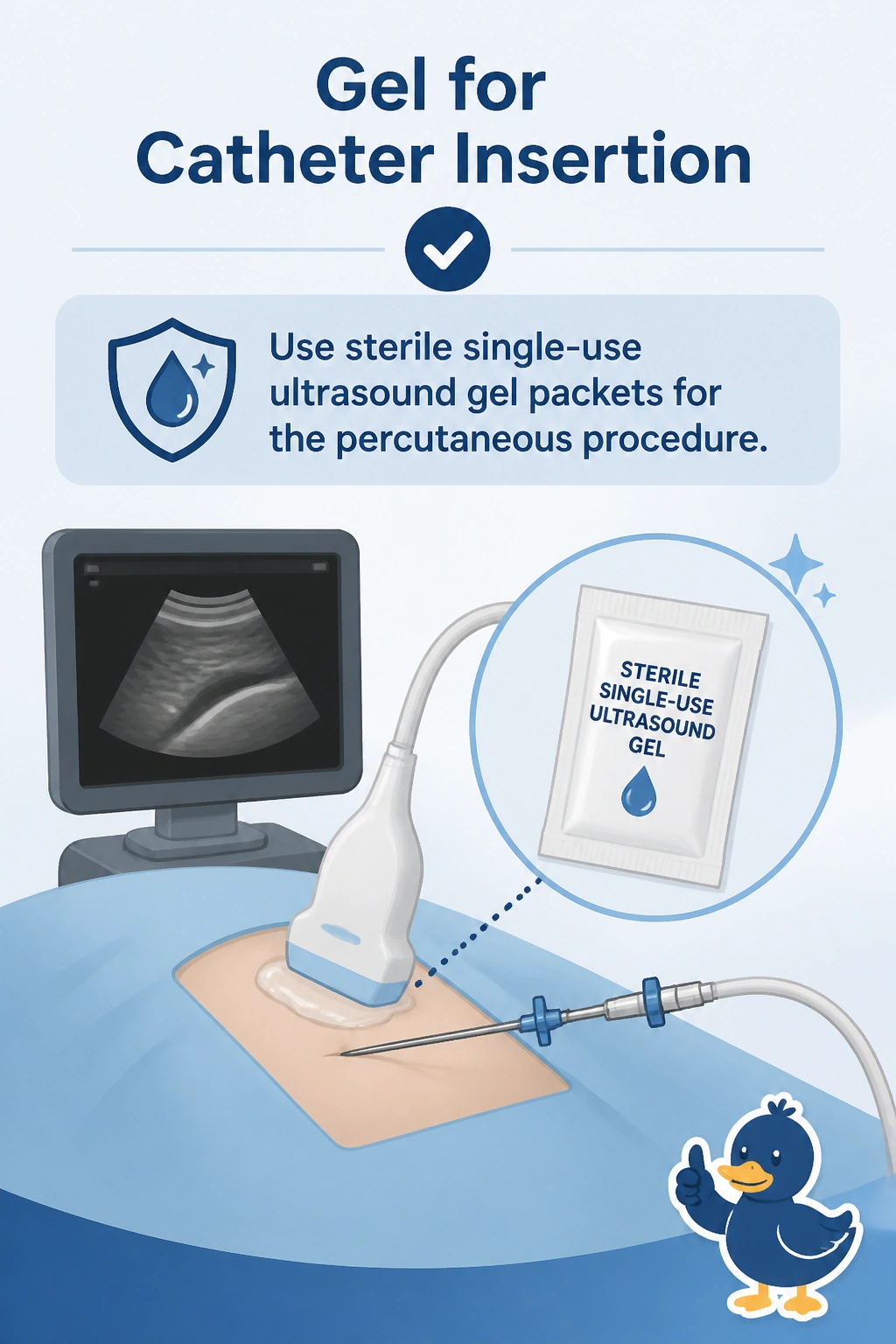
Percutaneous central venous catheter insertion breaches intact skin and enters the bloodstream, so CDC guidance requires sterile equipment and supplies throughout the sterile field. Choosing to Use sterile single-use ultrasound gel packets for the percutaneous procedure eliminates the risk of intrinsic or extrinsic contamination by waterborne pathogens such as Burkholderia cepacia, which can survive in opened multi-patient bottles and cause bloodstream infections. Choosing to Wipe the bottle nozzle with alcohol before applying the gel fails because the gel inside the multi-patient container can already be contaminated. Choosing to Apply the nonsterile gel only outside the sterile drape border does not prevent cross-contamination of the transducer sheath or gloves during probe manipulation. Choosing to Warm the multi-patient bottle in a heated cabinet prior to use actually worsens the hazard by incubating bacteria at favorable growth temperatures. As a caveat, nonsterile gel may be used for routine diagnostic scans over intact skin when no invasive procedure is planned. As an operational check, audit vascular access carts to confirm sterile single-use gel packets are stocked and opened multi-use bottles are removed from procedure rooms.
Prefer to study offline? Printable PDF study book + test engine ($7.50, unofficial). These questions stay free here.