
An adult patient is admitted to a general medical unit with a large abdominal wound producing copious purulent drainage that repeatedly saturates the outer dressing despite frequent changes. Wound cultures are pending and no multidrug-resistant organism is documented in the medical record. Which transmission-based precautions should the infection preventionist recommend immediately?
Select an answer to reveal the explanation.
Short Explanation
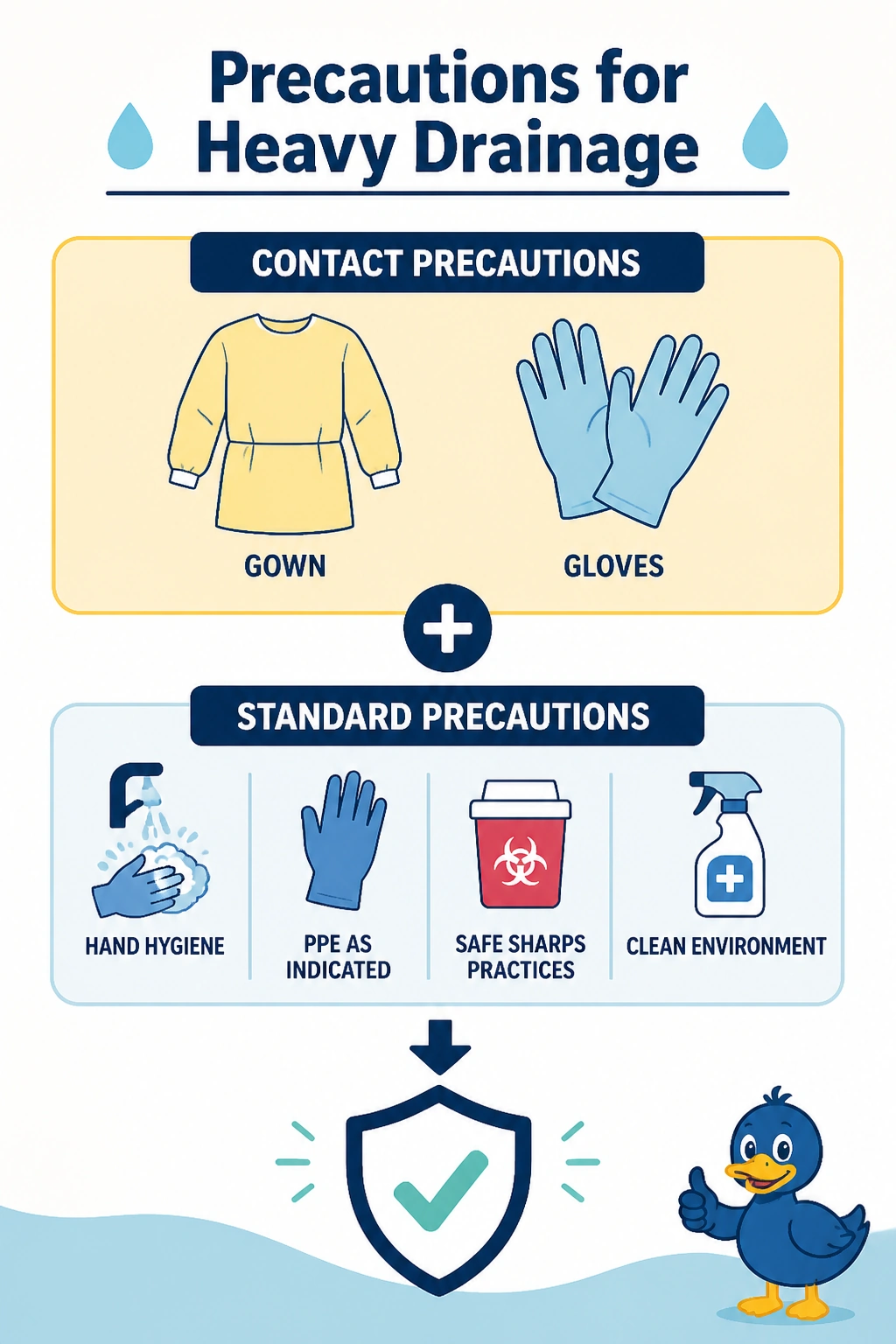
When a wound dressing cannot hold back drainage, waiting for lab results is like mopping the floor while the pipe is still leaking. The trap is relying on Standard Precautions alone just because no resistant organism is confirmed yet. You should initiate empiric Contact Precautions immediately whenever uncontained secretions or drainage pose a contamination risk.
Full Explanation
CDC Isolation Precautions guidelines recommend empiric transmission-based precautions based on clinical presentation whenever infectious material cannot be contained, without waiting for microbiology confirmation. Because copious purulent drainage saturating a dressing readily contaminates linens, surfaces, and staff clothing, the patient requires "Contact Precautions with gown and gloves in addition to Standard Precautions" immediately. Relying on "Standard Precautions alone until culture and susceptibility results confirm a resistant pathogen" leaves a dangerous window during which Staphylococcus aureus, group A Streptococcus, or gram-negative organisms can spread to other patients via contaminated hands and equipment. Choosing "Droplet Precautions with a surgical mask worn within six feet of the patient's bedside" targets large respiratory droplets rather than direct or indirect contact transmission from wound exudate. Using "Protective Environment precautions with positive air pressure and HEPA filtration" is designed to shield severely immunocompromised patients, such as allogeneic stem cell recipients, from environmental fungi rather than containing a patient's draining wound. As a caveat, Contact Precautions may be discontinued if an infectious etiology is ruled out and drainage is controlled. Operationally, verify dedicated noncritical equipment such as stethoscopes and blood pressure cuffs remain in the room and audit gown-and-glove donning before room entry.
Prefer to study offline? Printable PDF study book + test engine ($7.50, unofficial). These questions stay free here.