
A two-year-old child is admitted to a pediatric unit with fever, conjunctivitis, pharyngitis, and worsening pneumonia suspected to be caused by adenovirus. Which transmission-based precautions should the infection preventionist recommend in addition to Standard Precautions?
Select an answer to reveal the explanation.
Short Explanation
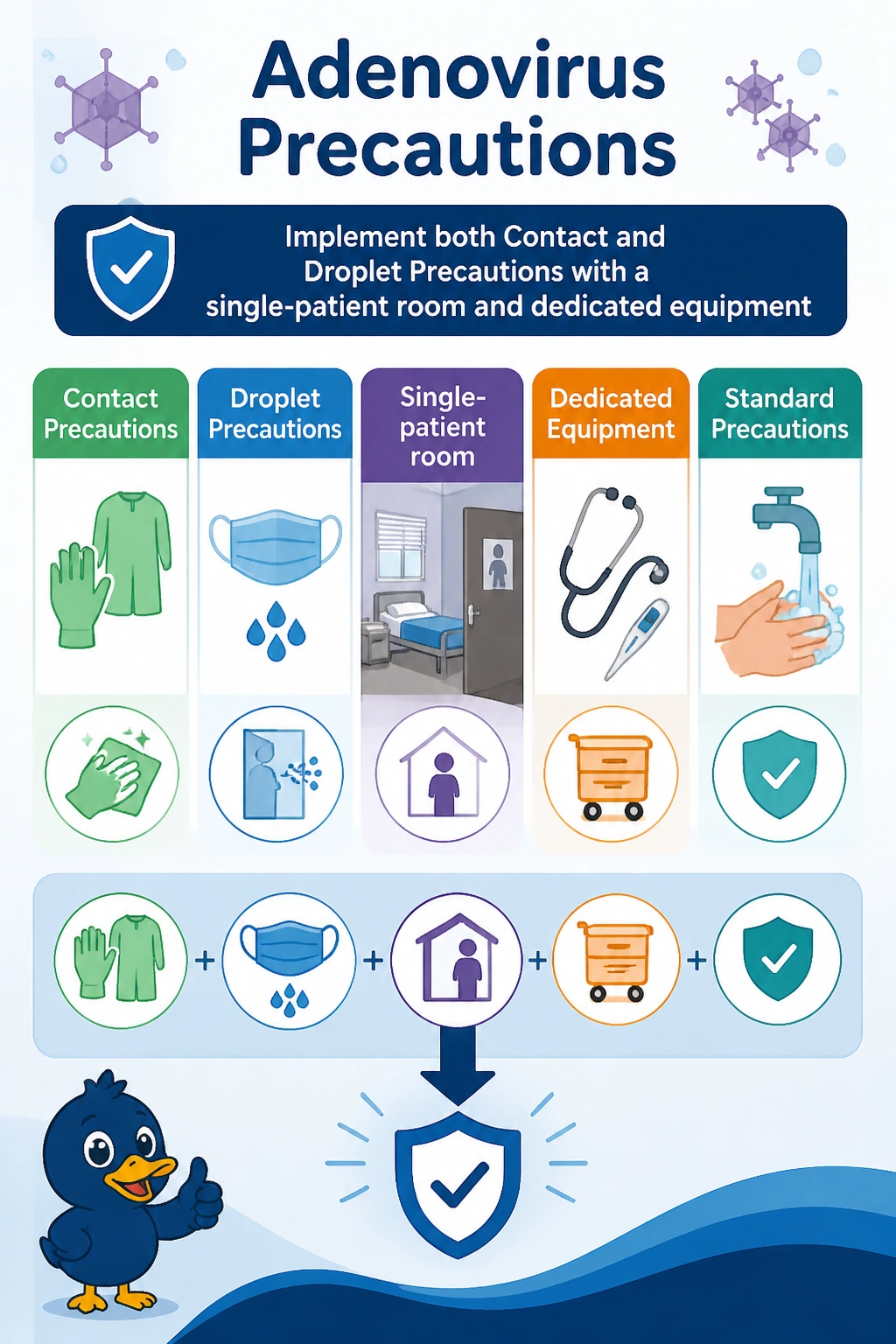
Adenovirus travels like a double threat, riding respiratory droplets through the air and lingering stubbornly on toys and bedrails. The trap is picking just one precaution category when your pediatric patient needs protection against both routes.
Full Explanation
Adenoviral pneumonia requires Droplet plus Contact Precautions for the duration of illness; precautions for other adenovirus syndromes depend on the clinical presentation. Therefore, the infection preventionist should Implement both Contact and Droplet Precautions with a single-patient room and dedicated equipment. Choosing to Place the child on Standard Precautions alone with routine surgical masking during suctioning leaves staff and neighboring patients unprotected from routine coughing droplets and contaminated fomites. Choosing to Assign Airborne Precautions in a negative-pressure room with fit-tested N95 respirator use overstates the transmission route, as adenovirus is not transmitted predominantly via long-range airborne droplet nuclei. Choosing to Use Droplet Precautions only without gowns or gloves unless diarrhea is also present ignores the high environmental contamination risk from respiratory secretions on gowns, hands, and shared pediatric items. Caveat: immunocompromised patients with adenovirus may shed virus for prolonged periods and require extended isolation duration. Operational check: confirm that surgical masks, eye protection, gowns, gloves, and dedicated stethoscopes are stocked at the room entrance before admission.
Prefer to study offline? Printable PDF study book + test engine ($7.50, unofficial). These questions stay free here.