
An unvaccinated adult inpatient is admitted with primary varicella-zoster virus infection (chickenpox) and placed in an Airborne Infection Isolation Room on Airborne and Contact Precautions. Three days after starting antiviral therapy, the fever resolves and no new vesicles have appeared for 24 hours, though several lesions on the trunk remain moist. When may transmission-based precautions be discontinued?
Select an answer to reveal the explanation.
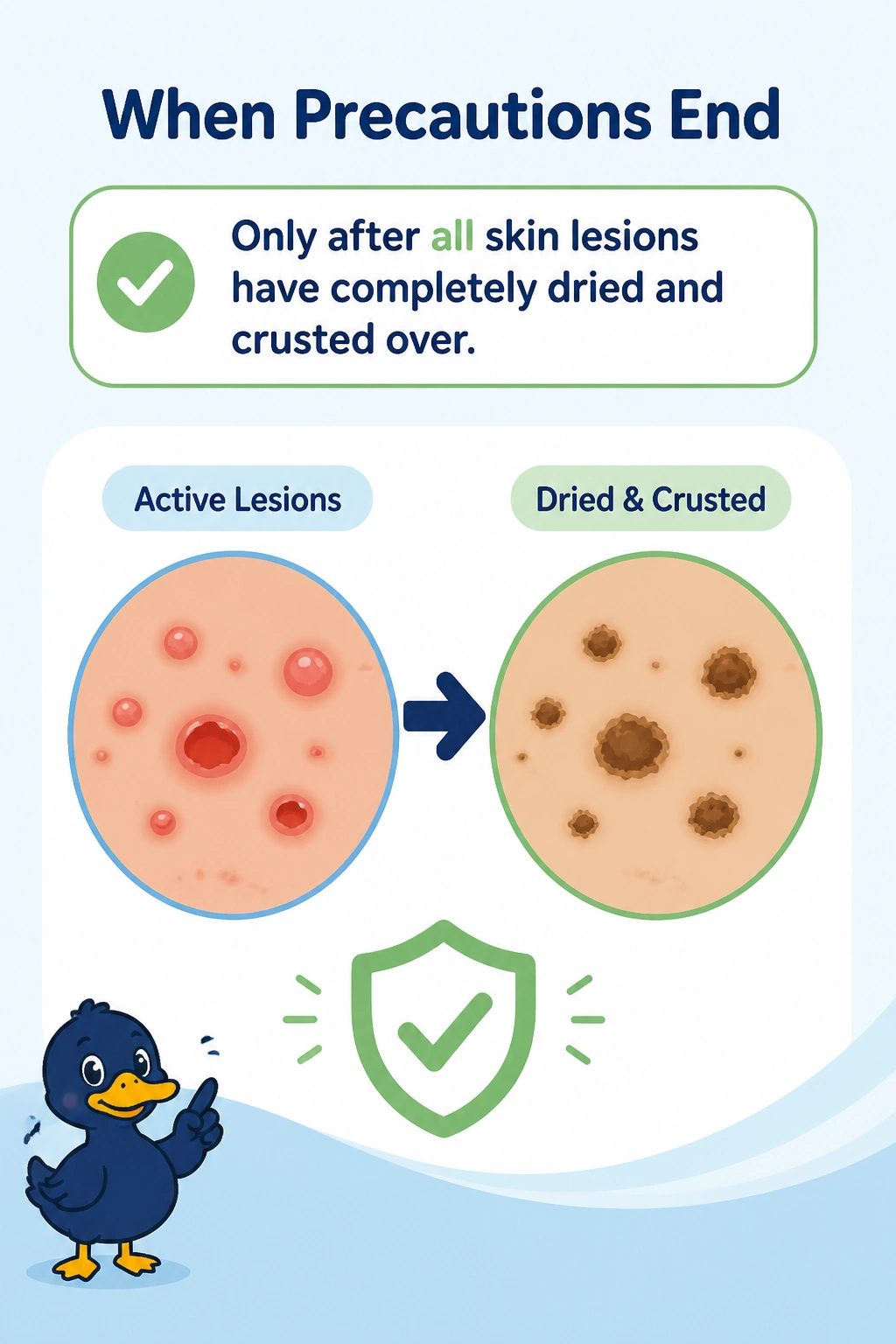
Short Explanation
Think of each moist chickenpox blister as a tiny reservoir still capable of launching virus into the air and onto hands. You must keep both Airborne and Contact Precautions in place until every lesion dries and crusts, so the trap is stopping isolation early just because the fever breaks.
Full Explanation
Under CDC Isolation Precautions guidelines, patients with primary varicella remain infectious until every vesicular lesion has dried and crusted, so precautions may be lifted Only after all skin lesions have completely dried and crusted over. Moist or uncrusted vesicles still contain viable varicella-zoster virus that can be aerosolized or spread by direct contact to susceptible patients and staff. Stopping isolation Immediately because fever resolved and no new vesicles formed for 24 hours is unsafe because existing open lesions continue shedding infectious virus even after systemic symptoms improve. Relying on a fixed duration such as After five full days of systemic antiviral therapy regardless of skin status ignores clinical variability in lesion healing, particularly in adults or immunocompromised hosts who may shed virus longer. Choosing Once Airborne Precautions end, while keeping Contact Precautions until discharge misunderstands the dual transmission route of primary varicella, which requires both airborne and contact barriers for the entire infectious period. As a caveat, immunocompromised patients may develop new lesions slowly and require extended isolation. For an operational check, perform a full-body skin inspection with the care team and verify every lesion is dry and crusted before moving the patient out of the negative-pressure room.
Prefer to study offline? Printable PDF study book + test engine ($7.50, unofficial). These questions stay free here.