
During a clinic audit, an infection preventionist watches a nurse wear clean examination gloves to remove a dry outer dressing, inspect the intact gloves for visible blood, doff them, and immediately reach into a clean supply drawer without washing or using alcohol-based hand rub. Which Standard Precautions principle is the nurse overlooking?
Select an answer to reveal the explanation.
Short Explanation
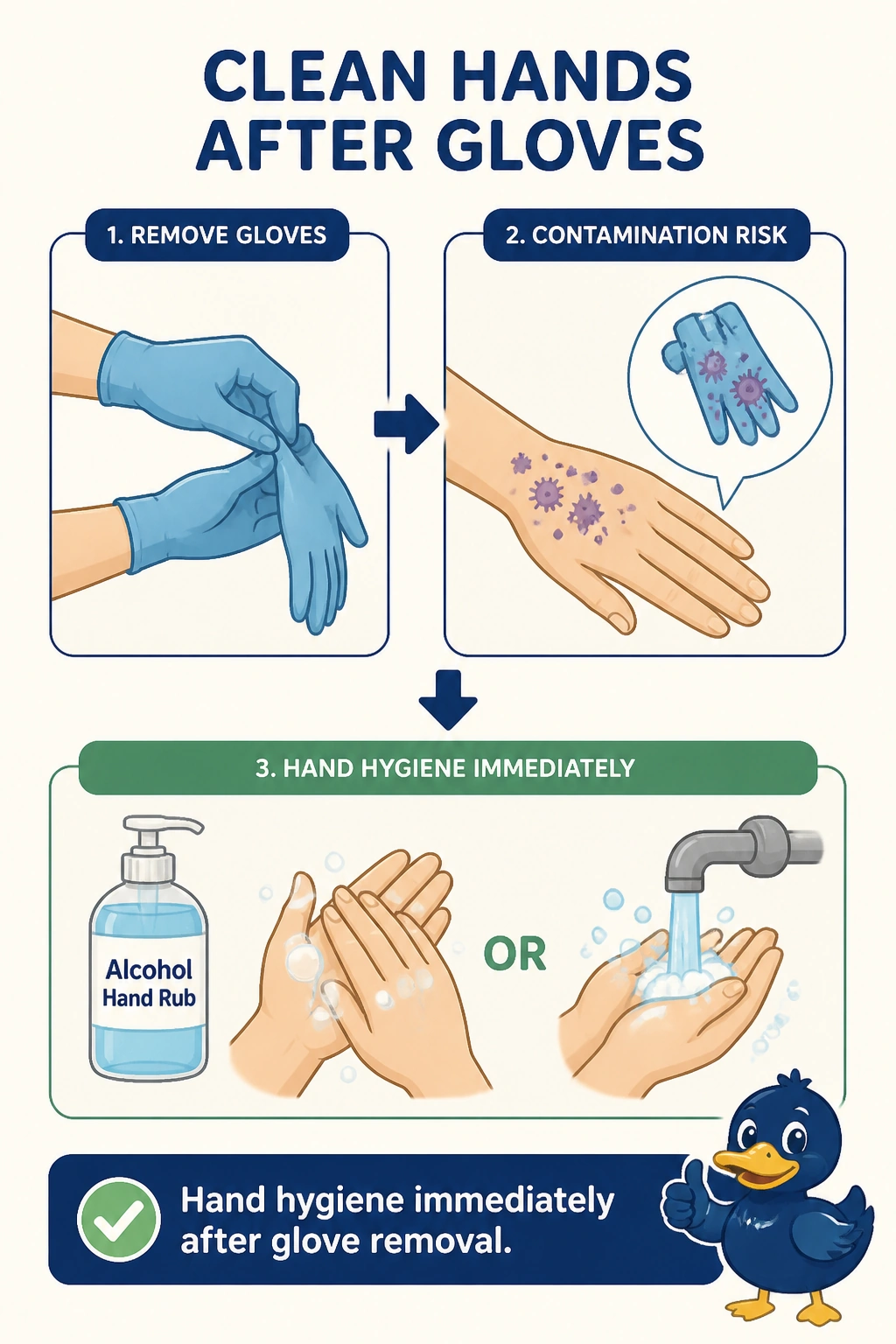
Gloves are a great shield, but taking them off is like peeling off muddy boots—your hands can still pick up microbes on the way out. The trap is assuming that clean-looking, intact gloves leave skin sterile underneath. You must always perform hand hygiene immediately after removing gloves to prevent contaminating clean supplies and the next patient.
Full Explanation
Under CDC Standard Precautions and Hand Hygiene guidelines, gloves reduce hand contamination during patient care but do not provide complete protection. Staff must Perform hand hygiene immediately after glove removal because doffing can contaminate skin through microscopic glove defects, moisture, or accidental contact with the outer glove surface during removal. Choosing to Skip hand hygiene because the gloves remained intact and no blood or drainage was touched is unsafe because invisible microorganisms and skin flora multiply beneath warm gloves and transfer readily to clean supply drawers. Trying to Apply alcohol-based hand rub directly onto the gloved hands before removing the gloves is not recommended for routine care because alcohol can degrade glove integrity and does not substitute for cleaning bare skin after removal. Expecting staff to Wash hands only with soap and water whenever exam gloves are removed after wound care is inaccurate because alcohol-based hand rub is preferred after glove removal unless hands are visibly soiled or a specific soap-and-water indication applies; soap/water is particularly encouraged after CDI care during outbreaks, and ABHR access should not be restricted. As a caveat, gloves must also be changed between dirty and clean body sites on the same patient. For an operational check, observe glove doffing during routine tracer rounds and verify immediate hand hygiene before staff touch clean equipment or drawers.
Prefer to study offline? Printable PDF study book + test engine ($7.50, unofficial). These questions stay free here.