
A respiratory therapist prepares to perform open endotracheal suctioning on an inpatient who has no diagnosed or suspected respiratory infection and is not on transmission-based precautions. Which personal protective equipment is required under Standard Precautions in addition to gloves and a gown if clothing soiling is anticipated?
Select an answer to reveal the explanation.
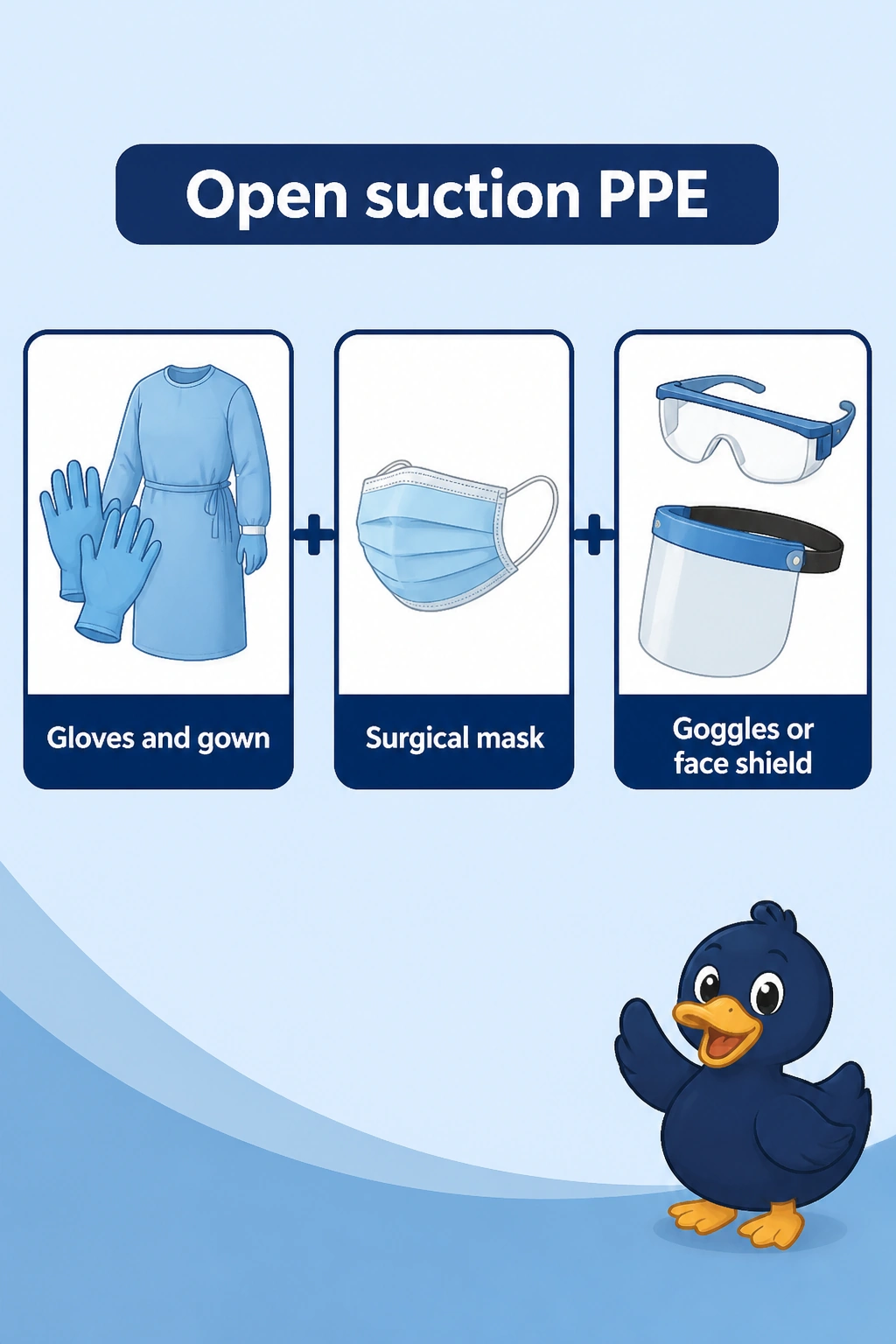
Short Explanation
When you perform open airway suctioning, treat it as a splash risk: droplets can reach your eyes, nose, or mouth in a split second. Standard Precautions call for a surgical mask and goggles or a face shield, even when the patient has no isolation sign.
Full Explanation
Under CDC Standard Precautions, you wear a surgical mask and goggles or a face shield for procedures likely to generate splashes or sprays of blood, body fluids, secretions, or excretions, including open endotracheal suctioning. The eyes, nose, and mouth are direct portals of entry for respiratory and bloodborne pathogens, even when the patient has no known infection. A fit-tested N95 respirator without eye protection leaves your eyes exposed and exceeds the respiratory protection needed under Standard Precautions when no airborne pathogen is suspected. Double gloves and shoe covers without facial protection fail to shield the facial mucous membranes, the primary splash-exposure hazard during suctioning. A surgical cap and sterile gown without a mask protect hair and clothing but leave the respiratory and ocular mucous membranes unprotected. As an exam caveat, suspected tuberculosis or another airborne infection calls for a fit-tested N95 respirator paired with eye protection. For a practical check, confirm that point-of-care PPE carts outside non-isolation rooms have masks with attached shields or separate goggles near suction equipment.
Prefer to study offline? Printable PDF study book + test engine ($7.50, unofficial). These questions stay free here.