
An adult medical-surgical unit aims to reduce catheter-associated urinary tract infections (CAUTIs) across its inpatient beds. Which evidence-based practice should the infection preventionist prioritize as the primary prevention strategy?
Select an answer to reveal the explanation.
Short Explanation
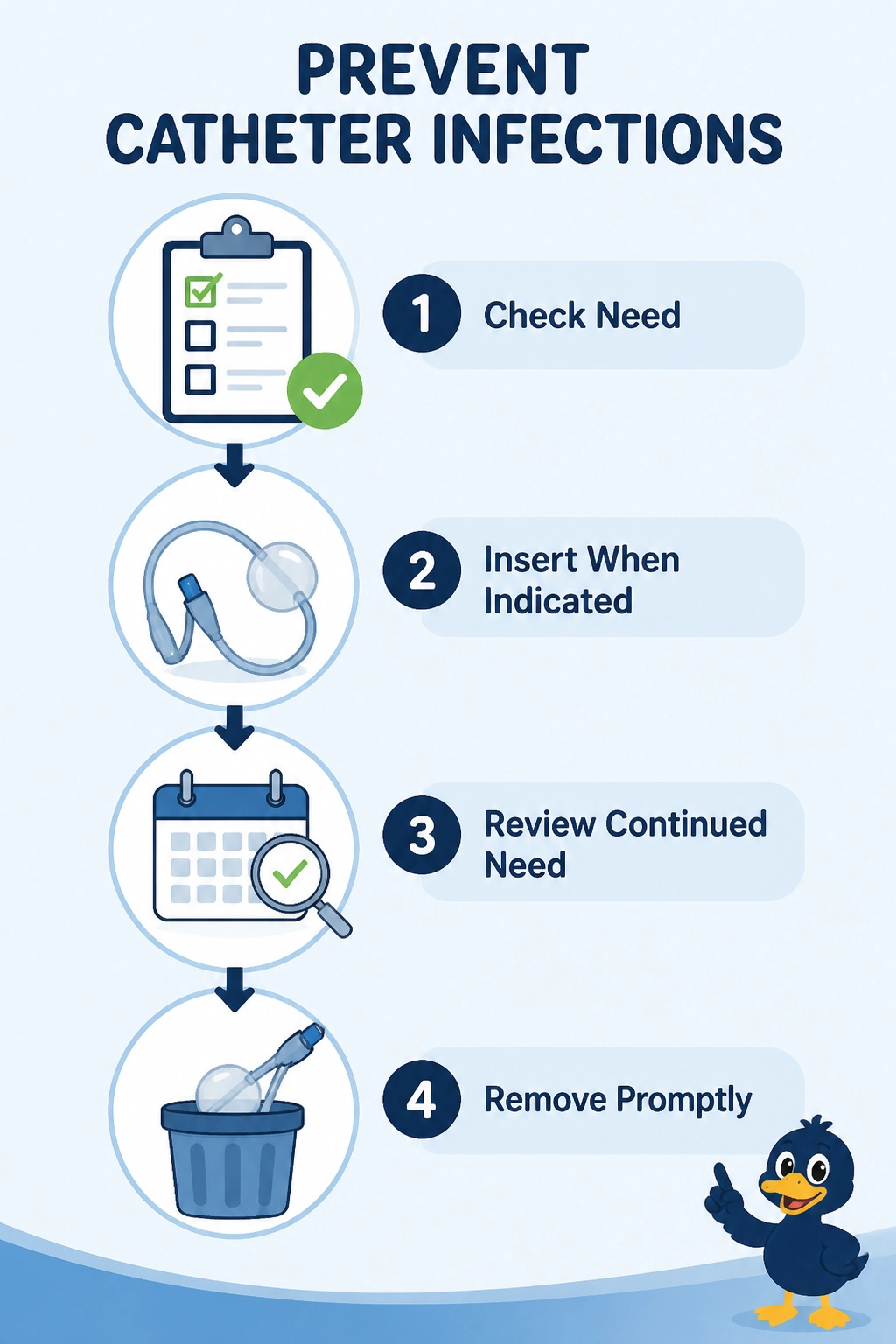
The best way to prevent a device-associated infection is to avoid unnecessary devices in the first place. The trap is leaning on routine catheter swaps, bladder washes, or prophylactic antibiotics that guidelines explicitly warn against. When you limit insertion to clear indications and pull catheters early, you cut risk at the source.
Full Explanation
CDC and HICPAC CAUTI prevention guidelines emphasize that teams should "Insert indwelling urinary catheters only for appropriate indications and remove them promptly when no longer needed" because duration of catheterization is the strongest modifiable risk factor for bacteriuria and infection. Limiting placement and using daily nurse-driven removal protocols reduce biofilm formation and ascending bacterial colonization. Choosing to "Perform routine daily bladder irrigation with an antimicrobial solution while the catheter remains in place" is not recommended because breaking the closed drainage system introduces organisms and increases infection risk. Selecting to "Replace indwelling urinary catheters on a fixed weekly schedule regardless of clinical patency" adds unnecessary mucosal trauma and offers no benefit unless obstruction, infection, or system compromise occurs. Opting to "Administer prophylactic systemic antibiotics for the duration of urinary catheterization" is discouraged because it drives antimicrobial resistance and Clostridioides difficile infection. Routine systemic antimicrobial prophylaxis is not recommended for short- or long-term catheterization because risks and resistance outweigh routine use; specific indications require separate clinical assessment. As a caveat, when catheterization is truly indicated, staff must maintain a closed, unobstructed drainage system with the bag kept below bladder level. For an operational check, audit documented indications during daily bedside rounds and track the unit urinary catheter utilization ratio.
Prefer to study offline? Printable PDF study book + test engine ($7.50, unofficial). These questions stay free here.