
A preoperative nurse at an ambulatory surgery center prepares a patient for an elective inguinal hernia repair and notes dense hair at the planned incision site that will interfere with skin closure. Which hair removal practice should the infection preventionist recommend based on CDC surgical site infection guidelines?
Select an answer to reveal the explanation.
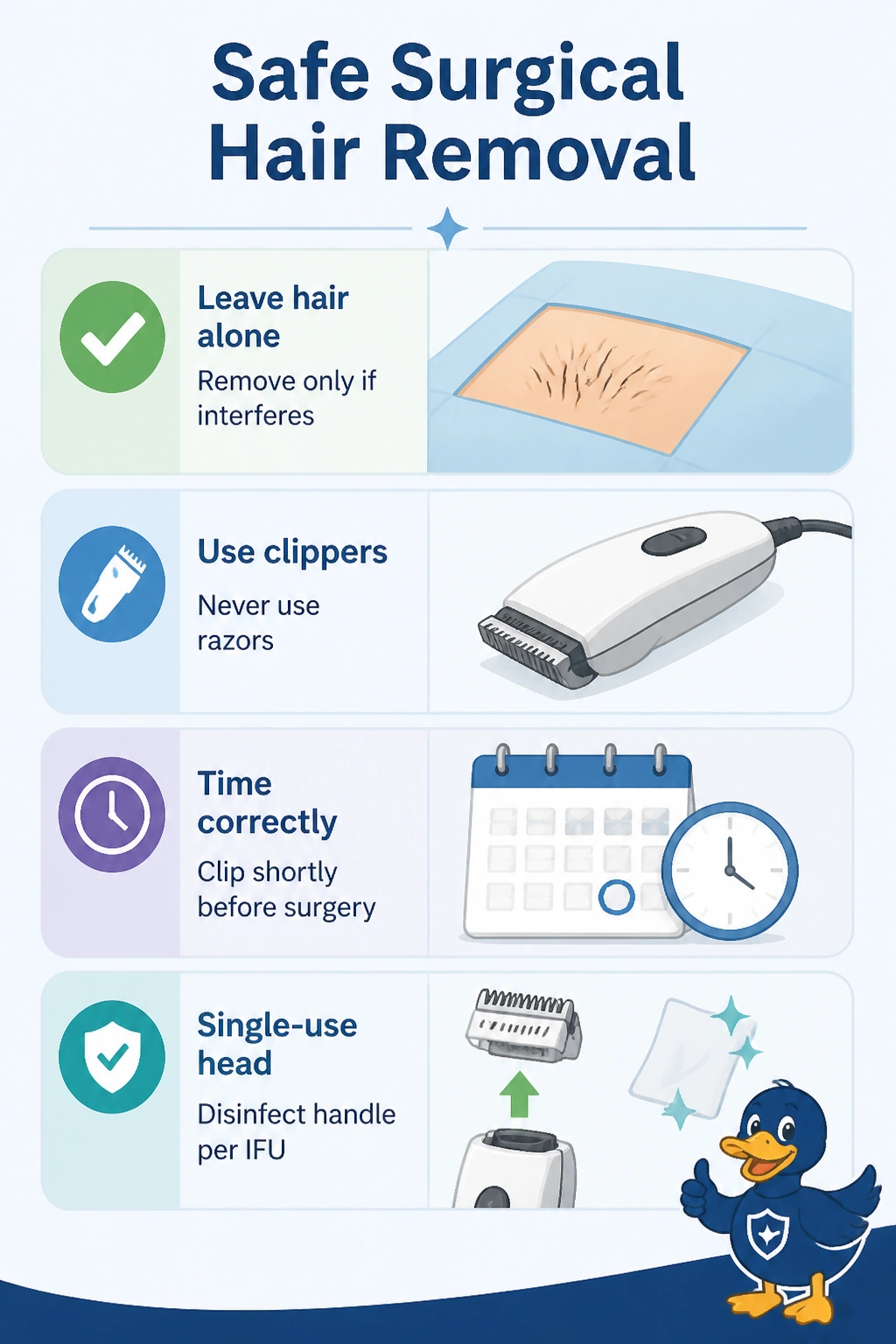
Short Explanation
Think of a razor like a tiny plow tearing up soil where you need smooth ground to work. When hair will truly interfere, you want to gently clip just that hair shortly before surgery with a single-use clipper head. You protect healing by avoiding nicks that let skin germs settle in overnight.
Full Explanation
Selecting Clip interfering hair shortly before surgery using clippers with a single-use head, cleaning/disinfecting any reusable handle per IFU aligns with CDC and HICPAC surgical site infection prevention guidelines, which advise leaving hair intact unless it interferes with the operation and using clippers shortly before incision when removal is necessary. Clippers trim hair above the skin surface without creating microabrasions that harbor bacteria, and using a single-use head with proper handle cleaning/disinfection per IFU prevents cross-transmission between patients. Choosing Shave the surgical site with a disposable razor the evening before surgery introduces microscopic epidermal nicks and gives endogenous flora hours to colonize damaged tissue before surgery. Choosing Apply an alcohol-based skin antiseptic over the unclipped hair instead fails to address practical interference with wound closure and dressing adherence when dense hair is at the incision line. Choosing Remove all body hair across the groin area using a reusable straight razor causes razor-induced skin injury that itself increases SSI risk regardless of reprocessing, while also removing hair well beyond the operative field. As a clinical caveat, avoid removing hair outside the immediate operative field even when using clippers. For an operational check, audit preoperative holding workflows to confirm razors are removed from patient prep carts and clippers are stocked with single-use heads.
Prefer to study offline? Printable PDF study book + test engine ($7.50, unofficial). These questions stay free here.