
An intensive care unit plans to standardize its central venous catheter insertion bundle to reduce central line-associated bloodstream infections (CLABSIs) in adults without a chlorhexidine contraindication. Which combination of evidence-based practices should be required during every non-emergent insertion?
Select an answer to reveal the explanation.
Short Explanation
Inserting a central line is a sterile procedure where shortcuts invite bloodstream bacteria straight into the patient! The trap is relying on a small drape alone or routine prophylactic antibiotics, when your core CDC bundle demands maximal sterile barriers and chlorhexidine.
Full Explanation
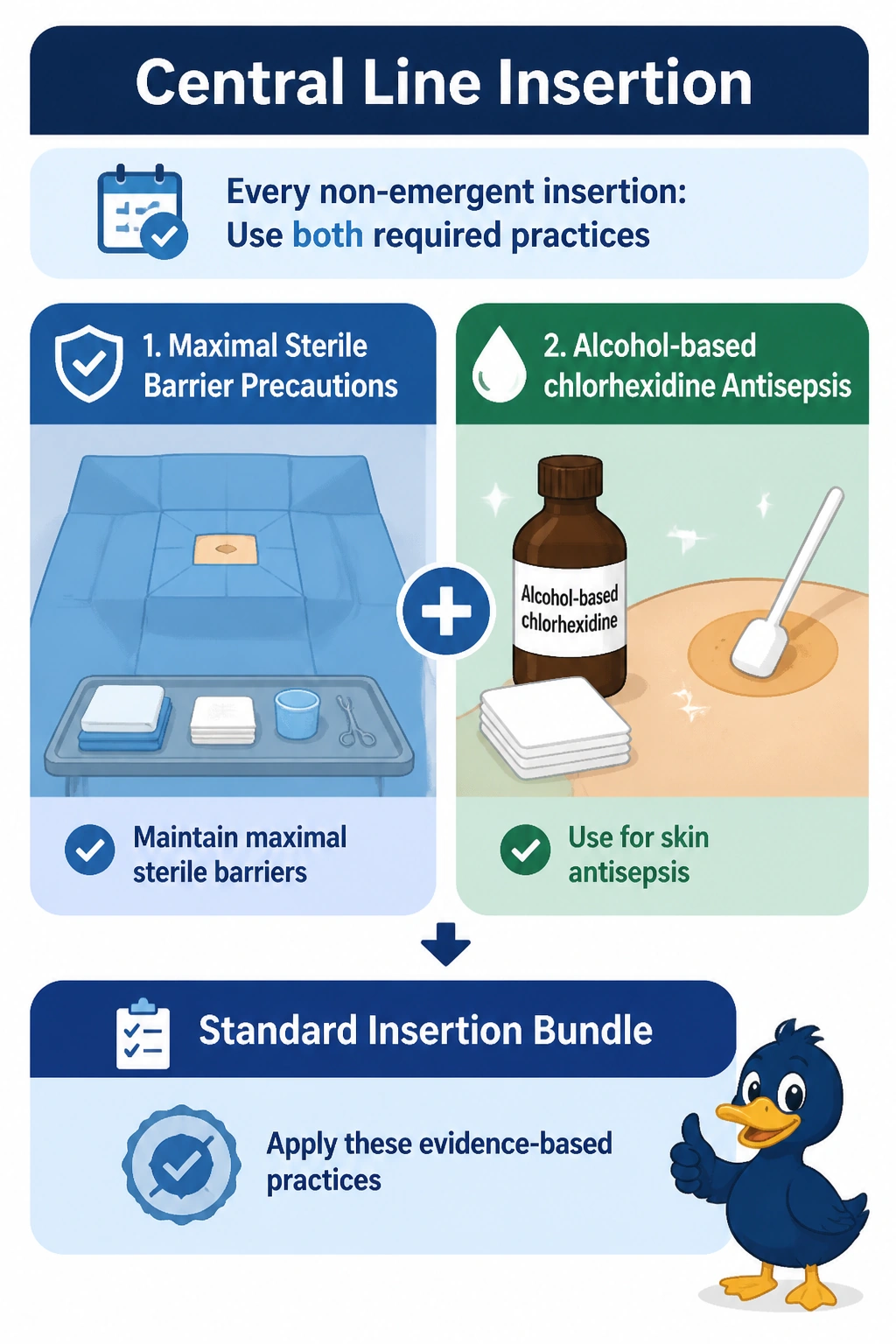
CDC/HICPAC guidelines for preventing intravascular catheter-related infections anchor the insertion bundle on Maximal sterile barrier precautions and alcohol-based chlorhexidine antisepsis. Maximal sterile barriers—cap, mask, sterile gown, sterile gloves, and a sterile full-body drape—combined with >0.5% chlorhexidine in alcohol skin preparation sharply reduce skin-flora contamination during catheter placement. When chlorhexidine is contraindicated, use an approved alternative such as tincture of iodine, an iodophor, or 70% alcohol for skin antisepsis. Using Clean non-sterile exam gloves and povidone-iodine ointment at the exit site violates aseptic insertion technique and risks introducing skin organisms into the bloodstream. Relying on Routine systemic prophylactic antibiotics and a sterile fenestrated drape alone is wrong because Routine systemic antimicrobial prophylaxis is not recommended solely to prevent catheter colonization or CRBSI and drives resistance, while a small fenestrated drape fails to protect the guidewire from unsterile surroundings. Choosing Double sterile gloving with immediate femoral vein selection for all adults is incorrect because the femoral site carries higher infection risk in adults and is avoided when possible. As a caveat, chlorhexidine must dry completely before skin puncture. For an operational check, empower nurses with a stop-the-line checklist to halt non-emergent insertions if any bundle element is missed.
Prefer to study offline? Printable PDF study book + test engine ($7.50, unofficial). These questions stay free here.