
An intensive care unit performs weekly active surveillance nasal swabs for methicillin-resistant Staphylococcus aureus (MRSA) on all patients, whereas a surgical step-down unit tests only patients with clinical signs of infection. When the intensive care unit reports a higher total MRSA detection rate, what epidemiological factor best explains the difference?
Select an answer to reveal the explanation.
Short Explanation
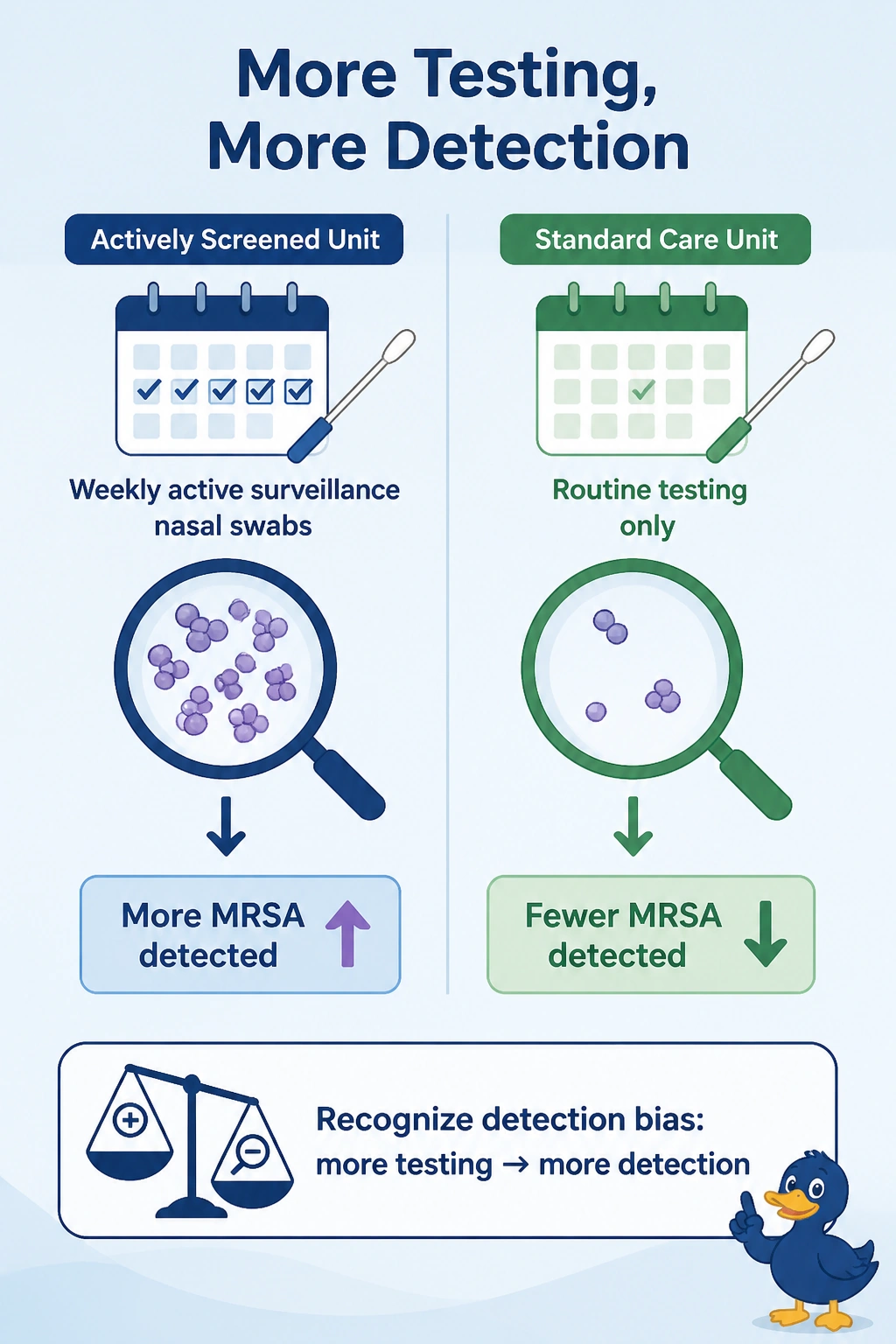
If you shine a bright flashlight in one closet and leave the others dark, you will find more dust in the lit closet even if both are equally dirty. Differential testing may explain higher detection; it does not establish that actual acquisition rates are identical. The trap is blaming unit hygiene without adjusting for how hard each unit is looking.
Full Explanation
Ascertainment intensity directly alters the number of asymptomatic or mild cases identified, so recognizing detection bias caused by more frequent testing in the actively screened unit is essential before concluding that transmission differs across wards. Concluding that the screened unit has worse hand hygiene compliance than all other hospital units mistakes an artifact of differential testing for a genuine breakdown in infection control practice. Comparing unadjusted positive counts as though surveillance and clinical specimens represent identical case finding perpetuates the error by treating different case-finding methods as equivalent instead of stratifying by specimen type and testing intensity. Attributing the higher count to recall bias from patients self-reporting prior colonization misidentifies the bias mechanism because laboratory screening results come from objective testing rather than patient memory. Caveat: when comparing MRSA or VRE rates across units, separate clinical infections from active surveillance colonization detections and account for admission screening policies. Operational check: document unit-level testing volume per 1,000 patient-days alongside incidence metrics when presenting comparative surveillance reports.
Prefer to study offline? Printable PDF study book + test engine ($7.50, unofficial). These questions stay free here.