
An infection preventionist evaluates two electronic health record algorithms to flag potential surgical site infections for manual chart review. Algorithm A has high sensitivity and moderate specificity, whereas Algorithm B has low sensitivity and high specificity. Which characteristic makes Algorithm A preferable for initial surveillance case finding?
Select an answer to reveal the explanation.
Short Explanation
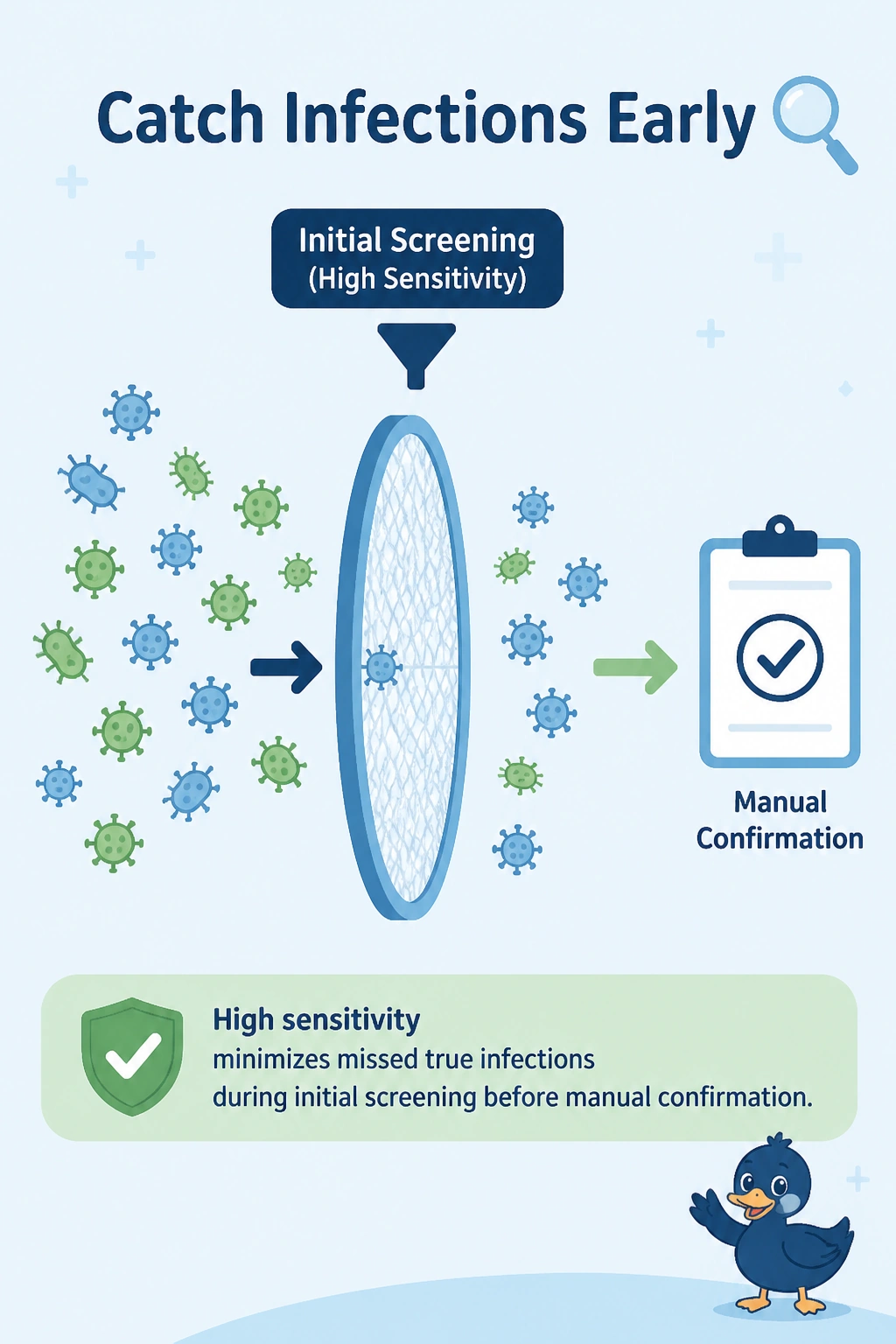
Think of your initial screen as a wide fishing net that helps you catch every real case before you sort the catch by hand. High sensitivity reduces missed true SSIs, while moderate specificity generates false-positive flags requiring chart review. The trap is chasing high specificity first.
Full Explanation
In two-stage infection surveillance, automated triggers serve as a screening filter prior to human adjudication, so Algorithm A is preferable because It minimizes missed true infections during initial screening before manual confirmation. High sensitivity captures the vast majority of true surgical site infections from microbiology, readmission, and antimicrobial triggers, allowing the infection preventionist to apply strict NHSN criteria during manual chart review. Assuming It eliminates the need for any clinical chart review by guaranteeing zero false-positive flags is false because moderate specificity means false positives will still occur and require manual exclusion. Believing Its high sensitivity makes unconfirmed positive flags suitable for direct NHSN event reporting is unsafe because screening sensitivity reduces missed cases but does not eliminate false positives or the need for criteria-based adjudication before reporting. Thinking It restricts surveillance exclusively to patients who return to the operating room for debridement describes a narrow, low-sensitivity approach that would miss superficial and medically managed infections. A caveat is that overly broad triggers without sufficient specificity can create unsustainable chart-review workloads for the team. Operational check: periodically audit a random sample of unflagged surgical discharges to verify that true infections are not slipping past the screening rules.
Prefer to study offline? Printable PDF study book + test engine ($7.50, unofficial). These questions stay free here.