
A regional perinatal center's neonatal intensive care unit (NICU) has a higher overall central line-associated bloodstream infection (CLABSI) rate than a neighboring community hospital's NICU, even though both follow identical insertion bundles. Why should the infection preventionist stratify the CLABSI rates by birth-weight category before comparing the two units?
Select an answer to reveal the explanation.
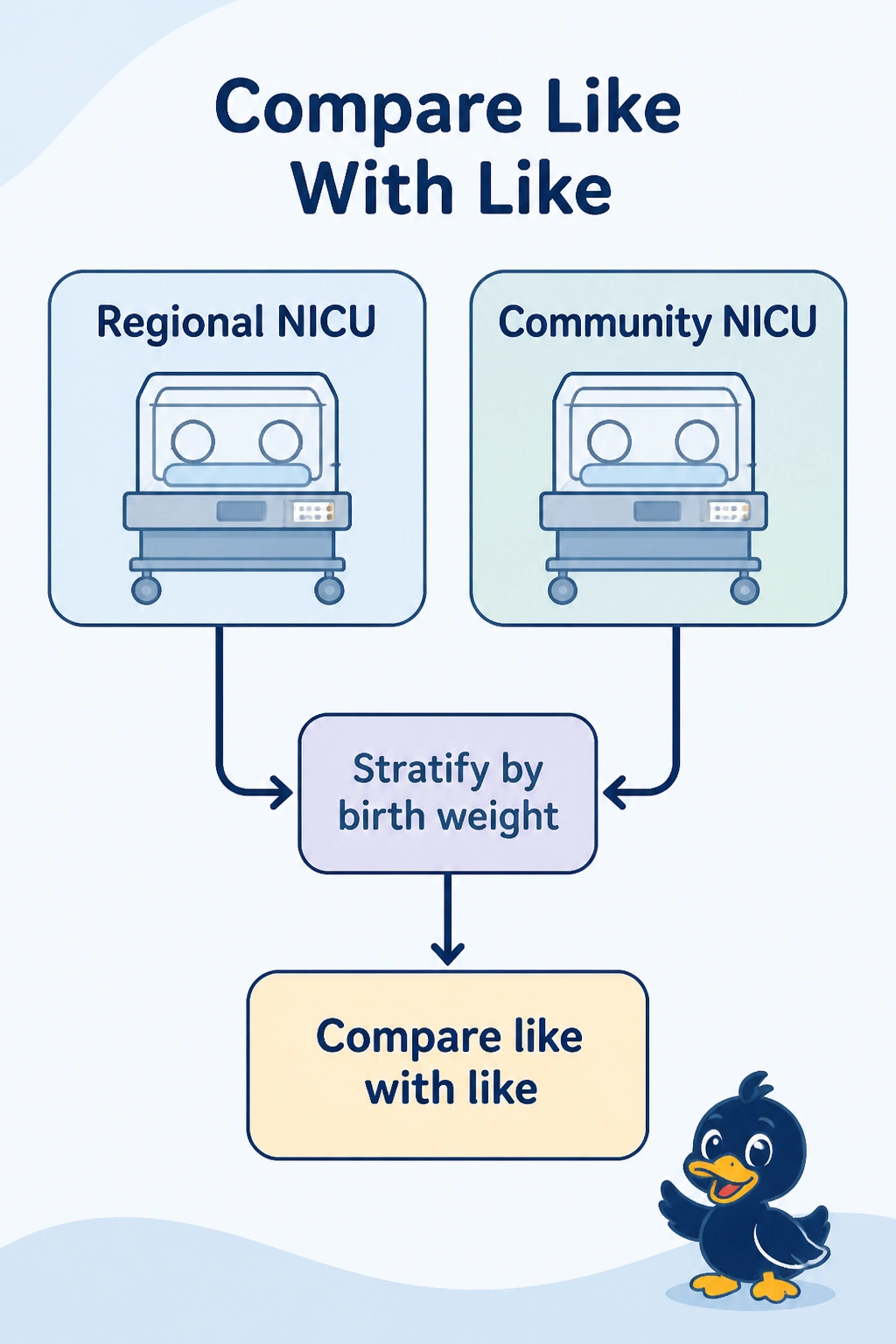
Short Explanation
Comparing crude NICU infection rates without stratification is like comparing lap times between a minivan and a race car without checking the track. The trap is assuming a higher overall rate automatically means worse clinical practice when your unit simply cares for smaller, higher-risk newborns. Stratifying by birth-weight category lets you compare apples to apples.
Full Explanation
Extremely low-birth-weight neonates have immature immune systems, fragile skin, and prolonged central venous catheter exposure, giving them a much higher baseline risk of infection than larger infants. Selecting To adjust for confounding caused by differences in infant birth-weight acuity follows CDC NHSN surveillance methodology, which stratifies NICU CLABSI rates into standardized birth-weight categories so units with higher-acuity populations are fairly evaluated. The remaining options misrepresent surveillance principles. Choosing To eliminate the need for standardized device-day denominators across facilities is incorrect because stratified rates still require central line days as the denominator to measure exposure time accurately. Choosing To convert incidence density rates into simple point prevalence percentages is wrong because stratified CLABSI metrics remain incidence density rates per 1,000 central line days rather than single-day prevalence snapshots. Choosing To exclude extremely low-birth-weight infants from national surveillance reporting would hide the highest-risk population instead of adjusting for their risk. As a caveat, even within birth-weight strata, small quarterly device-day counts can cause wide rate fluctuations, so examine Standardized Infection Ratios over longer periods. For an operational check, verify that monthly NICU surveillance reports display both birth-weight-specific rates and NHSN risk-adjusted ratios.
Prefer to study offline? Printable PDF study book + test engine ($7.50, unofficial). These questions stay free here.