
An outpatient clinic runs low on its routine hospital surface disinfectant wipes and a medical assistant proposes wiping exam tables with ortho-phthalaldehyde (OPA) solution poured from the endoscopy soaking basin. Why must the infection preventionist prohibit this practice?
Select an answer to reveal the explanation.
Short Explanation
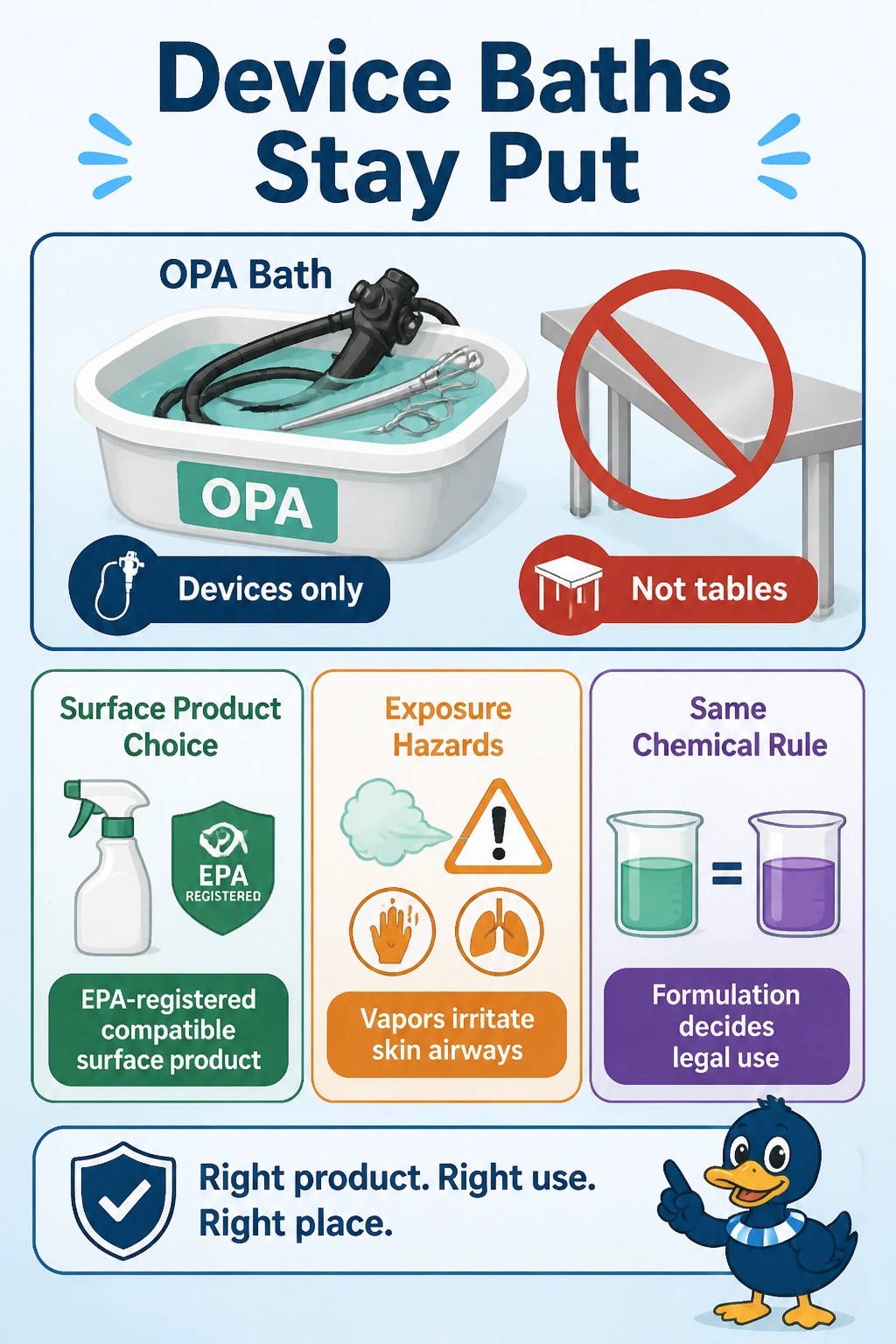
You protect patients and staff by keeping the OPA soaking bath in reprocessing, where it belongs. It is not labeled for exam tables and can create chemical exposure hazards, so check the product label before using a disinfectant on a surface.
Full Explanation
CDC disinfection and sterilization guidance advises against using liquid chemical sterilants or high-level disinfectants for general environmental-surface disinfection. This OPA bath is not labeled for environmental-surface disinfection and presents chemical exposure hazards; wiping exam tables can expose staff and patients to vapors, skin and respiratory sensitization, and staining. The claim that ortho-phthalaldehyde requires a heated automated endoscope reprocessor to become active against bacteria is incorrect: OPA is ready to use at room temperature for immersion. The claim that it evaporates too slowly and leaves tables permanently sticky misidentifies the concern, which is toxicity and irritation rather than tackiness. The claim that high-level disinfectants are too weak to inactivate common vegetative skin bacteria is also incorrect: they have broader potency than low-level disinfectants, but that does not make them safe for open-air wiping. An exam caveat is that the same active chemical can appear in differently regulated formulations, so do not assume every product containing an HLD active lacks EPA registration. As a practical check, verify that the product label specifies environmental-surface use and is compatible with the exam table; keep OPA in covered basins with exhaust.
Prefer to study offline? Printable PDF study book + test engine ($7.50, unofficial). These questions stay free here.