
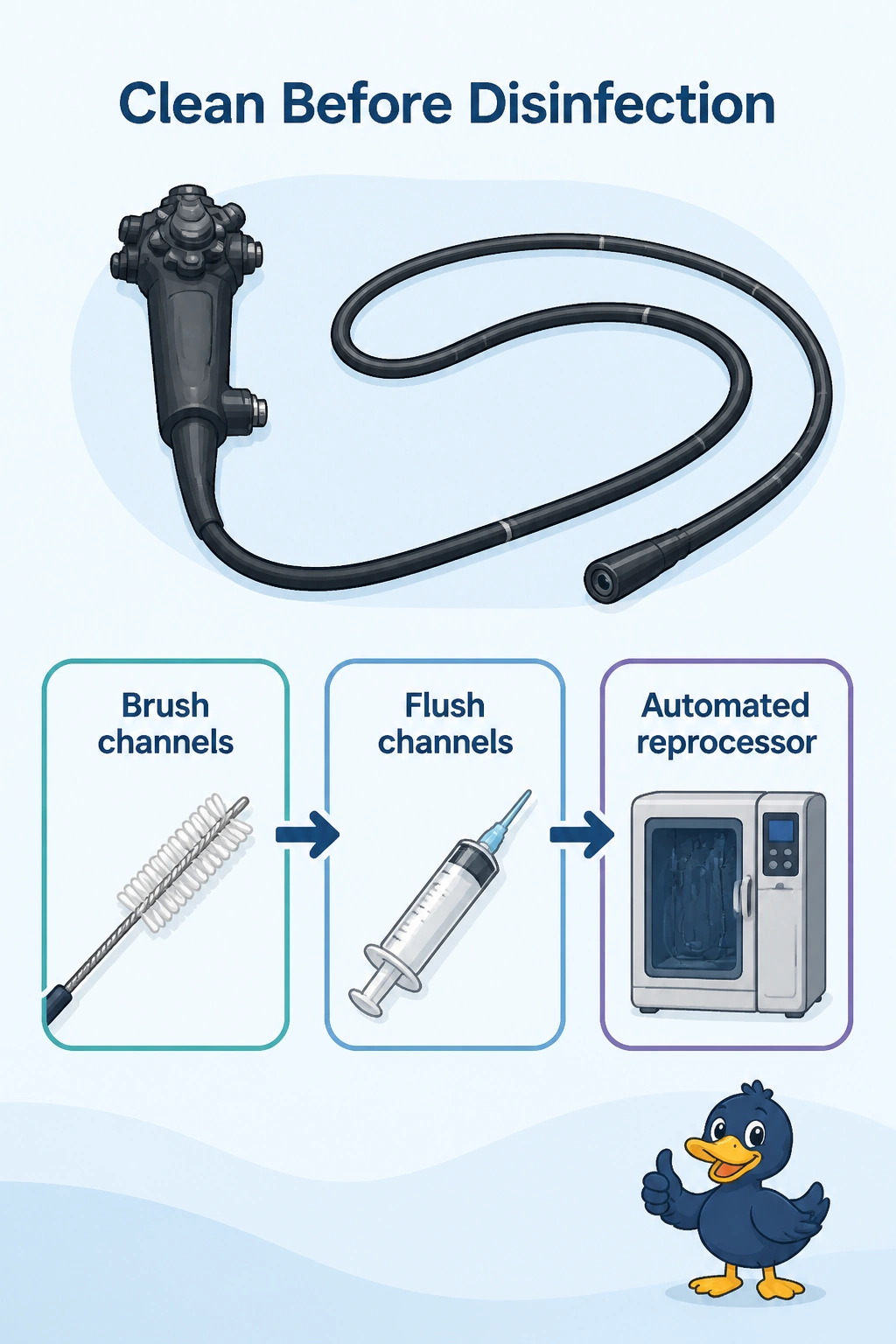
A newly hired endoscopy technician places a used flexible gastroscope directly into an automated endoscope reprocessor without manual brushing or channel flushing, assuming the machine's pre-wash cycle replaces manual decontamination. This AER’s validated IFU requires prior manual brushing and channel flushing. This machine’s prewash does not replace its required manual cleaning; follow the validated endoscope/AER process. Why must the infection preventionist intervene?
Select an answer to reveal the explanation.
Short Explanation
Putting an unbrushed scope into an automated reprocessor is like running a dishwasher over baked-on casserole without scraping the pan first. You cannot disinfect what you have not cleaned, because leftover mucus and blood shield microbes inside narrow channels. This AER’s prewash does not replace the manual brushing and flushing required by its validated IFU.
Full Explanation
This AER’s validated IFU requires prior manual brushing and channel flushing. Manual cleaning is required first because residual organic soil blocks disinfectant contact inside this gastroscope’s channels and other difficult-to-clean surfaces. This machine’s prewash does not replace its required manual cleaning; follow the validated endoscope/AER process. The system is validated to disinfect a pre-cleaned device, not to scrub away dried protein, mucus, or early biofilm that prevents liquid chemical penetration. The statement that every lumen must first be filled with sterile saline, regardless of IFU is wrong because validated detergent cleaning, not saline filling, is required to remove soil; saline does not clean or replace enzymatic brushing and flushing. The statement that automated reprocessors perform steam sterilization rather than liquid chemical high-level disinfection is incorrect because flexible gastrointestinal endoscopes are heat-sensitive and cannot withstand steam sterilization. The statement that flushing channels with isopropyl alcohol inside the machine replaces enzymatic detergent cleaning is wrong because alcohol is used after disinfection to aid drying and can fix proteinaceous soil if applied before cleaning. As an operational check, observe point-of-use pre-cleaning, leak testing, and complete manual brushing before every automated cycle.
Prefer to study offline? Printable PDF study book + test engine ($7.50, unofficial). These questions stay free here.