
During a decontamination and assembly audit in central sterile processing, an infection preventionist reviews surgical instrument trays being prepared for steam sterilization. How must hinged instruments such as hemostats and needle holders be positioned?
Select an answer to reveal the explanation.
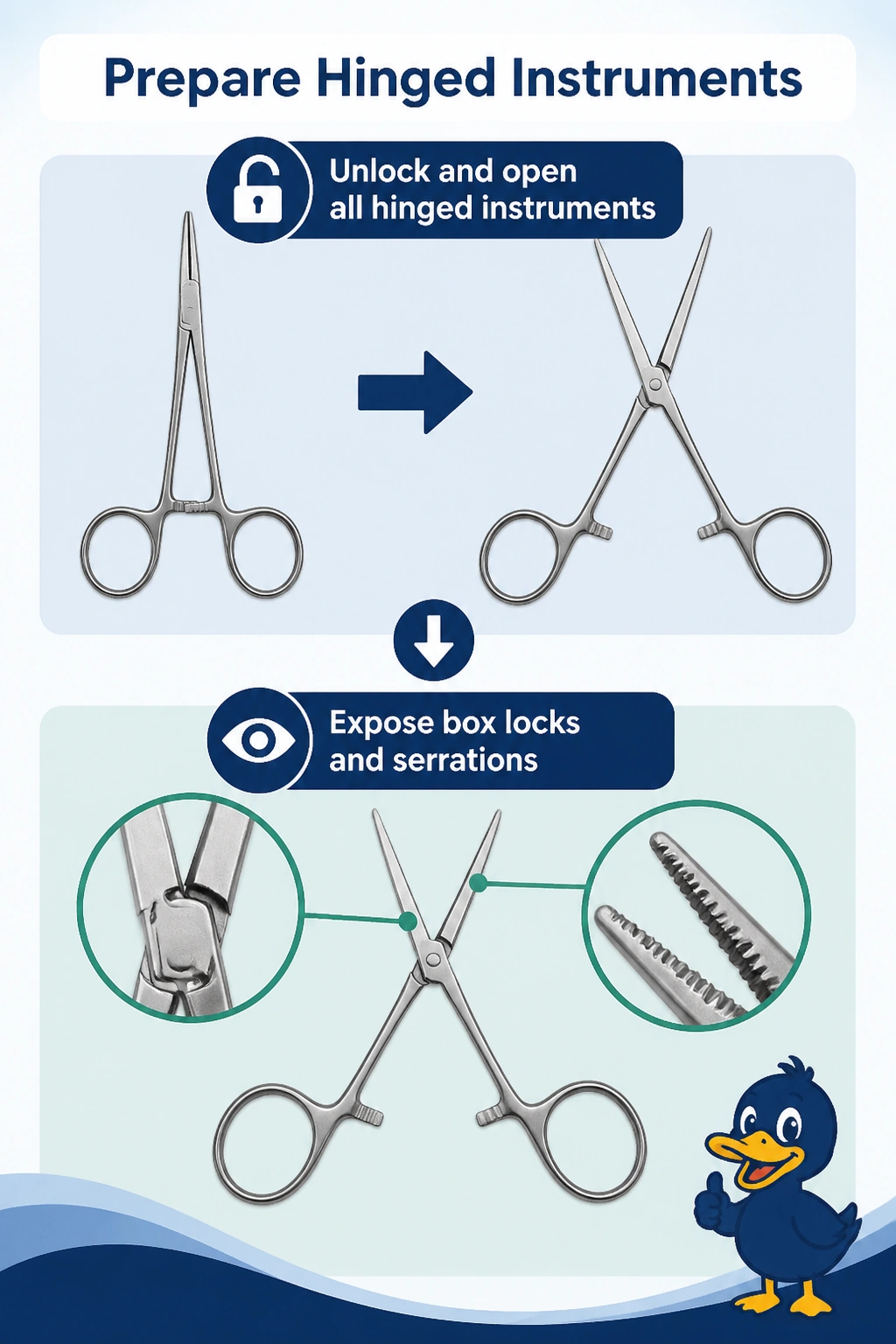
Short Explanation
You’ll get more effective cleaning and sterilization when hinged instruments are unlocked and open, so detergents and steam can reach box locks and serrations. Keeping the hinges open helps expose the surfaces that closed jaws would shield.
Full Explanation
Unlocking and opening hinged instruments exposes box locks and serrations so enzymatic detergents during washing and pressurized steam during sterilization can contact every crevice. Ratcheting instrument box locks closed to keep tips aligned shields opposing metal jaws and box locks, trapping residual organic bioburden and blocking air removal and steam contact, which can lead to sterilization failure. Placing hinged instruments tightly inside sealed paper-plastic pouches restricts steam circulation and can tear pouches or trap air pockets. Lubricating hinges with mineral oil after the sterilization cycle is flawed because non-water-soluble mineral oil coats microbes and prevents steam penetration in future cycles, while applying any lubricant after sterilization compromises sterility. Use only instrument-compatible lubricant validated for the intended sterilization method, at the IFU-specified stage; water-soluble or water-emulsifiable products may be specified. One caveat: instruments with removable components must also be disassembled according to manufacturer instructions for use before cleaning. For a practical check, inspect assembled trays and stringers in the clean prep-and-pack area to confirm all ratcheted instruments are unlatched and freely articulated before wrapping.
Prefer to study offline? Printable PDF study book + test engine ($7.50, unofficial). These questions stay free here.