
In the decontamination area of central sterile processing, a technician prepares to manually rinse reusable surgical hemostats coated with fresh blood before placing them into an enzymatic detergent bath. Which water temperature practice should the technician follow?
Select an answer to reveal the explanation.
Short Explanation
Hot water on blood-coated instruments acts just like a hot frying pan on egg whites: it cooks the protein right onto the metal. The trap is thinking hotter water always cleans better, when you actually need cool or tepid water first so blood rinses away cleanly.
Full Explanation
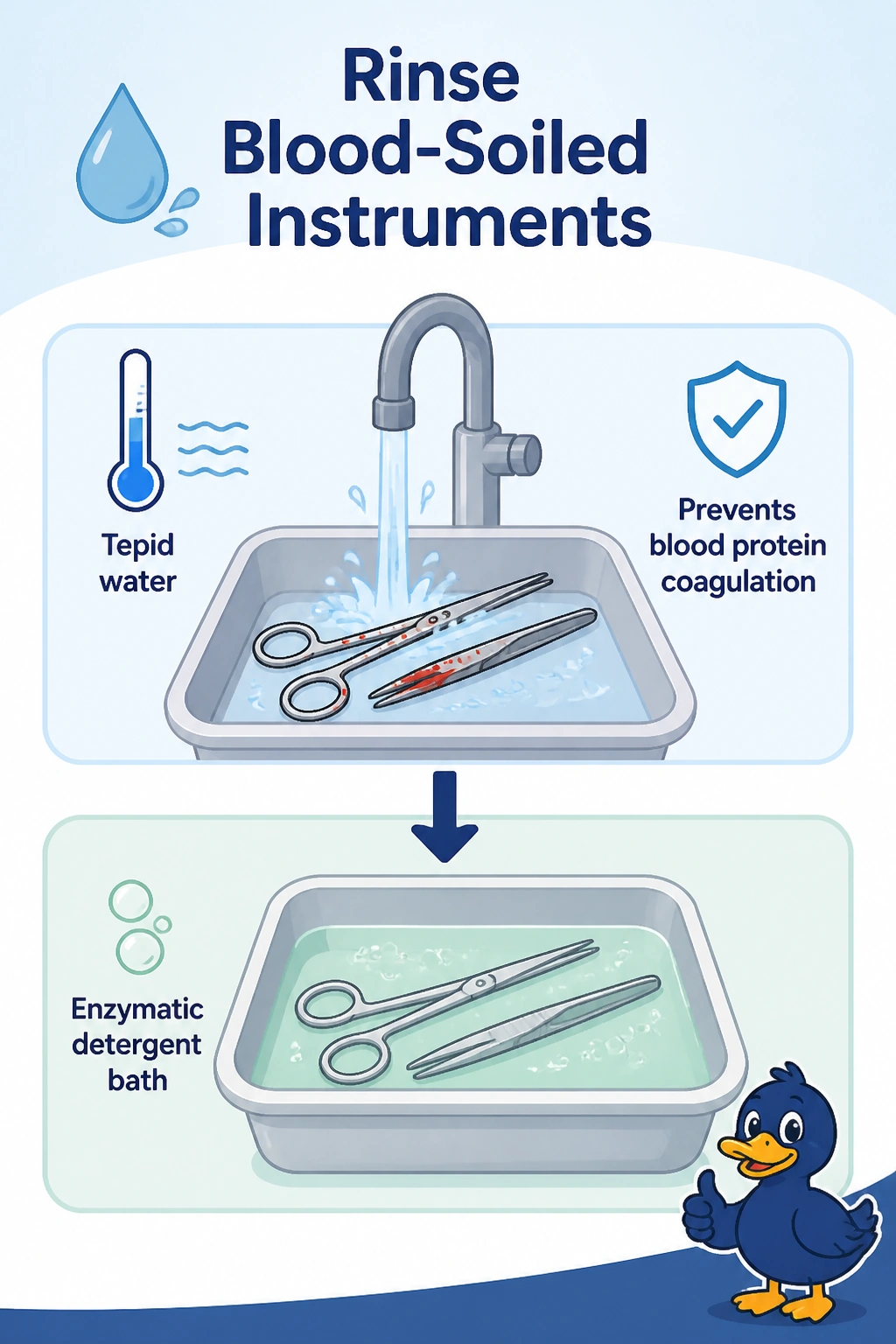
Protein-rich soils such as blood and tissue coagulate when exposed to high heat, baking onto stainless steel joints and serrations where they shield microorganisms from sterilants. Choosing to Rinse soiled instruments with tepid water to prevent blood protein coagulation removes gross organic debris safely and prepares surfaces for enzymatic detergent action. Excessive heat fixes protein; an enzyme soak does not replace gross-soil removal and the validated cleaning sequence. Choosing to Use the hottest tap water available to maximize initial microbial reduction denatures proteins and fixes soil onto box locks and crevices without achieving disinfection or sterilization during cleaning. Choosing to Spray instruments with 70% isopropyl alcohol immediately before manual brushing also fixes proteins onto metal surfaces and creates a flammability hazard without removing organic matter. Choosing to Skip prerinsing because an enzymatic soak reliably removes all fresh blood from instrument joints leaves gross soil in hinges and serrations to block detergent contact and subsequent sterilization. As a caveat, enzymatic detergents themselves require the specific lukewarm temperature range stated in the manufacturer's instructions for use to remain active without denaturing enzymes, so use IFU-specified temperatures. Verify sink temperature gauges during routine rounds.
Prefer to study offline? Printable PDF study book + test engine ($7.50, unofficial). These questions stay free here.