
During a supply room audit on a surgical unit, an infection preventionist finds one wrapped sterile instrument tray with a visible water stain on its outer wrap and another intact, dry tray sterilized eight months earlier. Which action follows event-related sterility principles?
Select an answer to reveal the explanation.
Short Explanation
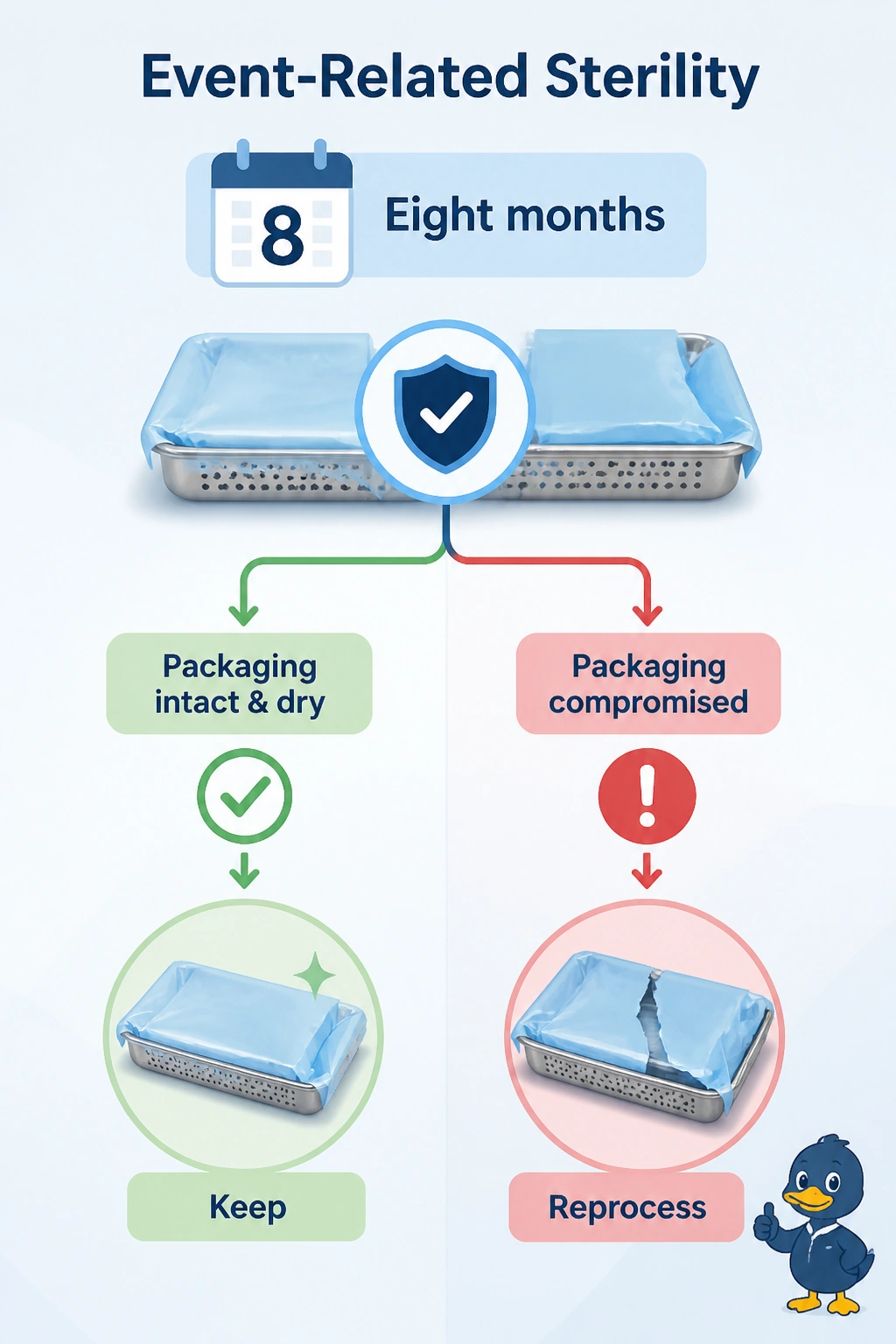
Sterility is not a carton of milk with a fixed calendar expiration date; it is a barrier that holds until an event breaks it. When moisture hits a surgical wrapper, bacteria can wick straight through the fibers to the instruments inside. The trap is trusting an arbitrary shelf-life date over physical integrity, so you should reprocess compromised packs and keep intact dry ones.
Full Explanation
Event-related sterility, supported by the CDC Guideline for Disinfection and Sterilization in Healthcare Facilities, holds that a sterile package remains sterile until an event compromises the barrier, such as moisture, tearing, crushing, or improper storage. Therefore, the correct action is to reprocess any tray with compromised packaging while keeping intact dry trays, because the water-stained tray has lost its microbial barrier whereas the eight-month-old intact, dry tray remains usable. Choosing to discard all wrapped trays older than six months regardless of wrapper condition reflects outdated time-related expiration thinking that wastes reprocessing resources without improving safety. Choosing to wipe the water-stained outer wrapper with disinfectant and use the tray is dangerous because moisture wicks microorganisms through porous wrap material into the interior instruments, and surface wiping cannot restore internal sterility. Choosing to store wrapped trays on a shelf only two inches above the floor if covered by a plastic dust cover violates storage standards. A dust cover does not replace required floor clearance and suitable storage conditions. As a caveat, if a manufacturer specifies a product-specific expiration date on a prepackaged sterile item, that date must still be honored. For an operational check, inspect sterile storage areas regularly for humidity control, solid bottom shelving, and package integrity before clinical use.
Prefer to study offline? Printable PDF study book + test engine ($7.50, unofficial). These questions stay free here.