
After a completed steam sterilization cycle and standard cooling period, a central sterile processing technician opens the sterilizer and notices visible moisture droplets inside wrapped surgical instrument trays. What is the required action for these wet packs?
Select an answer to reveal the explanation.
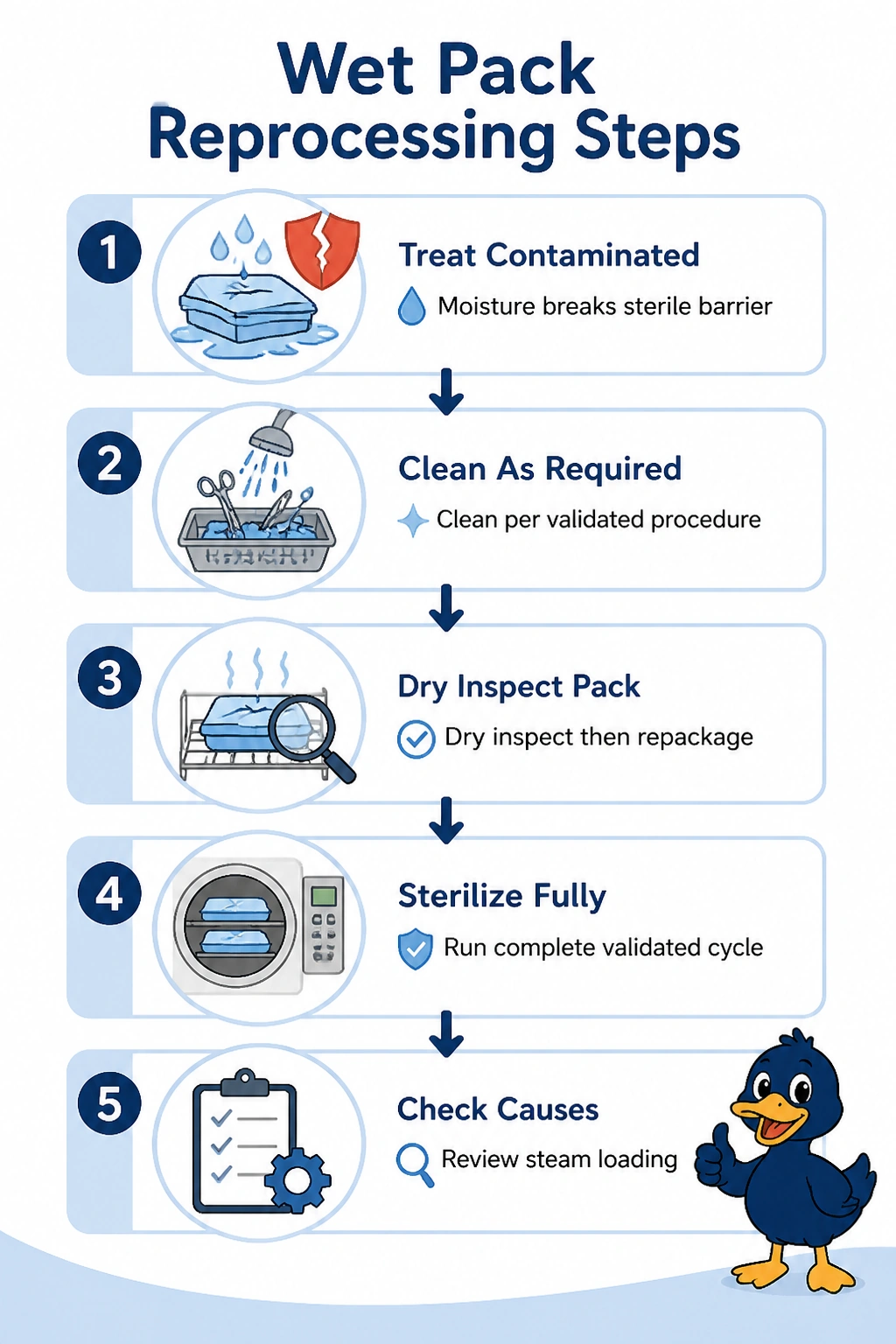
Short Explanation
Finding damp trays when the OR is waiting is frustrating, and you may be tempted to dry the wrap or trust the indicator. Because moisture can wick microorganisms through packaging, treat wet packs as contaminated and fully reprocess them before use.
Full Explanation
When visible moisture remains after cooling, treat wet packs as contaminated and fully reprocess them, including cleaning as required by the validated procedure, drying, inspection, repackaging, and a complete validated sterilization cycle. Moisture can provide a capillary pathway for microorganisms to penetrate packaging barriers, so sterility assurance is compromised; wet packs may also signal a problem with packaging, loading, steam quality, or drying. Placing wrapped trays under a warm air dryer until the exterior feels dry is unsafe because forced air can drive contaminants through damp wrap and cannot reverse prior wicking. Storing trays on an open wire shelf for twenty-four hours allows evaporation but does not restore package integrity or prevent microbial migration during drying. Releasing trays for immediate use based on an external chemical indicator is also unsafe: the indicator confirms heat exposure, not package integrity or sterility. Exam caveat: a changed external indicator does not make a wet pack acceptable. As a practical check, if wet packs recur, review steam traps, drain lines, chamber temperature, and tray weight limits.
Prefer to study offline? Printable PDF study book + test engine ($7.50, unofficial). These questions stay free here.